• Link to X
  • Link to Facebook
  • Link to Instagram
  • Link to TikTok
  • Link to Youtube
  • About
    • About Us
      • President
      • Board of Directors
      • Board of Advisors
      • Financials
      • Our Methodology
      • Success Tracker
      • Contact
  • Act Now
    • 30 Ways to Help
      • Email Congress
      • Call Congress
      • Volunteer
      • Courses & Certificates
      • Be a Donor
    • Internships
      • In-Office Internships
      • Remote Internships
    • Legislation
      • Politics 101
  • The Blog
  • The Podcast
  • Magazine
  • Donate
  • Click to open the search input field Click to open the search input field Search
  • Menu Menu
Blog - Latest News
Global Poverty

Indigenous Knowledge and Climate Change?
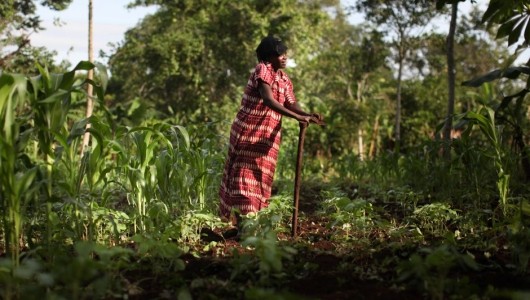
Indigenous Knowledge: Key to Coping with Climate Change?
It is no mystery these days that scientists have told Africa to brace itself for potentially devastating impacts of global climate change, and that the rural and the poor are likely to be hit the hardest. However, recent findings reported at the UNESCO scientific conference in Paris last month proposed that these rural areas, and the native farmers and pastoralists who live there, may actually be the most prepared to respond to a changing climate.

Benoit Hazard, an anthropologist from Institut National des Sciences Humaines et Sociales in Kenya researching resilience in East Africa, thinks the indigenous knowledge of local agriculturalists has already prepared them to adapt to sudden climate changes–and Hazard thinks this knowledge ought to be more widely implemented.

“We have traditional societies with specific knowledge to link things with ecological conditions, who know where water sources are and how to adapt. They need to be supported to mix their knowledge with agriculture practices,” said Hazard.

According to the research findings, those practicing more traditional farming methods tend to be much more sensitive to ecological changes, like drought for example. They also understand how to change their practices in order to not only adapt for themselves but to also not overburden the natural resources.

In addition to understanding how to utilize natural resources in a sustainable way, farmers who practice this type of agro-ecology, most often invest in a variety of agricultural products, such as livestock, crops, and the use of pollinators. Mixing these resources in a way that blends with the natural ecology of the landscape creates agriculture that has a higher chance of adapting with its environment.

Other farmer innovations stemming from traditional knowledge include planting indigenous crops, utilizing organic fertilizer and even using waste crop material to increase crop fertility.

Hazard suggested at the UNESCO conference that these traditional practices needed to be taught and encouraged more broadly and that combining new agricultural advances with the indigenous knowledge that has allowed East Africans to succeed in such a harsh climate is key to surviving potentially harsher future climates.

– Gina Lehner

Sources: allAfrica, United Nations Environment Program
Photo: Our World

August 15, 2015
Share this entry
  • Share on Facebook
  • Share on X
  • Share on WhatsApp
  • Share on Pinterest
  • Share on LinkedIn
  • Share on Tumblr
  • Share on Vk
  • Share on Reddit
  • Share by Mail
https://borgenproject.org/wp-content/uploads/borgen-project-logo.svg 0 0 Borgen Project https://borgenproject.org/wp-content/uploads/borgen-project-logo.svg Borgen Project2015-08-15 01:30:152020-03-27 13:27:14Indigenous Knowledge and Climate Change?

Get Smarter

  • Global Poverty 101
  • Global Poverty… The Good News
  • Global Poverty & U.S. Jobs
  • Global Poverty and National Security
  • Innovative Solutions to Poverty
  • Global Poverty & Aid FAQ’s
Search Search

Take Action

  • Call Congress
  • Email Congress
  • Donate
  • 30 Ways to Help
  • Volunteer Ops
  • Internships
  • Courses & Certificates
  • The Podcast
Borgen Project

“The Borgen Project is an incredible nonprofit organization that is addressing poverty and hunger and working towards ending them.”

-The Huffington Post

Inside The Borgen Project

  • Contact
  • About
  • Financials
  • President
  • Board of Directors
  • Board of Advisors

International Links

  • UK Email Parliament
  • UK Donate
  • Canada Email Parliament

Get Smarter

  • Global Poverty 101
  • Global Poverty… The Good News
  • Global Poverty & U.S. Jobs
  • Global Poverty and National Security
  • Innovative Solutions to Poverty
  • Global Poverty & Aid FAQ’s

Ways to Help

  • Call Congress
  • Email Congress
  • Donate
  • 30 Ways to Help
  • Volunteer Ops
  • Internships
  • Courses & Certificates
  • The Podcast
Link to: Ampion Venture Bus Program Supports Startup Ideas Link to: Ampion Venture Bus Program Supports Startup Ideas Ampion Venture Bus Program Supports Startup Ideas Link to: Stars Sign Open Letter to Amnesty International Link to: Stars Sign Open Letter to Amnesty International Stars Sign Open Letter to Amnesty International
Scroll to top Scroll to top Scroll to top