Senate Revives Export-Import Bank
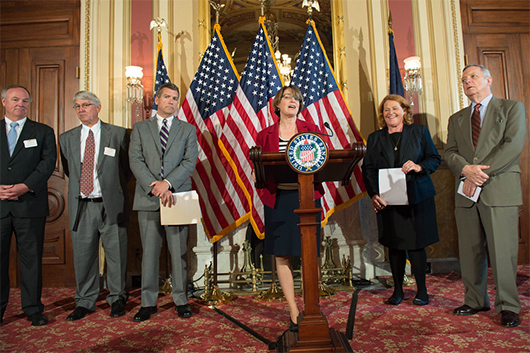
On July 26, 2015, the Senate voted to revive the federal Export-Import Bank, a substantial tool in promoting development and reducing poverty. Authorization for the bank expired on June 30, 2015.
The Export-Import (Ex-Im) Bank, an independent federal agency, is the official export credit agency of the United States. Since the Ex-Im Bank’s founding in 1934 by an executive order issued by President Franklin D. Roosevelt, it has provided financial support for American businesses exporting goods overseas when private sector financiers are unable or unwilling to step in.
The financial instruments the Ex-Im Bank provides include direct loans, guarantees and insurance. These instruments supported an estimated $27.5 billion in U.S. exports of goods and services in 2014. Interestingly, the bank operates at no cost to the taxpayers – it offsets collections to cover the cost of its operations. Just as interesting, in 2014, the bank reported a default rate of 0.175 percent.
In recent years, the financial services that the Ex-Im Bank offers have increasingly helped American businesses export to emerging markets as opposed to advanced economies. More than two-thirds of the projects financed by the bank occurred in relation to emerging markets in 2014, which the bank attributes to worldwide demand for infrastructure rising in emerging markets.
Creating infrastructure in the developing world is crucial for development. For those in poverty, access to electricity, telecommunications, clean water and transportation saves crucial time and resources. In 2014 the bank authorized $11.6 billion to support U.S. exports in infrastructure projects, more than half of its total financing for the year.
Looking at Sub-Saharan Africa, in the past five years the Ex-Im Bank has approved more than $6.3 billion to finance U.S. exports to that region, including $2.1 billion in 2014. That same year, Ex-Im Bank supported exports accounted for approximately 8 percent of an estimated more than $25 billion of total manufacturing exports to the region.
While these numbers ideally would be higher, they are still significant, likely affecting hundreds of thousands of African lives directly and millions indirectly. Facilitating the capacity of U.S. businesses to invest in developing regions of the world not only reduces poverty in those regions but also stimulates the U.S. economy. For example, the bank contends that for the fiscal year 2014, it supported 164,000 U.S. jobs by authorizing $20.5 billion for 3,746 financial transactions.
Looking at the bank holistically, it operates at no cost to the taxpayer, helps develop the developing world and stimulates the U.S. economy. However its detractors, many of who are Tea Party members, do not see the bank in such a light. They assert that the use of taxpayer’s funds for private benefit, whether for large or small businesses, distorts the market since, ideally, the private sector is more efficient in financing exports.
Yet the entire Republican Party does not see it this way. A bipartisan vote to attach a measure to a highway and infrastructure bill included almost half of the Republicans in the Senate, and a majority in the House supports resurrecting the agency.
Ultimately though, it will be up to the Republican leadership in the House whether to pass the bill with the measure or not. Unfortunately for proponents of the bank, the House majority leader, the majority whip, the Ways and Means Committee chairman and the Financial Services Committee, all opponents of the bank, stand in the way.
– Connor Bohannan
Sources: Congressional Research Service, Export Import Bank 1, Export Import Bank 2, Las Vegas Sun, The New York Times
Photo: Flickr
