Madrasas Alleviating Poverty in India
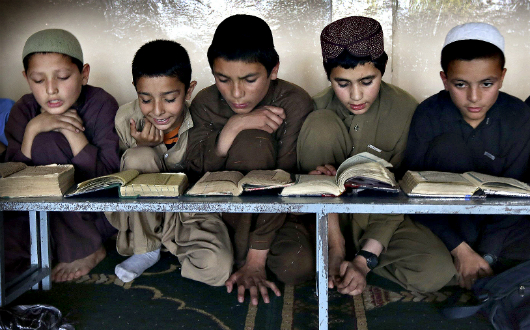
Walk into a Dar-al Uloom (a house of knowledge) in India, and you will hear what sounds like the buzzing of bees. It is the sound of hundreds of students reciting The Holy Qur’an, the Muslim holy book, as part of their daily studies. But you may be surprised to know that many students reciting the Qur’an are Hindu.
The madrasa is one of the most important institutions for millions of Muslims and Hindus in India. For the millions of children that attend them, they are a means to alleviate poverty in India.
Madrasa is an Arabic term meaning place of study and specifically refers to schools that teach an Islamic curriculum. Institutions vary greatly from the countries they are in, the subjects they teach and the ideologies they adhere to. The only common denominator are that they are administered by Muslims and incorporate some form of Islamic coursework.
Many madrasas receive their bad wrap from the small fraction of institutions that spread Wahhabism and are associated with terrorism and global threats. These institutions are catapulted to the spotlight and used to paint a broad picture of all madrasas as breeding grounds of fanaticism, but this is not true.
Madrasas in India are established Islamic seminaries that provide many children with the opportunity to receive basic education and life skills. These are opportunities that they would otherwise be unable to receive on their own due to living in extreme poverty.
In India, madrasas are also a strong pillar of community services. They offer boarding for many orphaned students and provide young women with access to basic education and skills such as cooking and sewing opportunities they would not have access to if madrasas did not exist in their villages.
For years, madrasas have worked to incorporate modern education alongside their religious curriculum. In West Bengal, nearly 600 government recognized madrasas are teaching mainstream curriculum and have a healthy non-Muslim population of students.
Anwar Hossain, the headmaster of the Orgram madrasa in India located 125 kilometers north of the state capital, Kolkata, says that it is mostly the madrasa’s modern curriculum that has made the institution increasingly popular in the Hindu-majority society.
The benefits of such madrasas in India are numerous in fighting poverty in a country with an enormous population of impoverished citizens. Student’s fees are very cheap or free for all students who cannot afford them. This is because many madrasas are funded privately by donors and are occasionally state sponsored. The madrasas also offer free uniforms for their students and a free meal every day, helping low income families provide food for their children.
Graduates of such madrasas are accepted into universities to study a variety of subjects. Madrasa graduates are going on to become scientists, doctors, engineers and other professionals, which is attracting more and more youth who feel they have a chance at a better life.
The madrasas are also working to bridge understanding and cooperation between Hindus and Muslims in India. University of North Eastern Hill professor and social activist Prasenjit Baswas says, “madrasas based on strong intellectual traditions that draw from other cultures and religions can help overturn the historical divide between Hindus and Muslims.”
With the help of proper funding and aid, many madrasas are reforming their curriculums in an attempt to empower graduates with the tools to combat poverty in India. However, this month the Indian government has de-recognized certain madrasas stating they are not teaching proper modern curriculums.
Instead of de-recognizing madrasas, more support and aid is needed to make sure that such institutions are given the tools necessary to reform, which will in turn help prevent youth from becoming radicalized. This process is not only beneficial to India, but the world as well.
– Adnan Khalid
Sources: Al Jazeera 1, Al Jazeera 2, New York Times
Photo: FT
