Disability Equals Poverty, But Not Anymore
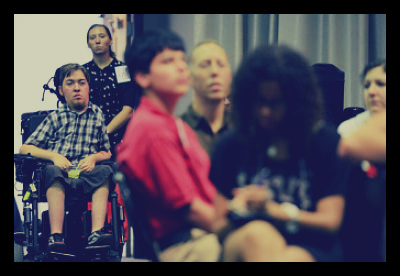
RENO, Nevada — When people say they want to help the world, or even America’s impoverished people, they think of the hungry, the homeless and the uneducated. Often those with disabilities are overlooked.
According to the World Health Organization, disabled persons are the world’s largest socially marginalized group. Compared to those without disabilities, they suffer from poorer health, lower educational achievements, fewer work opportunities and higher rates of poverty.
It was reported in 2012 that of the 19.9 million American citizens with disabilities between the ages of 18 and 64, 5.8 million of them live below the poverty line. This equals a poverty rate of 29.2 percent. Comparatively, 13.6 percent of citizens ages 18-64 without disabilities live below the poverty line. Those disabled that are blind or visually impaired the unemployment rate is over 70 percent.
The average median income of males without disabilities has been reported at $48,000 and women without disabilities earn a median of $37,000. Compared to men with disabilities who only earn a median of $41,500 and disabled women who only earn $32,000.
The American Psychological Association has shown that this effect on a disabled persons socio-economic standing is what contributes to their poor health and under education.
Even when disabled person do receive the support and attention they deserve which are viewed as basic human rights they are more often than not forced to live in poverty. The answer to this puzzling dilemma lies in the benefits the disabled receive.
Those with disabilities will generally be awarded Supplemental Security Income. This is one of two government programs designed to help those either born with a disability or those that develop a disability. The latter group will normally receive Supplemental Security Disability Insurance.
In order to retain these benefits, and their health insurance, individuals with disabilities are not allowed to earn more than $700 a month or have savings in excess of $2,000. Even with their benefits these figures leave many disabled persons surviving well below the poverty line.
At the end of September of this year that all changed. Championed by a woman born with down syndrome. Sara Wolf, now 31, has been working for her godfather’s law firm for the last thirteen years. In July, of this year, she testified before a U.S. Senate committee in Washington. Her goal was to pressure law makers into passing the Achieving a Better Life Experience (ABLE) Act.
The ABLE Act would let people with a disability create tax-exempt savings accounts, up to $100,000, to help them pay for things like a home, higher education, transportation, job-hunting costs and health care. This money would not count towards their savings, or income limits, which would endanger their disability income and health insurance.
As Wolff toured the country rallying support for her cause she managed to drum up 261,000 signatures for her online petition. Her efforts paid off as she acquired 380 sponsors in the House for her bill and 74 sponsors in the Senate. In July, the House Ways and Means Committee passed the bill unanimously.
Wolf said she wanted to take control of her future in the same way that many other Americans do. “I want people to know that I’m just like you,” Wolff said. “I could do whatever I put my mind and heart to.”
– Frederick Wood II
Sources: APA, Disability Scoop, Huffington Post, Disability Compendium, Al Jazeera
Photo: Flickr
