10 Facts About Poverty in the United Arab Emirates
The United Arab Emirates (UAE) GDP per capita is a whopping 49,000, and the unemployment rate is as low as 2.4 percent. At first glance, the country appears to be thriving with room for growth; yet, there is a large population living in poverty in the UAE. This is not present in the news as the focus is usually on the prosperous cities of Abu Dhabi and Dubai, both of which control the majority of the UAE’s total wealth.
This media focus gives outsiders the illusion of a rich and prospering country, and here are 10 facts about poverty in the United Arab Emirates worth knowing.
Facts About Poverty in the United Arab Emirates
- There is no official data on poverty in the UAE. The government does not release official data regarding any local poverty levels. This lack of facts should raise some questions regarding the government’s concerns and relief efforts.
- The UAE is one of the top ten richest countries in the world, and yet a large percentage of the population lives in poverty — an estimated 19.5 percent. This percentage is alarming as the nation is still considered wealthy on the whole even though almost a fifth of its people are not.
- Abu Dhabi and Dubai control 83.2 percent of the UAE’s wealth. This means that the other five emirates depend on the federal government for financial support.
- At least 98 percent of the families that get help from government aid have loans that prohibit them from paying for living essentials. Some blame this on the high standards of society and the cost of living expenses in the UAE.
- There are rules to receiving governmental financial aid. Before one is eligible for aid, the government looks at a family’s income, properties, ratio of family member to rooms, rent and health statuses.
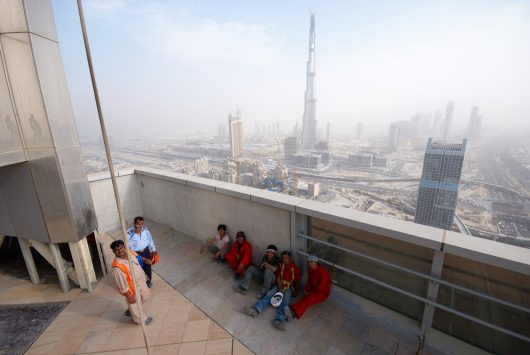
- Poverty in the UAE can be seen in the labor conditions of the working class. Migrants come to Dubai looking for work and send remittances back to their families. They are promised good pay and healthy living conditions; unfortunately, these assurances are rarely fulfilled.
- The economic crisis of 2008 confused poverty statistics. Pre-economic crisis, the poverty rate of the UAE was around 20 percent; currently, the UAE reports their poverty rate to be zero, based on a poverty line of around $22 a day.
- Reporters in the UAE are discouraged to write about poverty. The government controls information surrounding the state and has the power to suppress facts about reality.
- The economy is entirely dependent on trade and oil. Thus, government subsidies are needed when global prices fall.
- Economic distinctions are based on nationality and gender. Women are routinely discriminated against in hiring decisions, contributing to a gap in the poverty rates.
Room for Growth in the UAE
These facts about poverty in the United Arab Emirates show that although stable in many regards, the UAE could do with foreign aid and government assistance.
While the country has impressive employment rates and GDP per capita, the percentage of citizens living in or at poverty level is striking. Thankfully, the local government of the UAE has implemented assistance programs in an effort to reduce and relief local poverty. But also in the meantime, assistance should be offered and readily available for those in need.
– Haley Hine
Photo: Google
