10 Facts About Life Expectancy in the Maldives
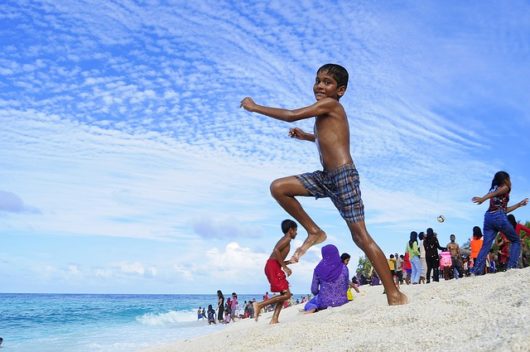
The Republic of Maldives is a prime example of a nation that has seen tremendous development and a transformation in the quality of life over the last half-century. Formerly among the least developed countries in the world, the Maldives has achieved upper-middle-class status with one of the highest life expectancies at birth worldwide. These 10 facts about life expectancy in the Maldives demonstrate the achievements of the cooperation and efforts of many sources:
10 Facts About Life Expectancy in the Maldives
- The Maldives is one of only five countries to graduate from the U.N.’s least developed countries (LDC) designation, achieving upper-middle-class status in 2011 in part because of its eradication of extreme poverty and vastly improved rates of life expectancy.
- The Maldives has seen the greatest increase in life expectancy at birth of any country over the last 59 years. According to the World Bank, Maldivians’ life expectancy has risen from 37 years in 1960 to 77 years in 2016. That’s one year lower than the United States, at 78, and above the worldwide average of 72 years. The 40-year improvement is well above the 19 year increase worldwide over the same period.
- The Maldives met five out of eight of the U.N.’s Millennium Development Goals (MDG) as of 2011 and is on track to meet its Sustained Development Goals (SDG) by 2030. The SDGs are an extension of the health, financial and infrastructure MDGs set by the U.N. to equalize global development by 2000. Millennium goals to conquer poverty, hunger, child mortality, HIV/AIDS, Malaria and other diseases, as well as to achieve universal primary education and improve women’s health are considered fully achieved. Sustained health goals are a focus for the Maldivian government, including implementing successful initiatives to improve health, end hunger, improve nutrition, food security and apply sustainable agricultural practices.
- Foreign aid efforts by the World Bank, AusAID and the EU and the governments of several individual nations have played a vital role. Aid began in the 1980s with infrastructure improvements to Maldives’ fisheries and central airport, providing income for 20 percent of the population involved in fishing and improving the transport of aid and foreign resources by air. Education and training projects totaled $39.2 million by 2000 and aid increased after the 2004 tsunami to include $14 million in emergency funds.
- The United States has provided long-term aid to the Maldives since 2005. Projects sponsored by USAID helped restore water supply systems, upgrade sewage systems and power facilities and improve financial operations. Other United States aid efforts from the CDC are currently helping the Maldivian Ministry of Health monitor and treat communicable diseases like influenza across the country.
- Investments in health initiatives and the availability of care have dramatically improved life expectancy in the Maldives. The Maldivian government spent 7.5 percent of its gross national product on healthcare in 2004 and 13.7 percent in 2014, according to the World Health Organization (WHO). The nation has had a universal healthcare system since 2011, and with help from WHO, eradicated Lymphatic Filariasis in 2016 and Measles in 2017. Mass drug administration, preventive chemotherapy and a political commitment to vaccinate children helped achieve eradication, with 99 percent of children under 12 having received a Measles vaccine as of 2017.
- Significant improvements in the health of women and children have been reported since 1990. In 2017, the fertility rate was at an all-time low, with only 2.1 births per woman rather than six in 1990. This drop contributed greatly to improvements in maternal health and quality of life for Maldivian children. Mortality rates for children under 5 years old dropped to eight in 1,000 births, helped by the increase in births attended by a healthcare professional from 70 percent in 2000 to 96 percent in 2017. Early childhood malnutrition, however, remains a serious threat to future life expectancy in the Maldives.
- Improved water quality and sanitation have decreased infectious disease outbreaks. At least 99 percent of Maldivians had access to improved water sources in 2015, with 98 percent reporting improved sanitation. However, inadequate waste disposal has continued to lead to water stagnation, worsening outbreaks of Dengue in certain areas.
- Maldives status as a Small Island Developing State (SIDS) put it at risk of devastation from environmental change. The lowest-lying nation in the world, Maldives highest point is six feet above sea level, with several islands having already been evacuated due to flooding caused by rising oceans. Increasing numbers of young Maldivians migrating to urban centers face overcrowding, increased drug use and strained resources, as well as economic difficulties resulting from an unemployment rate of 23.5 percent in 2016. Health consequences arising from urban lifestyles, namely malnutrition and obesity and increased rates of heart disease, cancer and other non-communicable diseases, threaten future life expectancy in the Maldives.
- Current and proposed initiatives hold promise for overcoming environmental and health challenges. Five current World Bank projects are targeting preservation of the nation’s marine ecosystems, while five programs in the pipeline aim to diversify a Maldivian economy threatened by dependence on fishing. At the same time, health providers are focusing on mental health and contraceptive services, while policymakers tackle gender-based violence and public hygiene.
Progress in health and sanitation, as well as investment and aid from international NGOs, have enabled Maldivians to live 40 years longer than they would have two generations ago. As a Small Island Developing State, however, Maldives faces threats from climate change. These 10 facts about life expectancy in the Maldives show incredible progress, yet it is unclear whether the nation has now achieved the self-sufficiency to meet these challenges without further international assistance.
– Marissa Field
Photo: Pixabay
