How Economic Opportunity Reduces Child Marriage in India
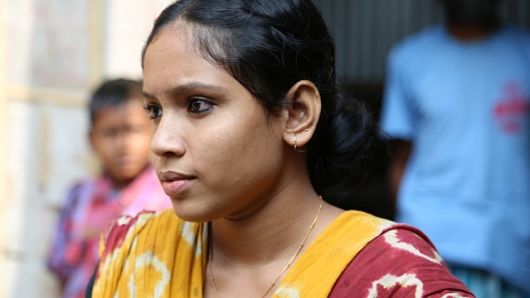
Child marriage continues to pose significant social challenges for countries around the world, but nowhere more than in India, where an estimated 47 percent of girls are married before their 18th birthday. But Indian state governments have developed promising programs to provide girls with opportunities aimed at weakening the social and economic arguments for marrying young.
While the Indian Prohibition of Child Marriage Act (PCMA) established legal ages for marriage at 18 and 21, respectively, for women and men, enforcement of the law depends on cooperation on the local level. Because the social and economic conditions that compel women to marry young have yet to be addressed, the PCMA remains largely ineffective.
According to Girls Not Brides, a global partnership of over 500 organizations working to ending child marriage, the primary factors driving child marriage are “economic considerations (poverty, marriage-related expenses/dowry), gender norms and expectations, concerns about girls’ safety and family honour, and lack of educational opportunities for girls.” While a National Action Plan to prevent such marriages was drafted in 2013, it is yet to be finalized.
State governments have adopted a number of policy initiatives to address the underlying conditions that compel children to marry. In late 2013, the government of West Bengal launched Kanyashree Prakalpa, a conditional cash transfer program intended to provide every indigent female student aged 13 to 18 with an annual scholarship and a $400 grant on her 18th birthday.
Girls must be unmarried to receive those benefits, which are meant to provide economic incentives for families that would otherwise marry off their daughters. According to Roshni Sen, one of the designers of the cash transfer initiative, nearly 3 million girls have enrolled in Kanyashree Prakalpa.

“They feel enormously enabled – it is not just the prospect of receiving money that excites them, but that they receive it in bank accounts that are opened in their names,” wrote Sen in an article for Devex. “It has put on hold their parents’ quest for a suitable groom. Most important, it has given them the opportunity to start a new dialogue with their parents, a dialogue in which they dare to speak of their future identities forged through continued education and professional training, identities which may – or may not – include marriage.”
Another initiative called Empowerment of Adolescent Girls, commonly referred to as SABLA and implemented by a district in West Bengal, is designed to help adolescent girls meet their nutritional requirements and to stay in school, with the goal of ensuring their eventual fulfillment of their rights to land.
According to Sen, strengthening women’s right to land can give them the resources they need to provide for their families on a long-term basis. It also helps organizations meet a number of development challenges, ranging from malnutrition to a lack of financial access. Under the program, government workers in West Bengal teach girls about their rights to attend school, their right not to be married before the age of 18, and their rights to assets, like land and other forms of capital.
These programs often help girls establish leverage with their parents, and evaluations of the program have found that “participating girls are more likely to stay in school, more likely to have an asset in their own name and less likely to be a child bride.”
Because national government policies depend on enforcement at the local level, smaller scale programs like SABLA are often better suited to remedying the deeply rooted social customs that drive phenomena like child marriage. As development organizations continue to focus on providing economic opportunity to vulnerable communities, poverty rates will decrease, and demographics like Indian women will be better able to realize their potential and gain the financial autonomy necessary for self-determination.
– Zach VeShancey
Sources: Devex, Girls Not Brides
Photo: Girls Not Brides
