Women’s Political Power in the Solomon Islands
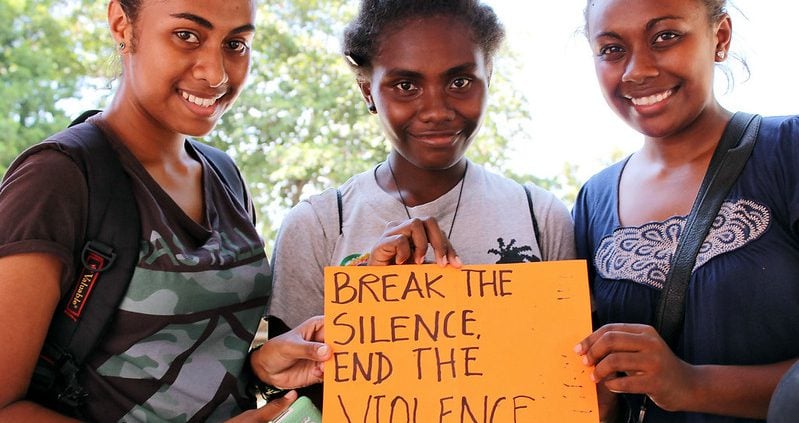 In 46 years of independence, the Solomon Islands’ 50-seat national parliament has been home to exactly six women. Not six at a time. In total. The 2024 general election saw 20 women stand as candidates out of a field of 334. Just three won. One Honiara-based organization seeks to increase women’s political power in the Solomon Islands by teaching women the mechanics of the system directly, seat by seat, workshop by workshop. The goal is simple to state and hard to achieve: convert silence into ballots.
Empowering Women Politically
Vois Blong Mere Solomon (VBMS), led by Director Josephine Teakeni, has spent years running workshops aimed at closing the gender gap in parliament. Partnering with the government’s Civic Education Unit and United Nations (UN) Women, VBMS trains women in the fundamentals of democracy, governance and elections. This includes a practice parliament where dozens of women from across the country’s provinces gather in Honiara to role-play the institution most of them have never seen a woman sit in. Participants learn what it means to vote, engage with local government or one day stand as a candidate, giving them the knowledge to participate in political life on their own terms.
Beyond Women’s Political Power in the Solomon Islands
The stakes extend beyond representation alone. A 2025 World Bank report found that around 35% of Solomon Islanders were multidimensionally poor as of 2019, a rate higher than any other Pacific Island country. UN Women projects that by 2030, women and children will make up 69% of those living in extreme poverty in the country. Evidence shows that in developing countries, increases in female political representation have produced measurably better provision of public goods, particularly in education and health. In a country where poverty is both extreme and gendered, who sits in parliament is not an abstract question.
Structural and Cultural Barriers
VBMS works against structural and cultural barriers. The Solomon Islands uses a first-past-the-post electoral system, seen as one of the toughest formats for women to break into worldwide. A push for reserved parliamentary seats for women, one per province plus one for Honiara, was floated in 2008 but has never passed Cabinet and has stalled since.
Cost is another barrier. Campaigning in a country spread across more than 900 islands is expensive, and candidates without existing financial networks or party backing often struggle to reach voters. VBMS workshops address this by building a base of politically literate women who understand not just how to vote but how campaigns, funding and party structures work long before they need to use that knowledge.
Extending the Mission
The mission extends beyond formal politics. VBMS has also addressed gender-based violence, producing a video documentary “Breaking the Culture of Silence,” which gave women a public platform to speak about traditionally undiscussed experiences. VBMS has positioned itself as a bridge, connecting international frameworks like UN Security Council Resolution 1325 on women, peace and security to the realities of daily life in Solomon Islands communities.
VBMS’s approach reflects a broader theory of change taking hold in the Pacific: political representation cannot be legislated into existence from above if the underlying knowledge and confidence to participate are not first built from below. In a country where women have long been civically present but politically absent, teaching the mechanics of power may be the first real step toward sharing it.
– Alana Breslin
Alana is based in London, UK and focuses on Global Health and Politics for The Borgen Project.
Photo: Flickr
