Women’s Livelihoods in Guinea-Bissau: Agriculture and Business
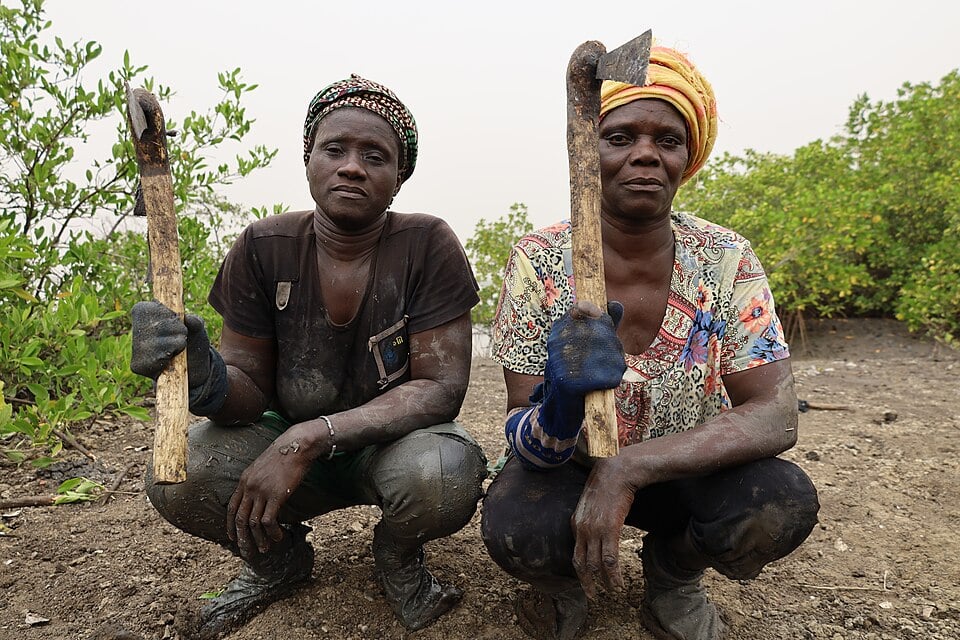 Women play a major role in Guinea-Bissau’s economy, particularly in agriculture, yet many have limited access to paid employment and opportunities to increase their earnings. The World Bank’s 2023 Economic Update provides a tentative estimate that gender inequality in earnings could represent $2.8 billion to $5.6 billion in lost human capital wealth, based on 2018 wealth estimates and simplifying assumptions. This is a potential lifetime cost, not a measured loss already incurred or an annual cost. Addressing the barriers women face is important for poverty reduction and economic growth. International organizations have introduced initiatives to improve women’s economic opportunities through agricultural investment, business support and better infrastructure. Although these efforts do not necessarily close the wage gap, they can help women turn their work into more reliable sources of income and strengthen women’s livelihoods in Guinea-Bissau.
Women’s Work Supports Guinea-Bissau’s Economy
Agriculture accounts for more than 45% of Guinea-Bissau’s gross domestic product and employs approximately 80% of its workforce, according to a World Bank country feature published in 2023. Women contribute substantially to this sector, but they face fewer employment opportunities and are less likely than men to earn a wage. These barriers limit women’s financial independence and prevent the country from fully benefiting from their economic contributions. When women lack access to paid work, resources and business opportunities, households lose potential sources of income. Improving women’s access to employment and ensuring fair compensation can strengthen household finances while supporting economic development. Reliable earnings data are also necessary to determine the extent of the gender pay gap and measure progress toward equal pay.
Better Data Can Support Women’s Economic Opportunities
Limited information about women’s earnings presents another challenge. UN Women reported that, as of December 2020, Guinea-Bissau had data for only 27.9% of the indicators needed to monitor the Sustainable Development Goals from a gender perspective. Important gaps included labor market statistics, particularly information about the gender pay gap. Without reliable figures, policymakers cannot accurately compare women’s and men’s earnings or identify sectors with the greatest disparities. Government agencies should collect and publish wage and employment data to identify inequalities and direct support where it is most needed.
Agricultural Investment Creates Opportunities
On Jan. 30, 2025, the Food and Agriculture Organization of the United Nations (FAO) announced the inauguration of an eight-hectare horticultural site with solar-powered irrigation for women farmers in Bula, in the Cacheu region. The World Bank funded the initiative through the Emergency Food Security Project, which supports agricultural production and food security. Beatriz Indeque, president of the Bula Women Horticulturalists Association, said the project guarantees a supply of locally grown vegetables. The site gives women access to irrigation infrastructure and space to grow vegetables for local markets.
The wider project directly supported 75,000 vulnerable farmers, including 13,500 who received training in modern agricultural techniques through Farmers Field Schools. FAO also reported that rice yields increased from 1.6 to 4.5 tons per hectare across the wider project. These results demonstrate the wider project’s reach and agricultural outcomes, rather than the specific impact of the Bula site. The investment provides women with infrastructure that can support production and access to local markets, although the earnings of women using the facility have not been reported. Tracking their production and income would help establish whether the initiative improves their economic security.
Business Support Can Help Women Increase Their Earnings
Business development programs offer another route to greater economic independence. In February 2024, the United Nations Development Programme (UNDP) profiled Sarita Paulo Alvarenga, a business owner in Gabú who received support through its Local Innovation Fund for Entrepreneurship. The program helped Alvarenga improve her business skills, upgrade her restaurant and purchase equipment she could not previously afford, including a solar-powered electricity system and a freezer. Following this support, her restaurant served an average of 50 customers a day and employed five people, up from three.
UNDP reported that the wider intervention had contributed to improved living conditions for more than 600 owners of micro, small and medium-sized businesses. Alvarenga’s experience illustrates how business funding, equipment and practical guidance can support income generation and create employment for others. However, her individual experience does not establish the program’s average impact on earnings or demonstrate that it has narrowed Guinea-Bissau’s gender pay gap. UNDP also does not specify how many of the more than 600 business owners were women, so the wider reach figure cannot establish whether women benefited equally.
Building on Women’s Livelihoods in Guinea-Bissau
The horticultural site in Bula and the LIFE program demonstrate practical ways to address barriers to women’s economic participation, from agricultural infrastructure and training to business equipment and skills development. These initiatives can support women’s livelihoods in Guinea-Bissau, but improving access to work is only part of the solution.
The World Bank also highlights the importance of strengthening laws and regulations that support women’s economic autonomy, employment and income opportunities. Combining these investments with reliable earnings data, monitoring of participants’ economic outcomes and policies that address pay directly could strengthen household financial security and contribute to poverty reduction. Equal pay remains an important part of this effort, requiring evidence and targeted policies alongside initiatives that expand women’s economic opportunities.
– Kaïla Nkufo
Kaïla is based in Vancouver, British Columbia, Canada and focuses on Politics for The Borgen Project.
Photo: Wikimedia Commons
