Updates on SDG 4 in Portugal: Progress and Solutions
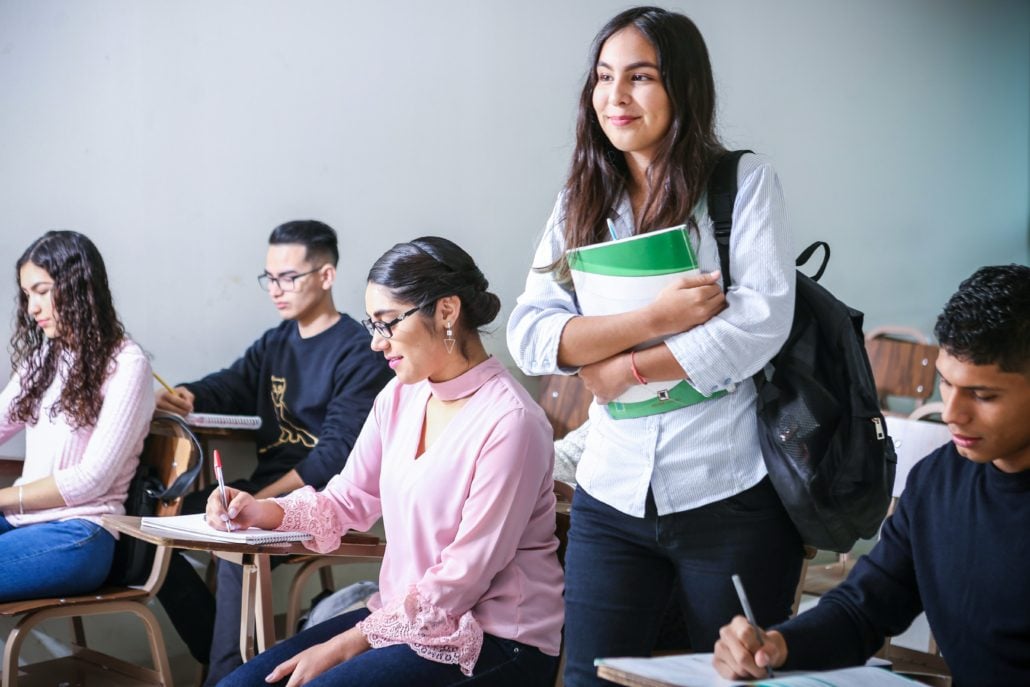 Students in Portuguese classrooms are designing mobile apps to solve problems they see in their own communities. Their work is part of a wider push toward quality education. SDG 4, one of the 17 U.N. Sustainable Development Goals, aims to ensure inclusive and equitable education for all by 2030. Updates on SDG 4 in Portugal show strong progress toward that goal, with early school leaving at 6.6% in 2024, below the EU-27 average of 9.4%. Portugal has stayed under that average since 2020.
Dropout Rates Keep Falling
Eurostat defines early school leavers as young people aged 18 to 24 who leave education before finishing upper secondary school. Between 2015 and 2025, Portugal cut its share of early school leavers by 7.4 percentage points, the second-largest decline in the EU after Malta. Portugal already sits below the 9% target that the EU set for 2030.
Poverty and Education
Updates on SDG 4 in Portugal also show how closely poverty and schooling connect. Statistics Portugal reported that 15.4% of residents were at risk of poverty in 2024.
Education level shapes that risk. In 2022 data, Statistics Portugal found that 22.6% of people with at most basic education faced poverty, against 5.8% of people with a higher education degree.
Learning Gaps Remain
Keeping students in school does not guarantee strong results. In the OECD’s 2022 PISA (Programme for International Student Assessment) assessment, socio-economically advantaged students outscored disadvantaged students by 101 points in mathematics, and the gap has stayed stable since 2012.
Portugal’s classrooms are also changing. The OECD reported that immigrant students grew from 7% to 11% of the country’s PISA test-takers between 2018 and 2022, the largest increase among the countries it compared. Portugal’s Ministry of Education added that these students scored lower than Portuguese students, especially those born abroad. Several programs aim to close these gaps.
Apps for Good Turns Students into Problem-Solvers
The organization CDI Portugal has run Apps for Good since 2014. Student teams aged 10 to 18 pick a real-life problem, then plan, build and pitch a mobile app to solve it, while teachers receive training to guide the projects.
Lisbon University researchers evaluate the program through interviews and questionnaires. In those surveys, 83% of students reported greater confidence, CDI Portugal said.
According to CDI Portugal, more than 28,500 students, 1,800 teachers and 700 schools have taken part in the program over 11 years. The organization also says the program reaches young people in vulnerable situations, including in prison establishments.
In 2025, Young Private Life, a game from Bela Vista Educational Center that promotes integration and positive behavior among young people, won the best app prize in the prison establishments category. Students at Escola Básica Júlio Brandão in Vila Nova de Famalicão also built Welcome to Portugal, an app for newly arrived immigrants.
João Baracho, executive director of CDI Portugal, said opening technology and innovation to young people from different contexts helps reduce inequalities.
Programa Escolhas Supports Vulnerable Young People
Another initiative targets the students most at risk of falling behind. Programa Escolhas, a national program within the Portuguese Institute for Sport and Youth, has promoted social inclusion across Portugal since 2001. It works with children, young people and families from disadvantaged backgrounds, with a focus on refugees, and combines education, vocational training, arts and sports.
By its 20th anniversary in 2020, the program had covered about 650 projects and 400,000 participants.
Looking Ahead
Updates on SDG 4 in Portugal point to a school system that keeps more young people learning, even as poverty continues to shape who gets ahead. Programs such as Apps for Good and Programa Escolhas give students the tools and support to build a stronger future, and in classrooms across the country, students keep designing apps to solve the problems around them.
– Penelope Griesinger
Penelope Griesinger is based in Lisbon, Portugal and focuses on Good News and Politics for The Borgen Project.
Photo: Unsplash
