Getting Dinner on the Table: Hunger in Yemen
 Since the outbreak of the Israel-Palestine war in 2023, many people have become familiar with Hamas, a condemned militant wing that launched the Oct. 7 cross-border attack. However, fewer people are familiar with another allied political force making waves just 1,500 miles away in Yemen.
Houthi Influence in Yemen
An Iran-backed armed movement known as the Houthis utilizes military force, coercion and propaganda to win support and gain governmental control. They seized Yemen’s capital city of Sanaa with Iranian support, and today, Yemen’s national government remains in contention with Houthi-controlled regions of the country.
Beyond lingering political tension, a severe humanitarian crisis has unfolded for ordinary Yemenis. Nearly three-quarters of Yemen’s population lives below the poverty line. Houthi militia are positioned near Yemen’s Red Sea Bab el-Mandeb Strait, causing blockages, trade and import delays, maritime attacks and embargoes that mirror the Strait of Hormuz situation in Iran. Separately, flooding and changing weather patterns have endangered home-grown crops and exacerbated waterborne illnesses. These economic pressures have led more than 60% of Yemeni families to report insufficient food consumption.
NGO Efforts
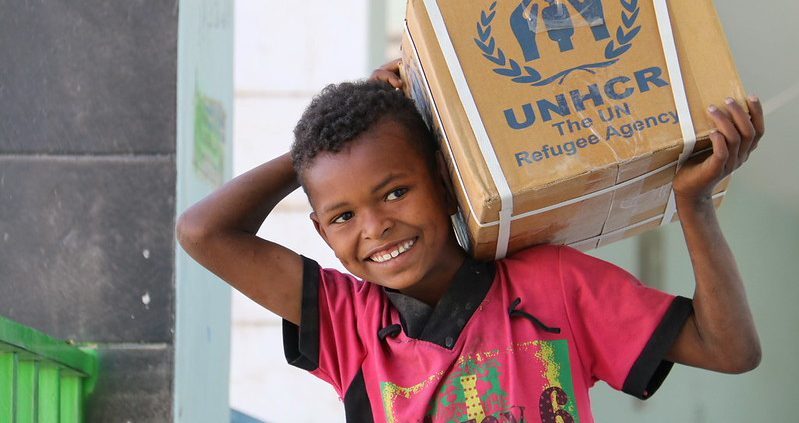
While economic reform efforts progress slowly, a few notable nongovernmental organizations (NGOs) lead hunger relief on the ground. UMMA Foundation, an American-based nonprofit aiding 23 countries, plays the long game by distributing food baskets packed with nutritional basics. With staples including lentils, rice, oil and seasoning, these baskets can sustain a family for one month, providing continued nourishment during a precarious time, according to the UMMA Foundation. Save the Children, which has worked in Yemen since 1963, operates similar food basket distributions and also supports 200 health clinics, providing life-saving care to 5 million children across the country.
Funding Challenges
Yet hunger in Yemen often persists due to funding gaps. While several organizations have launched coordinated response plans to scale relief efforts, the 2026 United Nations (U.N.) Yemen Humanitarian Needs and Response Plan reveals a tough reality. The plan seeks $2.16 billion to reach 12 million people across Yemen. According to United Nations Office for the Coordination of Humanitarian Affairs (OCHA), as of May 2026, only about 13% of that funding had been committed by donor governments — one of the lowest funding levels the response has seen in more than a decade — posing a continued hindrance to food, hygiene, water, medical and basic goods for those 12 million people.
Although hunger in Yemen may no longer dominate major media stories, the country’s struggle remains one of the world’s most severe humanitarian crises. Whether millions of families receive the attention needed will depend on sustained international funding toward organizations already working around the clock. The work already underway shows that food baskets, nutritional support and sustained aid investment can put dinner back on the table when families need it the most.
– Natasha Agarwal
Natasha is based in Philadelphia, PA, USA and focuses on Good News and Politics for The Borgen Project.
Photo: Flickr
