The USAID Budget for 2024
In March 2023, the President released a Fiscal Year 2024 Budget, reserving $63.1 billion for foreign aid, as well as $32 billion specifically for the United States Agency for International Development (USAID). The USAID Budget for 2024 is an important step up, with an increase of $3 billion, or roughly 10% from the Fiscal Year 2023 Budget. This allows the agency to further address the important development goals that it has set, bettering the lives of those globally and domestically.
The Budget
The USAID Budget for 2024 addresses a wide range of topics with regard to global poverty and quality of life. The largest portion of this budget is reserved for food security and humanitarian aid, $10.5 billion to address rising crises and natural disasters around the world as well as $1.11 billion to Feed the Future to address food insecurity throughout the world, specifically Ukraine.
With the war in Ukraine, more than 14 million families have had to flee their homes and cities from February 2022 to February 2023. This has had an increasingly detrimental effect on Ukraine’s economy, which shrunk by roughly 30% last year, forcing millions into food and economic insecurity. The USAID budget reserves an additional $522 million to address the food and economic insecurity in Ukraine.
Additionally, the budget aims to address health insecurity, which is an important part of addressing global poverty, with $4.1 billion for USAID programs aimed at addressing health issues around the globe, where vaccines and prenatal care may be difficult to find.
Implementation
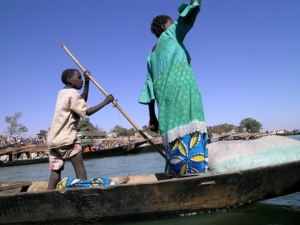
This money is deployed in a variety of ways, and implementation is an important aspect of the USAID Budget for 2024. Feed the Future, which is administered by USAID, works to reduce food security in 20 countries throughout the world. In many of the world’s developing countries, agriculture is integral to food security as well as the economy, and resiliency is imperative to feed rural communities. Feed the Future’s efforts in Mali, where 80% of the country relies on agriculture in some form, including improving resiliency through supplying better seeds for farmers as well as improved water conservation, can make sure that farmers can continue to earn a living, feed their families and feed the community. These efforts have been extremely successful, and in 2021, more than 2 million children under 5 were helped through Feed the Future’s efforts in Mali.
Since the beginning of the war, USAID has spent more than $1.4 billion on humanitarian aid to the Ukrainian people. One of these ongoing efforts is the AGRI-Ukraine initiative. AGRI-Ukraine is meant to provide assistance to farmers, who may have difficulty growing, storing and transporting their crops due to the war. This will help maintain an important sector of the economy, as well as assist in feeding millions of Ukrainians. An additional, often overlooked, impact of the war is access to important, life-saving medications for Ukrainian citizens. USAID efforts have helped to ensure that Ukrainians still have access to those medicines.
Outlook
USAID’s efforts throughout the world have been imperative in helping many efforts to eliminate global poverty. It has addressed food, health and economic insecurity throughout the world, ensuring that millions of the world’s poor have access to lifesaving medications, inventions and technologies. This helps to reduce poverty globally, while also working towards U.S. interests around the world. The USAID Budget for 2024 will ensure that these efforts are able to continue in full.
– John Rooney
Photo: Flickr
