Updates on SDG 14 in Mauritius
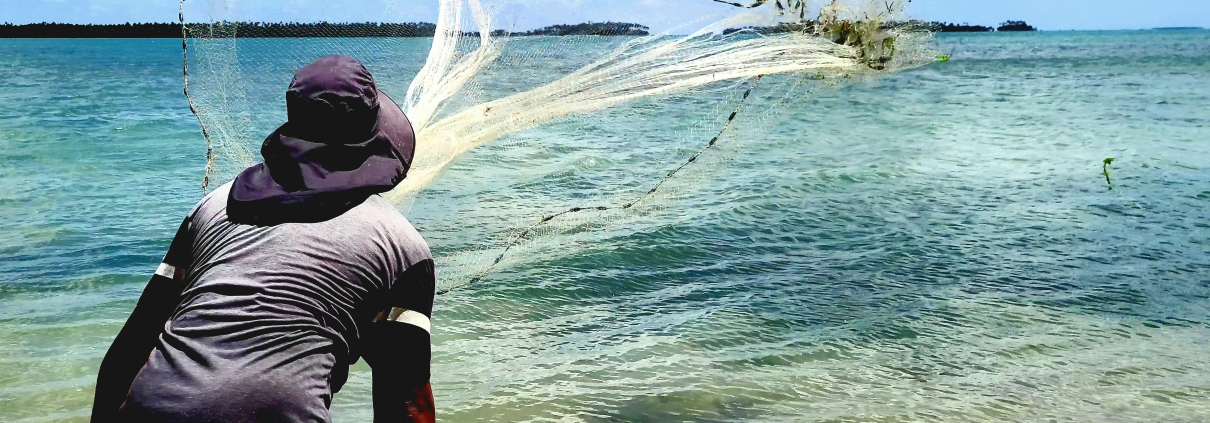 Mauritius has an Exclusive Economic Zone of approximately 2.3 million square kilometers, one of the largest maritime territories of any small island state on earth. According to the United Nations, that vast ocean space represents one of the country’s greatest untapped opportunities for food security and poverty reduction. And yet, as the U.N. Development Programme has documented, rising food prices and growing import dependence continue to place significant financial pressure on ordinary Mauritian households.
Updates on SDG 14 in Mauritius sit at the center of that contradiction. Sustainable Development Goal 14, Life Below Water, is not simply an environmental target for the island nation. The U.N. frames it as a direct pathway to economic resilience, local food production and poverty reduction for a country whose ocean territory dwarfs its landmass many times over.
Poverty and Food Insecurity
While extreme poverty remains low in Mauritius, vulnerability remains an important issue in the context of rising food prices and import dependence. According to the IMF, the national relative poverty rate fell to 7.3% in 2023, while the Sustainable Development Report 2025 places the poverty headcount ratio at 0.8% at $2.15 per day and 1.3% at $3.65 per day. At the same time, food insecurity indicators remain concerning: the prevalence of undernourishment was 5.9% in 2022, and other estimates place it as high as 8.7%. These figures are especially significant in a country where rising food prices and seafood affordability continue to place pressure on lower-income households.
Recent estimates indicate that roughly 8.7% of the Mauritian population is undernourished. For a middle-income island economy surrounded by one of the world’s most productive ocean territories, that figure reflects a structural gap rather than a resource one. The food is not absent. The systems to make it accessible and affordable are what need work.
An Island That Imports What Its Ocean Could Provide
As a Small Island Developing State, Mauritius depends heavily on external markets for food supply. The U.N. Development Programme (UNDP) notes that this dependence makes the country particularly vulnerable to global supply chain disruptions, imported inflation and geopolitical instability, forces that Mauritian households have little power to control and even less capacity to absorb.
Fish illustrates the problem clearly. Once one of the most accessible protein sources for Mauritian households, seafood has become noticeably more expensive in recent years. Official food security data show that the price of frozen fish peaked at Rs 327 in February 2023 and remained high at Rs 321 in May 2024. For lower-income families, this price pressure has narrowed dietary choices and deepened food inequality, despite the island being surrounded by vast marine resources that remain underutilized.
The Delivery Gap
Mauritius has made genuine legislative progress aligned with SDG 14 objectives. Two pieces of that framework are worth examining in detail because they illustrate both how far the country has come and how much distance remains.
Mauritius’s environmental governance framework is primarily anchored in the Environment Protection Act 2002, later strengthened through amendments in 2008, which extends environmental stewardship and pollution-control standards across the island’s coastal and marine zones. According to the Nairobi Convention’s country profile on Mauritius, the Act establishes environmental impact assessment requirements for coastal development projects, a mechanism designed to reduce shoreline degradation and protect marine biodiversity and fishing stocks over time.
The Integrated Coastal Zone Management framework provides the institutional structure for coordinating the management of Mauritius’s lagoons, coral reefs and coastal ecosystems across multiple government agencies. According to the Nairobi Convention’s Mauritius country profile and related regional assessments, it has supported beach rehabilitation, habitat mapping, water-quality monitoring and coral reef restoration. While the policy framework is clearly in place, implementation and ecological outcomes continue to vary across coastal zones, reflecting the long-term nature of restoration and the uneven pressures faced by different parts of the island.
The Data Behind the Urgency
The Sustainable Development Report 2025 places Mauritius 76th out of 167 countries with an overall SDG score of 70.3, a performance that reflects moderate progress on some goals and persistent challenges on others. SDG 14 sits firmly in the second category.
According to the SDG Index Dashboard for Mauritius, only 11.1% of marine sites important to biodiversity were protected in 2023. The same dataset recorded an Ocean Health Index clean water score of 68.7 in 2024, pointing to ongoing environmental pressures on the island’s marine ecosystem. Most strikingly, 71.9% of fish caught came from overexploited or collapsed stocks, a figure that directly links marine degradation to food security, livelihoods and poverty reduction, rather than framing it solely as an environmental issue.
When nearly three-quarters of the national fish catch draws from stocks already under severe pressure, updates on SDG 14 in Mauritius become less about environmental reporting and more about understanding a food security risk that is actively developing.
An Organization Closing the Gap
The Indian Ocean Commission’s SmartFish Programme offers a concrete example of what meaningful SDG 14 implementation can look like in practice. Launched in 2011, the regional initiative operates across Indian Ocean island states, including Mauritius, with a focus on strengthening fisheries governance, improving market access for small-scale fishers and building the data systems needed to monitor fish stock health over time. In doing so, it connects marine sustainability directly to livelihoods, food security and poverty reduction.
According to regional fisheries governance sources, SmartFish supports fishermen, coastal communities and food security outcomes across the region. For Mauritius, this helps transform marine resources into systems that support local food production, employment and poverty reduction.
Beyond institutional programs, the blue economy offers significant potential through aquaculture, algae cultivation, oyster farming and marine-based small enterprises. World Bank assessments identify these sectors as drivers of employment, lower seafood import dependence and improved food affordability.
What the Numbers Mean for the People
Updates on SDG 14 in Mauritius ultimately tell a story about the distance between a country’s resources and its population’s access to them. According to the SDG Index Dashboard, 71.9% of fish catch is linked to overexploited or collapsed stocks. That figure is not an abstraction, it is a timeline. Every year, that number holds or worsens, the foundation for domestic food production, fishing livelihoods and food affordability erodes a little further.
The U.N. SDG framework, regional fisheries programs such as SmartFish and Mauritius’s own legislative infrastructure all point in the same direction. Deeper investment in sustainable fisheries, aquaculture and marine-based enterprise, combined with stronger implementation of existing policy, represents one of the most direct paths available to Mauritius for narrowing the gap between its ocean wealth and persistent food vulnerability among lower-income households. The challenge now is turning existing frameworks into measurable results.
– Aditya-R Nowbuth
Adutya-Raj is based in Ottawa, Ontario, Canada and focuses on Politics for The Borgen Project.
Photo: Pexels
