Roots of South Sudan: Beadwork Offering Independence
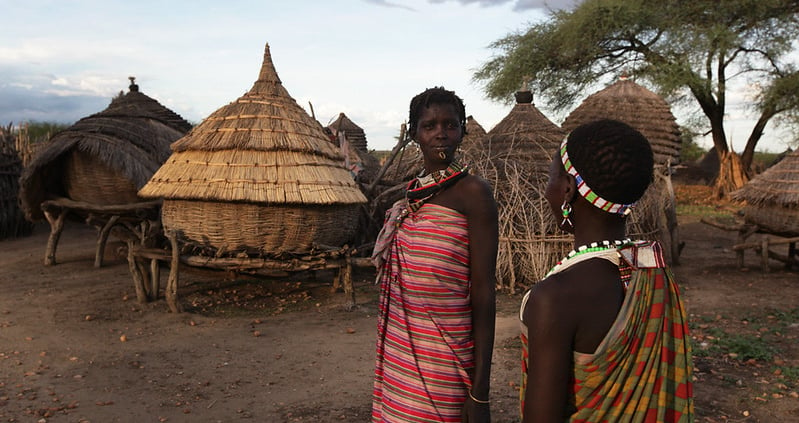 Years of economic hardship and violence have severely impacted South Sudanese livelihoods. Prolonged instability and extensive displacement have uprooted millions of people from their homes, disrupted economic activity and increased economic insecurity. The World Bank reports that conflict and significant economic dislocation contributed to South Sudan’s poverty headcount rising from 51% in 2009 to 82% in 2016.
Women’s financial stability is further affected by conflict and displacement, which can worsen existing inequalities. Against the backdrop of the country’s escalating humanitarian crisis, UN Women reports that women and girls face particular challenges.
Displacement, however, does not take away women’s existing skills and knowledge. Some South Sudanese women are using traditional beadwork to turn a cultural skill into a source of income. Roots of South Sudan is a craft-based organization founded in Juba in 2009 that provides employment opportunities through traditional handicrafts such as beadwork for internally displaced South Sudanese women, as well as Sudanese and Ethiopian refugee women.
The organization helps displaced women turn their existing skills into income while maintaining cultural traditions by connecting traditional handicrafts with resources and wider markets.
Economic Barriers Facing Displaced Women
Conflict and displacement can disrupt livelihoods, making it more difficult for women to access the resources needed to provide a consistent income. Only five percent of women in South Sudan had an account with a formal financial institution in 2017, compared with 13% of men. The World Bank also notes that women’s participation in income-generating activities is limited by restricted access to markets, financial services, business training and productive resources. UN Women notes that access to capital, savings and skills can help displaced women increase their economic stability and diversify their sources of income.
Despite these barriers, South Sudanese women continue to draw on skills that can support their livelihoods. For example, women have passed traditional beadwork from one generation to the next, preserving a skill that can also provide an opportunity to generate income. Andariya documents the relationship between women’s livelihoods, cultural continuity and beadwork.
From Traditional Skill to Livelihood
Launched in Juba in 2009, Roots of South Sudan uses traditional beadwork to provide economic opportunities for internally displaced South Sudanese women from various ethnic backgrounds, as well as Sudanese and Ethiopian refugee women. Roots of South Sudan reports that its programs have provided economic, educational and trauma-healing assistance to more than 500 women, including internally displaced and refugee women.
Roots supports women in turning their existing skills into products that can reach wider markets by providing materials, training and other forms of support.
Market access is a key part of this model. Through its partnership with MADE51, a UNHCR initiative that helps refugee artisans reach international markets, Roots connects artisans with customers outside South Sudan.
Through collaborations such as the IBU Movement, Roots also provides opportunities for training, product development and capacity building. These forms of support allow women to build on existing skills while creating opportunities to earn an income from their work.
According to Roots of South Sudan, its members have generated more than $950,000 in direct income since 2011, with each member’s income estimated to support six to 10 family members. The income generated through beadwork can therefore extend beyond individual artisans to support households that depend on their earnings.
Rebuilding Independence and Community
Roots’ model focuses on building on displaced women’s existing skills rather than treating them solely as recipients of aid. Its Juba center brings together women from different South Sudanese communities, giving them opportunities to work together and exchange cultural knowledge and experiences.
Garland highlights how artistic activities such as beading can create spaces where South Sudanese women interact, share knowledge and discuss their experiences and culture. For women who have experienced displacement, these spaces can give traditional craft a role beyond income generation while helping maintain cultural connections and relationships across communities.
Preserving Culture
South Sudanese beadwork has cultural significance in addition to its value as a handcrafted product. While the practice itself is passed down from one generation to the next, beads, colors and designs can convey identity, social belonging and traditions. Cultural Survival and the Metropolitan Museum of Art document the cultural significance of beadwork across African communities.
For displaced women, continuing these practices can provide a way to build on existing skills while maintaining connections to their cultural heritage. Research on South Sudanese beadwork also shows how women adapt the craft as their circumstances change.
The expansion of traditional craft markets can create income opportunities while also raising questions about cultural ownership and fair compensation for artisans. Africa Press highlights the commercial potential of South Sudanese crafts, while Roots of South Sudan describes how the organization provides materials and helps artisans sell their work domestically and internationally.
Beadwork therefore carries both cultural and commercial significance, allowing a skill passed down through generations to become a potential source of income.
Craft-Based Livelihoods
Beadwork alone cannot solve the underlying causes of poverty, violence and displacement in South Sudan. However, when women have the means and opportunity to earn from skills they already possess, craft-based work can contribute to rebuilding their livelihoods. In addition to teaching women how to produce crafts, Roots’ production model helps remove some of the practical obstacles that can prevent women from engaging in paid employment by providing childcare, meals and transportation alongside organized orders and access to materials.
Other livelihood projects similarly combine skills development with practical financial support. For instance, UNHCR has provided start-up grants, digital access and vocational training to refugees and host communities. These examples suggest that the viability of craft-based livelihoods depends not only on the skill itself but also on creating the conditions that allow women to turn that skill into a steady source of income.
Final Thoughts
Conflict and displacement can take away livelihoods and increase economic insecurity for women and their families, but they do not take away the skills women already possess. Beadwork demonstrates how these existing skills can generate income while helping women rebuild their livelihoods and maintain cultural traditions. Roots’ experience suggests that addressing poverty does not always require women to start from scratch; economic opportunities can also be built around the knowledge and skills they already possess.
– Zeba Vagh
Zeba is based in Melbourne, Australia and focuses on Good News for The Borgen Project.
Photo: Flickr
