HOPE for Public Health in Micronesia
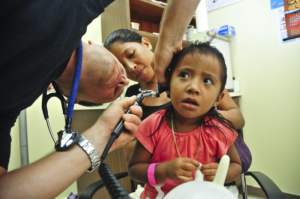 Commemorating 65 years of dedicated service across numerous countries worldwide, Project HOPE has consistently addressed the most pressing needs of people during emergencies and challenging disasters. While their impact has touched the lives of countless individuals globally, their primary focus lies on Micronesia, particularly in the realm of public health education. Approximately 12 years ago, Project HOPE established its presence on the island of Chuuk, within the expanse of Micronesia’s islands, and began disseminating its invaluable services.
5-Day Plan
Over the course of a mere five days, Dr. Lynn Bemiller and Nurse Maureen Kisicki generously dedicated their expertise to providing essential aid during critical C-section surgeries. However, their contributions extended beyond this immediate assistance; they also engaged in reciprocal knowledge exchange, imparting vital medical procedures to the health care practitioners at Chuuk Hospital. Departing Chuuk, they left behind a legacy of public health education that is poised to yield enduring improvements in well-being for years to come, according to Dr. Bemiller.
Project HOPE’s Beginning
With a vision to revolutionize the health care system, Project HOPE goes beyond mere assistance to global health care; it actively engages in the education of local health care professionals within each nation, fostering the implementation of sustainable strategies for enhanced health care. Rooted in the belief of establishing enduring solutions for the transformation of medical systems across nations, Project HOPE becomes a beacon of hope for individuals in their day-to-day existence, alleviating concerns related to public health challenges.
Dr. William B. Walsh, driven by the harrowing sights he witnessed in the South Pacific during his service in the Navy during World War II, emerged as the visionary behind Project HOPE. Collaborating closely with President Dwight D. Eisenhower, Dr. Walsh successfully orchestrated the chartering of a U.S. Navy hospital ship at the remarkable cost of $1 per year. This vessel was christened the “SS HOPE.” By 1974, the SS HOPE was ready to set sail, the tangible embodiment of Dr. Walsh’s mission. However, the legacy he established didn’t merely remain at sea; it transitioned onto land, carried forward by the concerted efforts of volunteers, health care experts and collective teamwork across the nation under the banner of Project HOPE.
Micronesia’s Journey Towards Improved Public Health
According to the World Health Organization, Chuuk State has begun to intensify its public health screenings of Tuberculosis and leprosy in order to control infectious diseases in that nation. This ensures the ongoing health and safety of its population while also contributing to regional and global efforts to curb the spread of these contagious illnesses. Through these rigorous public health measures, Chuuk State plays a pivotal role in fostering a healthier future for its citizens and beyond.
Not confined to Chuuk State alone, the impact of Project HOPE’s medical volunteers resonates across the Federated States of Micronesia, extending notably to Pohnpei. Within this realm, Dr. Bemiller and Nurse Kisicki, steadfast in their commitment, immersed themselves in the tropical climate, tending to an impressive “nearly 300 patients in a single day.” Dr. Bemiller underscores that, while the ailments were not severe, the opportunity to deliver additional insights and health education directly in the patient’s native language proved invaluable. Project HOPE’s ethos transcends the conventional model of rendering aid and then departing; instead, it emphasizes the propagation of transformative medical knowledge, thereby nurturing the growth of self-sustaining medical services in diverse global nations. This approach catalyzes a sustainable health care legacy that continues to flourish even after the volunteers return to the United States.
Future Hopes and Plans
In 2023, reports have detailed the impact of climate change on the Federated States of Micronesia. The report strongly underscores the imperative to both recognize and effectively address the looming issues posed by powerful storms and potentially devastating natural disasters. These significant shifts in the climate landscape give rise to heightened risks impacting citizens’ well-being and raise valid concerns about an upsurge in diseases such as dengue and leptospirosis. Against the backdrop of these global shifts, it becomes crucial for the government to proactively implement measures aimed at enhancing the nation’s resilience against extreme weather fluctuations and reinforcing its health care system, all in preparation for the inevitable changes that lie ahead.
Nevertheless, a glimmer of hope exists. The Asian Development Bank has diligently engaged in funding multimillion-dollar projects aimed at aiding Micronesia in fulfilling its comprehensive endeavors toward national improvement, encompassing areas from health care to education and energy. While their financial backing represents a significant initial stride towards Micronesia’s envisaged brighter horizon, sustained and unwavering support remains imperative to effectively tackle the potential long-term operational hurdles that might emerge amidst these encouraging initiatives. Anchored by a national Strategic Development Plan spanning 2004 to 2023, Micronesia’s future presents a vista of promise, brimming with infinite potential to uplift public health standards for its citizens.
Conclusion
Project HOPE’s 65-year journey is a testament to its unwavering commitment to global welfare, marked by transformative health care interventions. Their legacy spans from emergency responses to focused initiatives in Micronesia, catalyzing enduring improvements in public health education and services. The 5-Day Plan exemplifies their holistic approach, where Dr. Bemiller and Nurse Kisicki’s expertise not only healed but also left behind a legacy of knowledge for sustainable public health methods. The organization’s inception through Dr. William B. Walsh showcases its belief in sustainable health care solutions that transcend borders. Micronesia’s progress, propelled by intensified public health efforts and knowledge sharing, reflects the power of collaboration. Amidst climate challenges and health threats, the future holds promise with initiatives like the Asian Development Bank’s support, underpinning Micronesia’s trajectory towards elevated public health standards.
– Sandy Kang
Photo: Flickr
