How the United Nations is Working to Prevent Hunger in Tonga
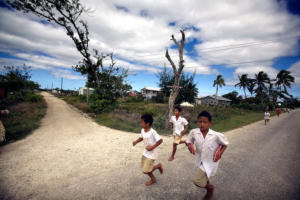 The Kingdom of Tonga, a constitutional monarchy, is a 171-island archipelago in the South Pacific Ocean. Its estimated population of almost 105,000 occupies 45 of the islands, with over two-thirds living on the island of Tongaatapu. Over 75% of Tonga’s population is rural, although less than 28% of the land is arable. Tonga is an upper middle-income economy, with “enormous diaspora and remittance reliance” (estimated at almost 42% in 2022). Tourism is a key industry, and the country is a major fish exporter.
Food Security: Access vs. Quality
The most recent Sustainable Development Report for Tonga for the U.N.’s SDG 2, Zero Hunger, shows decreasing trends in terms of improvement, with significant challenges remaining. (Information was available for only four of the eight indicators comprising the assessment.) While the SDG has been achieved for stunting and wasting of children under 5, significant challenges remain for the Sustainable Nitrogen Management Index, and a major challenge regarding the prevalence of obesity, where the improvement trend is decreasing.
Tonga has not met the criteria for inclusion in the Global Hunger Index, most likely because of insufficient data. Still, other sources support the conclusion that food security in Tonga is not a question of access to food, but rather an issue of the quality of food being consumed. The Pacific Community: Tonga Food Security Profile reports that more than 97% of the population has adequate access to food, but around 12% lack access to nutritious foods. While vegetable and fruit consumption is approximately what the WHO recommends for a healthy diet, 60% of dietary energy comes from foods it is recommended to limit or avoid—e.g., sugar and animal fats. Only 15% of Tongans consume a balanced diet.
This conclusion is supported by the 2022 Global Nutrition Report, which indicates that Tonga’s obesity prevalence (57.9% of adult women and 45.5% of adult men) is higher than the regional average and among the highest in the world. At the same time, while Tonga is “on course” for childhood stunting, childhood wasting and childhood overweight, there has been no progress, or worsening, for anemia among women of childbearing age and exclusive breastfeeding. Tonga is off course for the remaining eight indicators of the report.
Impact of Dietary Diversity on Health
The World Food Programme’s mobile Vulnerability Analysis and Mapping survey, October/November 2024, in Tonga, similarly noted that 98% of the households surveyed experienced adequate consumption, but diets lacked diversity. Although food security was found to be stable, the high cost of food and rural poverty are challenges. Significantly, the poor quality of diets can lead to NCDs (non-communicable diseases).
The World Bank had previously noted an increase in poor diet as one of the behavior-related risk factors contributing to Tonga’s rise in NCDs, which accounted for four of the five leading causes of mortality. A 2021 World Bank study focused on NCD-related fiscal policies, such as taxation policy on unhealthy food consumption behaviors.
The World Bank has worked with Tonga to evaluate programs put in place 2016-2019 to promote healthy lifestyles. These programs were:
- A government policy to mandate overseas fishing vessels to sell a portion of their catch in Tonga at a discounted rate, thus increasing the supply of fish available domestically
- An NCD tax on unhealthy foods
- A government buy-back program, whereby the Ministry of Fisheries purchased fish wholesale from local fishing boats and subsequently sold it to the public at a subsidized rate
The World Bank’s findings showed that “integrated, innovative solutions can work together to reduce food security risk… and improve health and nutrition outcomes.”
Climate Challenge
Not to be ignored is the impact of climate on Tonga and its key economic sectors—tourism, agriculture and fisheries—and thus the direct and indirect effect on food security and health. Natural hazards include heat waves, drought, floods, cyclones and storm surges. In January 2022, for example, a volcanic eruption and tsunami destroyed crops and polluted drinking water.
Subsequent to the COVID pandemic, the U.N.’s International Fund for Agricultural Development (IFAD) worked through the Informal Economies Recovery Project to support the implementation of various agricultural development activities in Tonga. IFAD’s mission is to reduce rural poverty, to improve nutrition and increase food security, as well as to strengthen resilience. IFAD partnered with MORDITT in Tonga (Mainstreaming of Rural Development Innovation Tonga Trust), with activities including the distribution of seedlings.
A Collaborative and Multi-Pronged Approach
Addressing hunger in Tonga is thus a combination of national and international commitment with macro-level policy and sectoral efforts, as well as micro-level behavioral change efforts.
– Staff Reports
Photo: Flickr
