Politics and Poverty Reduction in Bolivia
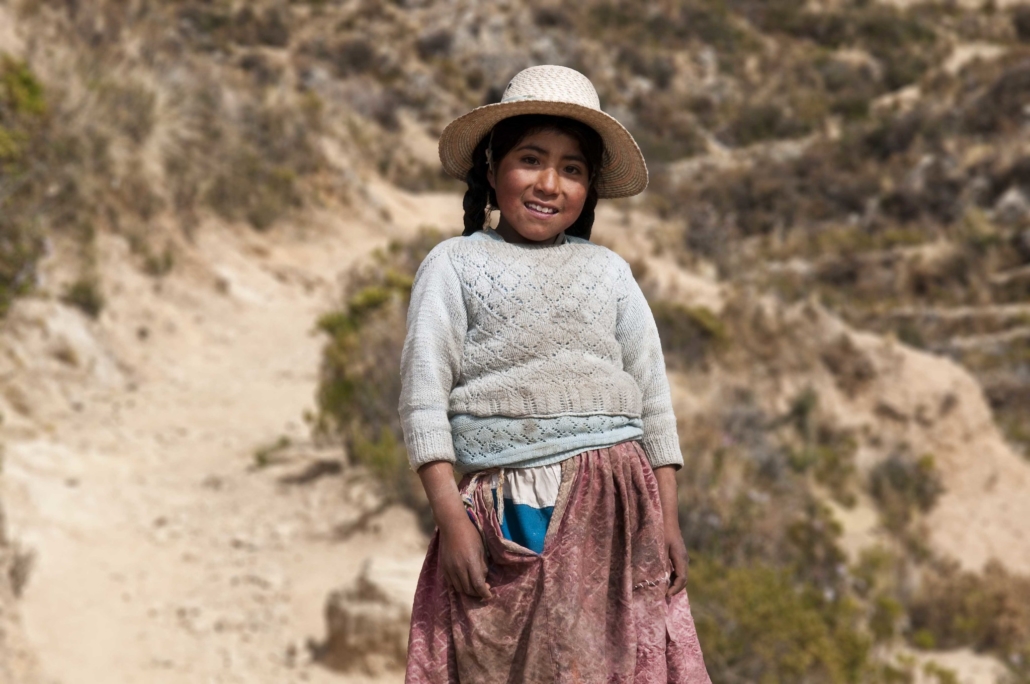
Although Bolivia does show signs of growth, economic and political difficulties have marred its few successes. In addition to having one of the highest rates of poverty in South America, corruption, political persecution and the ongoing COVID-19 pandemic hamper Bolivia. These issues distract from efforts to improve the lives of the nearly 4 million Bolivians living in poverty in 2018, politicizing programs like the “Patriotic 2025 Bicentennial Agenda” which is supposed to work toward the 2030 Sustainable Development Goals (SDGs). Thus, the very people who should be ending poverty are hampering poverty reduction in Bolivia.
Corruption in Bolivia
With Bolivia experiencing political turmoil, its politicians have often squandered the limited resources available to the nation. In 2017, ex-president Evo Morales built a $7 million museum dedicated to himself in the town of Orinoca, where 90% of the population lives below the poverty line. Interim-president Jeanine Añez’s brief administration included several examples of corruption, with both her Interior Minister and Health Minister receiving a charge of graft, the latter making a profit off of government-bought ventilators during the pandemic.
This has meant that funds intended to fight poverty in Bolivia have disappeared. A 2021 evaluation of the previous year’s government budget found that actual spending on public programs was always significantly lower than the expected amount, suggesting widespread corruption. The budget has also seen a decrease in funds appropriated for public services, further hampering anti-poverty efforts. Given this, Bolivia has been incredibly fortunate to see its poverty rate decline as dramatically as it has over the last 10 decades, but this is mostly due to an unsustainable boom in oil and natural gas. Institutional weaknesses thus present a major challenge to an economy reliant on volatile resource extraction.
Protests in Bolivia
Deepening Bolivia’s woes are the ongoing dispute between Bolivia’s socialist party, Movimiento al Socialismo (MAS), and the country’s opposition parties. In 2019, protests erupted over whether incumbent socialist president Evo Morales could run for an unconstitutional fourth term, as well as the fraudulent nature of the election which gave him a sweeping victory. Following MAS’ return to power in 2020 after an interim government, and the election of Morales’ ally Luis Arce as President, many of those that participated in the interim government received charges of sedition. This includes President Jeanine Añez, who received a 10-year sentence in prison for staging a “coup” despite not having involvement with the 2019 protests. The upheaval and resources wasted on these political fights have ground Bolivia’s economic growth to a halt, with the pandemic only accentuating the country’s dire situation.
The International Response
These breaches of democracy have also drawn the attention of other international actors, straining Bolivia’s already tense geopolitical situation. President Arce attacked the Organization of American States (OAS) for interfering with the 2019 elections, to which the OAS responded by reaffirming it only documented instances of fraud and was concerned about the persecution of MAS’ political opponents. Similarly, the European Union and the U.S. State Department have expressed disapproval over the politically motivated imprisonments.
All of this prevents international aid from reaching the struggling nation, handicapping efforts to fight poverty in Bolivia. Following President Morales’ election in 2005, he expelled the U.S. ambassador and rejected assistance from USAID, permanently removing the latter by 2013. Morales chose to focus on short-term economic growth and reducing inequality, leveraging the country’s oil and gas resources to make significant reductions in the poverty rate by 2015. However, it is uncertain whether Bolivia’s extraction-based economy will be successful in the long run, or whether it made a mistake in shutting the door to aid.
Poverty Reduction in Bolivia
Even amid economic and political uncertainty, progress is occurring to promote poverty reduction in Bolivia. President Luis Arce’s government has seen a reduction in the extreme poverty rate from 13.7% to 11.1% in 2021, suggesting the economy might be rebounding after the pandemic. In addition, the yearly ‘National Report’ emphasizes Bolivia’s commitment to 13 ‘pillars’ of development, including the end of extreme poverty and investment in public health. With the report stressing Bolivia’s commitment to the 2030 Sustainable Development Goals (SDGs), fighting poverty may be making a comeback in public policy.
– Samuel Bowles
Photo: Unsplash
