Migration to China: Building a More Inclusive Society
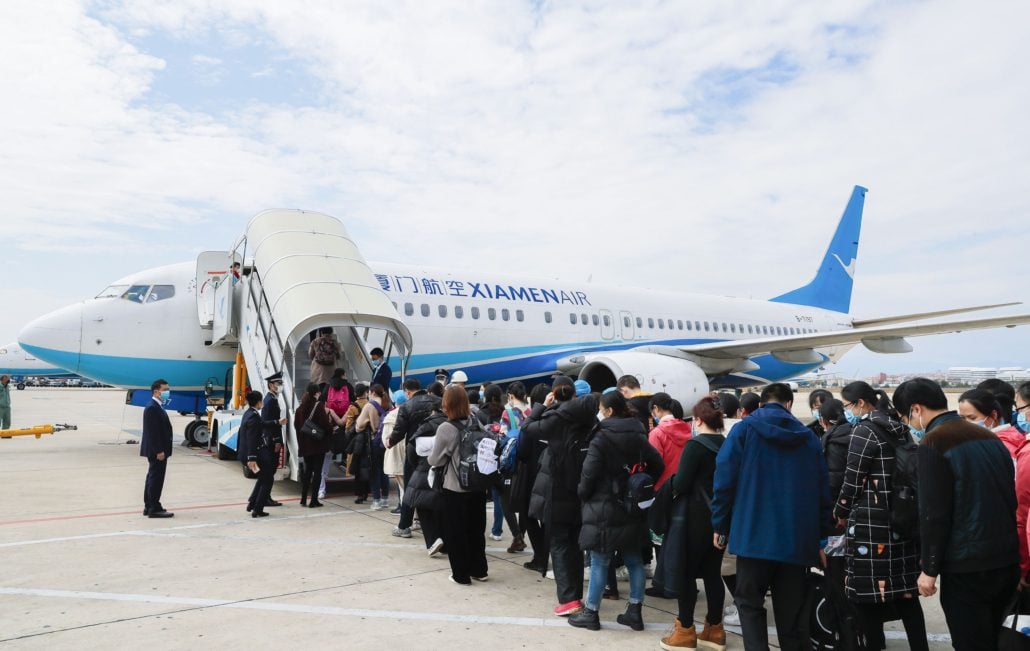 China has a relatively small foreign population compared with major immigrant destinations, but international travel, education and employment are expanding as China strengthens its global connections. This raises questions about how foreign residents, particularly those facing social or economic barriers, can participate fully in Chinese society. Here is more information about migration to China and what life is like for foreign residents in the country.
A Growing International Presence
China’s 2020 census recorded 845,697 foreign nationals living across mainland China, less than 0.1% of its 1.41 billion residents. While permanent immigration remains limited, international migration to China has grown since COVID-19.
In 2025, Chinese immigration authorities recorded 82.04 million entry and exit trips involving foreign nationals, 26.4% more than in 2024. Foreign nationals made 30.08 million visa-free entries, representing 73.1% of foreign entries and increasing 49.5% from the previous year. Although these figures measure border crossings rather than permanent immigration, they demonstrate China’s growing international connections.
International students are another important group. China’s Ministry of Education recorded 254,019 international students in higher education in 2023, allowing many to develop local connections while accessing education and professional opportunities.
Different Experiences for Foreign Residents
Foreign residents’ experiences vary according to nationality, race, employment, immigration status and finances.
Research into African migrants in Guangzhou and Foshan found that perceived discrimination affected perceptions of personal safety. Among participants from Nigeria, the Democratic Republic of the Congo, Angola and Uganda, 75.3% held business visas, with trading goods the most common occupation.
A 2024 China Quarterly study documented challenges facing Guangzhou’s African community, largely made up of traders and entrepreneurs. The number of Africans officially recorded in Guangzhou fell from 16,000 in 2014 to 10,344 in 2017.
In an interview with The Borgen Project, Cindy Li, a Chinese national from Fushun City, described differences in how foreign nationals experience Chinese society. She said some people view white Western foreigners more favorably in certain professional settings. While this is her personal experience rather than evidence of a nationwide pattern, it adds perspective to research showing that foreign communities can experience integration differently.
Li also identified employment, as well as nationalistic views, as factors in public attitudes toward migration, citing, “If you don’t want the job, there are plenty of people who do,” to illustrate perceptions of China’s competitive labor market.
Asian Migration
China does not primarily attract migrants from the world’s poorest populations; many come from other Asian countries for employment, business or education. However, migrants from poorer parts of Southeast Asia and Africa may seek economic opportunities and face financial hardship through low-paid work and limited social protections. Research shows migrants can experience deprivation despite relatively high incomes, meaning migration does not necessarily protect against poverty.
Lower-income migrants may also be viewed more negatively by some Chinese natives. Cindy stated that she has “seen many discussions online where people express concerns about crime involving some foreign residents, particularly in lower-income communities” and that, regardless of the accuracy of these views, “they have definitely influenced public opinion.”
These experiences show why integration matters alongside immigration policy. Greater mobility does not automatically provide equal access to services, employment or community life.
China Expands Services for Foreign Residents
In December 2024, the Ministry of Human Resources and Social Security integrated foreign work permits with social security cards, allowing applications, extensions and modifications online.
The resulting “Join in Card” provides access to 264 public services covering health care, transportation, finance, tourism and government services. It can be used for public transportation in 336 cities and medical services at tens of thousands of health care institutions and pharmacies across 41 cities. Previously, work-permit applications could require visits to two departments and take about a month; the new online process can deliver the card within 10 days.
These changes can particularly benefit residents facing language barriers or unfamiliar administrative systems, reducing practical obstacles to integration.
Shanghai Takes Integration into Communities
In June 2026, Shanghai opened the Changshou Subdistrict Immigrants’ Integration Service Station in Putuo district. The 1,000-square-meter center provides immigration policy consultations, accommodation registration, legal education, cultural exchange, entrepreneurship assistance and everyday-life services.
Moving support into local communities can help foreign residents understand local requirements while encouraging cultural exchange.
China has also expanded short-term international mobility. Nationals from 55 countries, including the U.K. and U.S., can use China’s 240-hour visa-free transit policy.
A Positive Path Toward Inclusion
Migration to China remains small compared with the country’s population, but international connections are growing. Expanding travel, education and employment creates opportunities for integration systems that benefit foreign residents and local communities.
The “Join in Card” and Shanghai’s integration station improve access to health care, transportation, legal information, employment services and everyday assistance, reducing barriers that can marginalize foreign residents.
Cindy described cultural exchange as an opportunity for societies to “learn from one another and adopt each other’s strengths,” a sentiment that will continue to grow as immigrants can acclimate more fully to their new country.
The future of migration to China depends not only on how many foreigners enter, but whether those who live, study and work there can participate in their communities with financial freedom. By expanding accessible services and cultural exchange, China is taking steps toward greater understanding, opportunity and connection, particularly for the poorest immigrants.
– Lilia Clark
Lilia Clark is based in Oxford, UK and focuses on Politics for The Borgen Project.
Photo: Pexels
