International Volunteering and Poverty Reduction
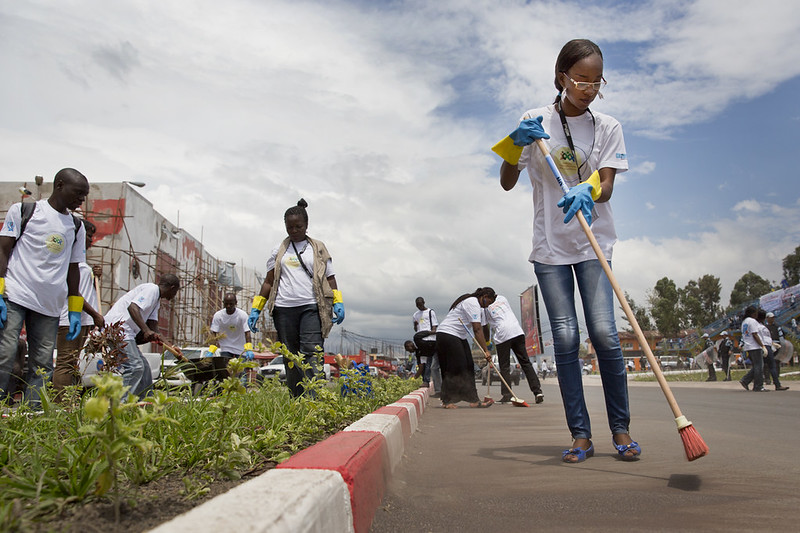
International volunteering is the process of completing unpaid work in a foreign, and often developing country in great need. It is an extremely diverse practice and includes teaching, environmental conservation, and supporting communities. This is an excellent practice to have a positive impact on the people and environment of the country.
One can view international volunteering and poverty reduction as two interrelated aspects. The practice has received great commemoration for its impact and success in addressing poverty. For example, the U.N. recognizes international volunteering with International Volunteer Day, celebrated every year on December 5. Despite this, it is not without its criticisms.
International Volunteering and Poverty Reduction
According to World Vision, about 9.2% of the world’s population (689 million people) live in extreme poverty and survive on less than $1.90 a day. Poverty has extensive repercussions including hunger and food insecurity, increased crime and child mortality rates, political instability and corruption. Many households that suffer from poverty are exposed to precarious situations. For example, they deal with exploitation due to their limited access to employment. Poor labor laws, insufficient political and trade-union representation and general economic issues are making this issue worse.
Oftentimes, in these low-income and developing countries, there is a lack of key public infrastructure including schools, hospitals, security services and social protection schemes for people to access. Even in areas where they do exist, there is no way for the poor and marginalized to engage with them.
Others have regarded international volunteers as an under-recognized yet essential source to support poverty reduction and service delivery in low-income countries. In a 2015 report, Voluntary Service Overseas (VSO) discovered how they play a significant role in “bridging the gap.” Not only do they add to the number of those working, but they also bring their own experiences to the workforce, helping to ensure that the services are relevant to those using them.
In Mozambique between 2004 and 2008, the number of those providing home-based care for AIDS patients increased from 17,170 to 99,122 because of international volunteers.
In Lesotho in 2015, international volunteers had the task to design and implement training programs for more than 400 youth leaders in an initiative that was volunteer-run. Using social media, the volunteers were able to teach the youth leaders how to establish their own platforms and engage with other young people, thus, creating a sustainable method of poverty alleviation.
In Burkina Faso, a partnership between the Ministry of Youth and Employment, the United Nations Development Programme (UNDP), United Nations Volunteers and France Volontaires had tremendous results. They established programs designed to target the employability of young people in the early 2010s. They mobilized more than 13,000 youth volunteers which gained many new competencies such as how to access information on gender issues and learn about labor market competitiveness. Overall, the program resulted in 66% of the youth gaining ‘decently paid jobs’ after.
Disadvantages of International Volunteering
Despite international volunteering having a fruitful impact on poverty reduction in low-income and developing countries, it has been receiving extensive criticism as well. Perhaps the most condemned aspect of going abroad to volunteer is the idea of ‘stealing’ local job prospects. Rather than prioritizing local needs, organizations place money, effort and energy into international volunteer programs where the volunteer’s experiences and activities are often more important to some. Furthermore, volunteers tend to be young and inexperienced, and thus, can hinder poverty reduction. Shannon O’Donnell, the author of the Volunteer Traveller’s Handbook, stated that ‘”there is no doubt that volunteer programmes shift jobs from locals to potentially less skilled labour.”
Another key disadvantage is the duration of volunteer projects. Although many organizations offer and promote long-term projects, most of them are short-term. This is mostly based on the volunteer’s ability and time available to commit to a project. Like the criticism above, these projects become ‘volunteer centric,’ creating an array of short-term placements which enable a constant flow of new volunteers. This means that the organizations put more effort into training them rather than actually supporting poverty reduction initiatives.
An interrelated criticism focuses on international volunteering projects which focus on poverty reduction for children. During their time, volunteers build deep connections and relationships with children. They might do this by supporting their education in schools through lessons or extracurricular activities, community events or even helping in orphanages, all of which prove how the existence of volunteers is beneficial on multiple levels. As a result, the departure of these volunteers at the end of their projects may lead to psychological and emotional consequences for the children. Stephanie Halksworth from ReSet stated how these consequences include a “sense of abandonment, invalidation and stagnation.”
Ethical Volunteering: The Future of Poverty Reduction
The disadvantages stated above of international volunteering question its ethics and how these may be skewed in favor of the volunteer. A new form of volunteering branded as ethical volunteering emerged in 2016 to address these concerns. Ethical volunteering ensures that volunteers are not only doing so for themselves but also providing aid in a responsible and sustainable way. With support from the U.N., such activities are relevant to poverty reduction and staying aligned with this cause.
Here are five ideals associated with ethical volunteering:
- Making a sustainable impact
- Contributing to community development
- Interacting with the environment (including animals) responsibly
- Personal development grounded in ethics
- Gaining a global perspective
International volunteering can be a positive force for supporting communities and poverty reduction. Regardless, its core elements have received critics, something which hints at the need for a change within the practice. Ethical volunteering overcomes these considerations and represents the future of international volunteering for poverty reduction.
– Harkiran Bharij
Photo: Flickr
