21 Day Lockdown: Affects on India’s Workforce
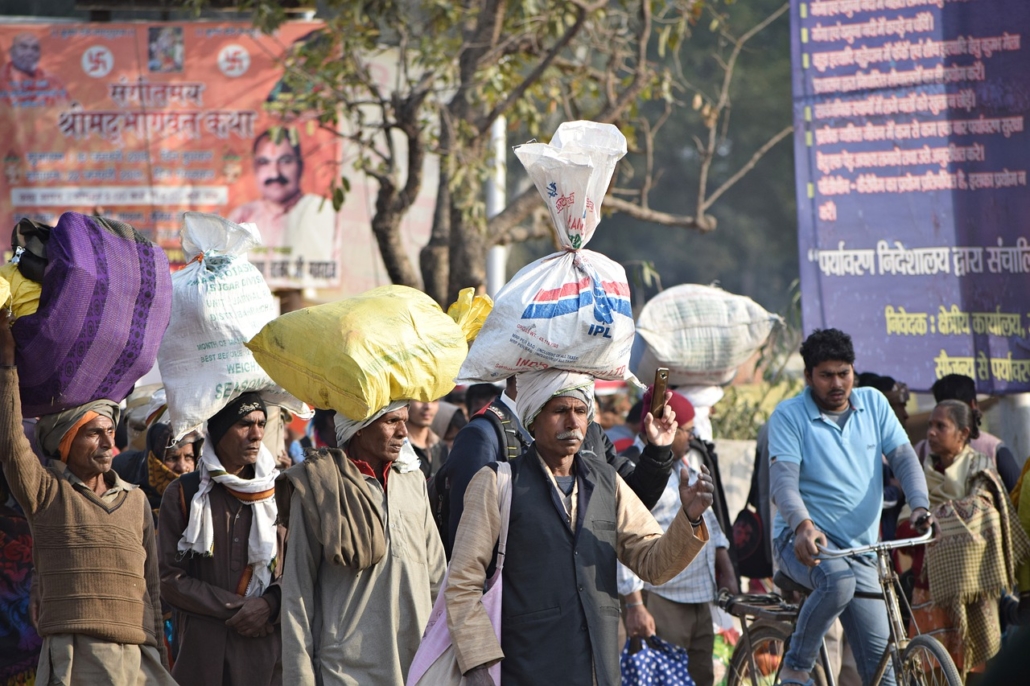 On March 24, 2020, India’s prime minister, Narendra Modi, announced a nationwide lockdown — giving India’s workforce of 1.3 billion people just four hours to prepare. The goal of this lockdown was to minimize the spread of COVID-19. However, there have been three major problems with this lockdown:
- Migrant workers returning home
- Equal access to resources
- Coordination
Migrant Workers
During the lockdown, all stores, factories and businesses shut down. For many migrant workers, this was problematic since it is their employers who provide them with food and shelter. To get home, many of these people used public transportation every week — which was also shut down. Under these circumstances, tens of thousands of migrant workers became stranded with no means of transportation to return home — except on foot. Consequently, workers and families walk hundreds of kilometers in the streets, close to one another, to arrive home. Moreover, these workers have limited access to health products and resources. Many of these people live on daily income and without these funds, they must rely on the government for financial support.
Access to Resources
This sheds light on the second problem, the distribution of resources. Due to the lockdown, India’s economy could drop by nearly 8%. This has prompted the government to invest in a $23 billion relief package to help sustain India’s poor and stimulate the economy.
But does this provide people with enough? Does this provide for everyone? Dr. Sanjay Kumar, an activist, professor and leader in the field of urban development, describes the situation as “very related with social security systems.” He describes a lack of equal connection between people and resources, explaining that “public distribution is not connected.” This is about the lack of equal distribution of goods, not the lack of goods in the first place. Since more than 80% of India’s workforce works within the informal sector and all inessential jobs have been shut down, these people are left jobless. They need resources but find them difficult to obtain because they can no longer access them through their jobs.
Coordination
Thirdly, there has been a lack of coordination by the government while implementing this lockdown. There was much confusion among policemen during the lockdown. This resulted in multiple cases of police brutality against those in India’s workforce simply trying to return home. Additionally, there is much confusion and a lack of education regarding the virus. India’s workforce is not adequately educated on social distancing — a practice that is very important for the containment of the virus. “There is a gap between planning, announcement and implementation… due to this gap, people are suffering,” Dr. Kumar said. Due to this disorganization, Prime Minister Modi has publicly apologized for the poor execution of this lockdown.
Two further important issues remain. That of healthcare funding, which is very low and the high amount of immunocompromised citizens with respiratory diseases. India currently has 2.09 million people confirmed to have the new coronavirus. Bearing in mind the limited ability to test because of poor healthcare funding, this is a great concern. The rise in cases has shown to be fairly rapid. Concerned, global citizens can assist India and its informal workforce through advocation. E.g., advocating for the creation of a social security net, donating to hospitals, donating to families and advocating for the government to invest in India’s healthcare system. Through this type of action, India’s workforce may see a much needed, positive turn around.
– Hope Arpa Chow
Photo: Google Images
