Locally Led Humanitarian Aid in Nigeria
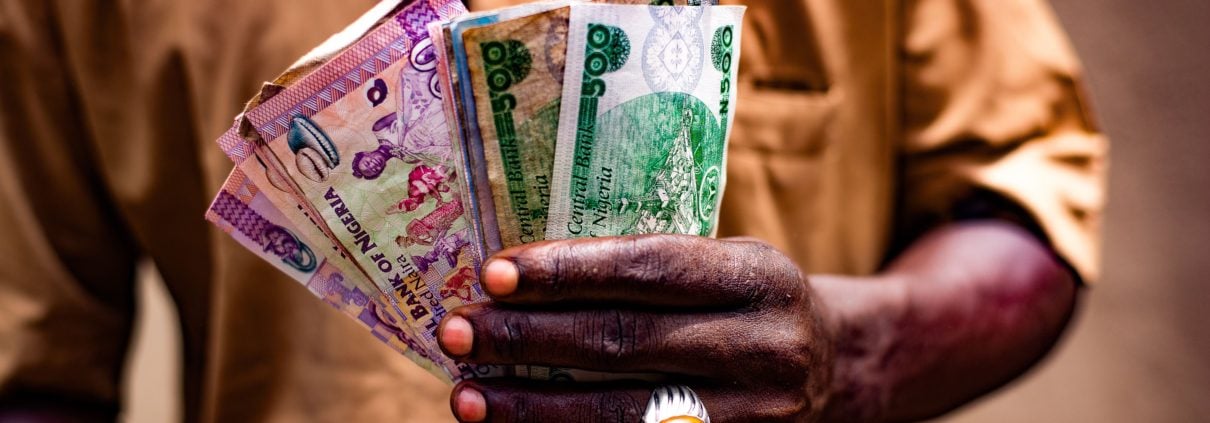 As international funding drops, locally led humanitarian aid in Nigeria is stepping up to address poverty and displacement in crisis-affected regions. In collaboration with the United Nations (U.N.), a sweeping transition has begun, aiming to shift control of the nation’s humanitarian operations to national actors. With local nongovernmental organizations (NGOs) receiving 70% of funding allocations in 2025, the transition suggests that locally led organizations are becoming central players in crisis relief efforts rather than peripheral ones.
The Humanitarian Reset
On July 14, 2026, Nigerian Minister of Humanitarian Affairs and Poverty Reduction, Bernard Doro, opened a humanitarian transition workshop led by the government in collaboration with the U.N. and other development partners. In his remarks, he described a “profound reset” underway across the global humanitarian sector, with Nigeria among the countries leading the transition.
The global Humanitarian Reset is not just a rhetorical or political slogan. Launched in 2025 in response to shrinking funding and growing humanitarian needs, the initiative aims to reshape how organizations coordinate and deliver aid. It seeks to strengthen national leadership rather than rely on a system in which international actors coordinate much of the relief response in developing countries, redefining the role of international counterparts as financial and technical partners.
This change of strategy has acquired urgency following the shift in United States (U.S.) foreign aid policy under the Trump administration. The European Parliament reported that the U.S. disengagement from international humanitarian assistance, including the termination of up to 83% of programs administered by the United States Agency for International Development (USAID), disrupted operations for international NGOs and U.N. agencies.
Funding Cuts
For Nigeria, this shift comes at a pivotal time. Conflict for 16 years in the northeastern regions of Borno, Adamawa and Yobe, combined with the country’s vulnerability to natural disasters, has left millions of people dependent on humanitarian assistance.
Vulnerable countries have relied heavily on the U.S. for humanitarian aid, particularly for food security and disaster relief, so the funding shift has posed a significant challenge for humanitarian work worldwide. The U.N. Resident and Humanitarian Coordinator in Nigeria, Mohamed Malick Fall, told Reuters that funding dropped by nearly half in 2025 compared with the previous year, slowing response efforts and life-saving assistance. Of the $516 million needed in 2026, only $255.5 million has been secured. Global aid cuts leave vulnerable families with fewer resources to cope with shocks such as conflict, disease or natural disaster, increasing the risk of long-term poverty.
Humanitarian Crisis
The scale of the humanitarian crisis compounds the funding gap. In the northeastern states affected by the conflict that erupted after the Boko Haram insurgency in 2009, an estimated 5.9 million people will require humanitarian assistance in 2026. According to the U.N., more than 90% of the population in northern rural areas already lives below the poverty line.
Ongoing conflict and insecurity have displaced more than 3.5 million people in Northern Nigeria, disrupting local agricultural activity and worsening food insecurity and malnutrition. Devastating floods have compounded the crisis, further pushing vulnerable families into severe poverty and stripping them of their livelihoods and land. World Bank data shows that 87% of internally displaced people in northeast Nigeria live in poverty, illustrating the link between displacement and poverty.
In 2026 alone, an estimated 35 million Nigerians are projected to suffer from acute food insecurity, while three million children risk suffering from acute malnutrition. As a direct consequence of a shrinking budget, only 600,000 of the 2.5 million people targeted for urgent aid between January and March 2026 actually received assistance — a mere 22.1%. Against this backdrop, locally led humanitarian aid in Nigeria is becoming increasingly important in helping affected communities recover.
Success of Localization
Given this funding gap and the ongoing crisis, the transition to localization has become a practical necessity, and the strategy is already showing results. According to the Nigeria Humanitarian Fund — established by the United Nations Office for the Coordination of Humanitarian Affairs in 2017 — national NGOs received a record 70% of direct allocations in 2025. By bypassing heavily bureaucratized international intermediaries, localization allows for faster aid delivery.
Local civil society organizations often bring cultural literacy and a deep-rooted understanding of the communities they serve, helping them navigate local dynamics that international actors may not fully grasp. National NGOs like the Lake Chad Peace and Development Initiative, which works with war-torn rural communities in Yobe State to access basic services, helped more than 40,000 emergency-affected children in the northeastern states gain access to education through a network of 350 local volunteers, demonstrating the reach of local initiatives.
Transitioning from an internationally led humanitarian response to a nationally led one will require navigating a complex bureaucratic landscape and maintaining rigorous financial accountability, but the reset represents a historic opportunity. The growth of locally led humanitarian aid in Nigeria can help offset the broader decline in international humanitarian funding. This strategy is not just about doing more with less; it is about building a resilient, self-sufficient and locally led system that gives Nigerians the tools to recover from crisis and fight poverty.
– Mateo Montes Asturias
Mateo is based in Montpellier, France and focuses on Politics for The Borgen Project.
Photo: Pexels
