Fighting HIV/AIDS in Nigeria: Healthy Economic Future for Women
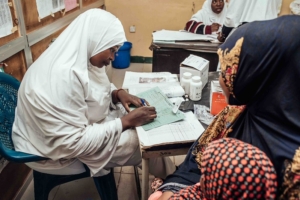 Nigeria has the second-largest HIV epidemic globally, with approximately 2 million people living with HIV (PLHIV) as of 2023. Studies show women and adolescent girls in sub-Saharan Africa are more than twice as likely to contract HIV as men and are more likely to face social stigma for taking HIV medication. Factors contributing to the disparity include poverty, limited access to education and gender-based violence, which increase vulnerability among women and girls.
Organizations, including the U.S. President’s Emergency Plan for AIDS Relief (PEPFAR), the Achieving Health Nigeria Initiative and the Institute of Human Virology, Nigeria, work with trusted local leaders to combat stigma and expand access to HIV testing and treatment. By promoting updated perspectives within communities, these efforts educate adolescents and broader populations about gender equality and sexual health. Advocates say the programs provide women with critical mental and physical support, thereby improving employment opportunities and long-term stability.
NGO’s Improving HIV/AIDS Cases and Female Economy
The disease has had a devastating effect on the nation as a whole, particularly on women. The United Nations (U.N.) in Nigeria reports that gender inequalities and the low socioeconomic status of women and girls continue to increase their vulnerability to HIV infection and other forms of abuse. President George W. Bush launched PEPFAR in 2003 to address this crisis.
The program has provided billions of dollars in funding for HIV treatment and prevention in more than 50 countries. PEPFAR is a bipartisan initiative involving multiple U.S. agencies that works to strengthen global health security and control the epidemic through direct support and partnerships. Since its inception, the U.S. government has invested more than $100 billion in the global HIV/AIDS response, saving more than 25 million lives.
NGO’s Involved
Achieving Health Nigeria Initiative (AHNi) is one of several NGOs involved in PEPFAR’s work. Founded in 2009, the organization implements public health interventions focused on education and youth development. It also works on disease prevention and epidemic control.
In addition, it runs humanitarian programs addressing health, protection and the prevention of sexual and gender-based violence. AHNi also led the National Aligned HIV/AIDS Initiative (NAHI) in collaboration with the Nigerian government and PEPFAR. The initiative aims to help Nigeria achieve epidemic control and meet the UNAIDS 95-95-95 targets by 2030, the organization reports.
Another NGO supported by PEPFAR is the Institute of Human Virology, Nigeria. Its ASPIRE project focuses on HIV testing services, laboratory diagnosis and patient tracking. It also includes prevention of mother-to-child transmission, antiretroviral treatment, including for pregnant women and support services for orphans and survivors of gender-based violence. The project also operates a well-being hub for PLHIV and AIDS and members of the surrounding community.
The Positive Economic Effect on Nigerian Women
Training from projects such as these has expanded employment opportunities for women. Stella Obianuju, a member of the Association of Women Living with HIV/AIDS in Nigeria, participated in a leadership training program and described a significant change in her life. She said she moved from a state of stigma and abuse to being “well informed and empowered,” with the knowledge to report violence and discrimination and seek justice.
By raising awareness and expanding access to prevention measures, such programs aim to reduce new HIV infections as well as HIV-related illness and death. Reduced morbidity, stigma and mortality can also create conditions for economic growth and poverty reduction, including expanded access to family planning services. The expansion of HIV treatment centers has also created jobs in logistics, health care and data management as systems shift from paper records to digital platforms.
This transformation has improved quality and accountability by allowing real-time assessment of clinical outcomes. In Nigeria alone, PEPFAR has invested more than $6 billion in the national HIV/AIDS response, according to the U.S. Embassy in Nigeria. Overall, PEPFAR funding supports the hiring of thousands of health workers, including doctors, nurses, pharmacists, laboratory technicians and counsellors, particularly in rural and underserved areas.
The program also provides grants to Nigerian NGOs, community-based organizations and faith-based groups, creating administrative, management and field-level jobs.
Final Remarks on HIV/AIDS in Nigeria
Recent U.S. funding freezes in 2025 have threatened the continuity of HIV services and increased the risk of treatment interruptions. This prompted the Nigerian government to seek domestic alternatives. In response, it approved about $3.6 billion in 2025 to fund 150,000 HIV treatment packs.
According to the Gates Foundation, “These advances have been driven by sharp science and collaboration between the private sector, governments, research institutes, advocates and PLHIV everywhere. But what makes long-acting PrEP so exciting isn’t just the science. It’s what these prevention methods could offer: Options.”
These options offer greater choice for women, families and adolescents, increasing autonomy and long-term health security.
– Gemma Nailer
Gemma is based in Manchester, UK and focuses on Good News and Global Health for The Borgen Project.
Photo: Flickr
