Higher Education in Cambodia
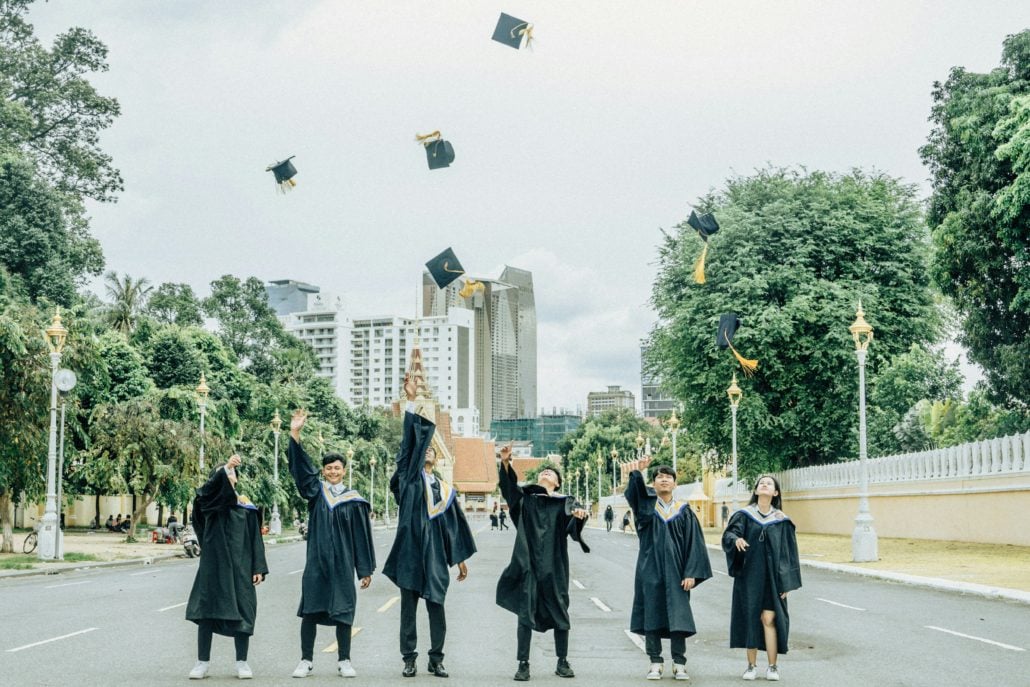 Since the introduction of the Policy on Higher Education 2030, higher education in Cambodia has made significant progress, especially in enrollment percentage. However, due to access issues for the rural poor and women, it is uncertain whether they will achieve their 2030 goals across the whole population. The Khmer government and local organizations have therefore mobilized to introduce scholarships and support programs to set young people, and their communities, up for success.
Cambodia’s Higher Education
Between 2004 and 2019, enrollment in higher education in Cambodia increased from 6% to 15% of the eligible population, reflecting stakeholders’ prioritization of tertiary education. However between 2019 and 2022, enrollment fell by 15% due to rising costs and disruptions to secondary school education during the pandemic.
Even before the pandemic, only 5% of students from the poorest quintile graduated from high school, compared to 52% of students from the wealthiest quintile. Limited access to laptops and poor internet infrastructure in rural areas, where the majority of the poor live, meant more children were out of school, thus widening the graduation gap between wealth quintiles.
While efforts have been in place to return high school graduation rates to pre-pandemic levels, declining literacy and math proficiency in primary and lower secondary schools means this remains a concern for the coming years.
Beyond this, higher education costs have risen by 62% in the last decade, making it increasingly hard for the poor to send their children to university. Indeed, the lowest wealth quintile only accounts for 4% of tertiary enrollment while the wealthiest makes up 46% of the student population. Unless addressed, this divide will continue to grow, limiting both national and regional development as the poor continue to miss out on opportunities.
National Scholarships
To address this, the Khmer Government intends to introduce national scholarships. These scholarships would focus on increasing access for the poor, women, those in disadvantaged areas, disabled students and those enrolling in STEM programs. By offering free tuition to these target groups, the government hopes to increase enrollment and thus lift more of its vulnerable population out of poverty.
Their focus on STEM programs links to hopes for technological innovation, as this will raise the value of goods and services Cambodia produces. Unlike other ASEAN countries where STEM-associated degrees make up the majority of tertiary education, in Cambodia, 41% of students are enrolled in business and management degrees. While this helps maintain current sectors, there is limited opportunity for innovation, thus hindering economic growth.
The Question of Quality
Beyond access, the quality of higher education in Cambodia also remains a concern. Since funding is allocated according to institute age rather than research or graduation percentage, there is little incentive for older universities to invest in developing their programs. Only 9% of full-time academics have PhDs, the staff’s limited research expertise limiting both their students’ learning and university progress. Furthermore, the focus on enrollment rather than graduation means less than 60% of students complete their studies.
To help address some of these barriers, Lotus Outreach established the Cambodian Tertiary Education and Leadership Youth Training (CATALYST). The program provides vocational training for high school graduates from Cambodia’s poorest rural areas through scholarships, mentoring and workshops. The aim is to ensure disadvantaged students are able to thrive and complete their studies, rather than be forced to drop out due to financial or academic struggles.
CATALYST has also sponsored 266 women through higher education. Its vocational training and workshops run alongside the scholarships and mean that all 20 of the 2025 graduates secured salaried employment following their graduation.
Charity Organizations
Lotus Outreach is among many charitable organizations seeking to help the disadvantaged to pursue higher education.
The Life and Hope Association’s Program Advancing Girls Education (P.A.G.E) tackles the gaps in secondary school education, giving full-time accommodation and teaching to 36 girls from rural areas near Siem Reap. The girls live in the city with the monks who run the organization and are given the support and space needed to complete their education, rather than being pushed into domestic care.
The Asia Foundation has also made huge strides, funding 146 scholarships for rural girls to achieve bachelor’s degrees from Western University. Paired with the Foundation’s Career Development plan where the young women acquired English language, computer and leadership skills, the graduates have gone on to pursue careers in both civil and private sector organizations.
Since only 11% of girls in Cambodia continue to upper secondary school, these programs have proved vital in opening doors for young women.
Looking Ahead
Higher education in Cambodia has developed significantly in the last two decades, however there remains work to be done. National scholarships and charitable organizations are helping to tackle access issues. If this is paired with budget reform and support programs, the country can ensure students thrive at both university and beyond.
– Elizabeth Holden
Elizabeth is based in Kent, UK and focuses on Politics for The Borgen Project.
Photo: Unsplash
