Five Ways to Help People in Djibouti
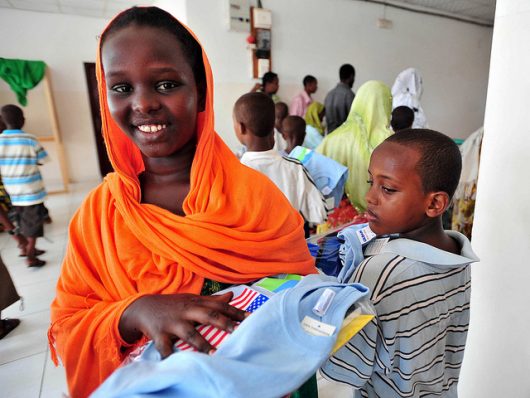
Djibouti, a small country in the region known as the Horn of Africa, has struggled in recent years with the effects of drought, famine and loss of income. As less than .04 percent of the country’s landmass is arable farmland, Djibouti relies heavily on other countries to provide food and other amenities, the prices of which can fluctuate wildly. As a result, Djibouti is in a near-constant food crisis, often finding it difficult to pay for the basic sustenance its citizens need. 23 percent of the population lives in extreme poverty and 39 percent of the population is unemployed. To address these issues, many organizations have already begun to work to improve conditions. Here are five ways to continue this good work and help people in Djibouti:
- Help provide water. In addition to making it difficult to grow crops, widespread drought in Djibouti has made it difficult for many people to access to water at all. In some rural communities, families only get 40 liters of water every two or three days, and that water must provide for an entire family. Often the nearest water source is 14 miles away. In 2011, $1 million was allocated through UNICEF to provide food, water and sanitation to Djibouti, and other organizations, such as Action Against Hunger, have also been instrumental in providing water. Even so, many families do not have a consistent source of water, and there is much work still to be done.
- Provide food. As Djibouti’s growing conditions leave much to be desired, one of the first and most important ways to provide help is through providing food. The World Food Programme, which has been present in Djibouti since 1978, has fought to make sure that people in Djibouti have access to proper nutrition and have even slowly helped to build a national school meals program.
- Contribute to health services. In addition to malnutrition and lack of clean water, the health of people in Djibouti suffers from the effects of HIV and AIDS. The World Food Programme, as one of its main goals for the country, hopes to help people in Djibouti with HIV/AIDS by providing them with specialized nutrition products to aid recovery. Action Against Hunger, meanwhile, supports six emergency care facilities throughout Djibouti, including one based in Djibouti City.
- Support the industries that drive growth. While Djibouti is unable to sustain an agricultural industry, it has found an opportunity in other fields, specifically, port services, construction and transportation. One of the most direct ways to support the growth of its GDP is to visit the country and experience its rich culture in person.
- Encourage foreign nations to give more. As the economy of Djibouti still relies heavily on foreign nations, those nations must give all that they can. To let your government know that foreign aid is a priority, contact your representatives by phone or by email.
Djibouti’s economy and people have suffered greatly from factors far out of their control, and it is in other countries’ best interests to help people in Djibouti however they can, whether in small ways, like donating a few dollars to a charitable organization, or through larger ways, like pushing foreign governments to help. Given time and hard work, we can see Djibouti’s luck begin to change.
– Audrey Palzkill
Photo: Flickr
