Lack of Healthcare in Madagascar Leads to Mass Exorcisms
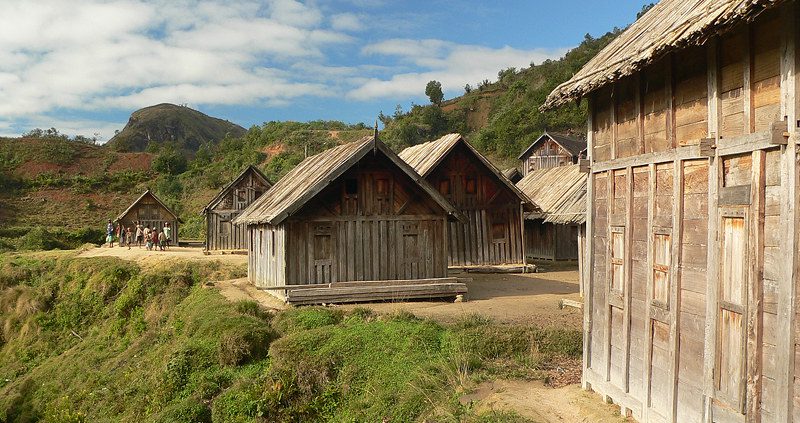 In Madagascar, exorcisms are not just a plot of horror movies or scary stories. Across the country, numerous healing and revival camps perform daily exorcisms as the primary way to treat mental illness. While this practice is rooted in traditional ancestral customs, the prevalence of these exorcism camps intersects directly with the lack of healthcare in Madagascar, becoming a dangerous consequence of the country’s extreme poverty.
Poverty in Madagascar
Madagascar—a beautiful island known for its biodiversity, unique wildlife and the 2005 hit movie where New York animals escape their caged zoo life—has one of the highest global rates of poverty. Around 80% of the country’s population lives on less than 9,255 Malagasy ariary per day, which roughly converts to $2.15. One of the most prominent ways Madagascar’s poverty manifests is its extreme lack of access to healthcare. Most citizens must pay out-of-pocket for basic medical services that are unaffordable for the average household. In addition to roughly half of the country’s population living far from medical facilities, 75% of those health centers lack basic electricity and running water.
Underfunding, poor infrastructure, and a lack of utilities at most healthcare facilities in Madagascar have led citizens to seek alternatives. The most popular substitute is placing mentally ill individuals in exorcism camps.
History of Exorcisms in Madagascar
Madagascar has a deep ancestral tradition of holistic healing and spiritual well-being. Amid a period of severe socio-economic hardship in the country, a man named Rainisoalambo heard a calling from Jesus Christ to convert to Protestantism and add a ministry of exorcism to the Malagasy Lutheran Church. This divine experience galvanized him to start the fifohazana revival movement in 1894: a crusade that successfully translated modern European Christianity into a deeply local, culturally resonant experience. As the indigenous Christian movement grew, the traditional holistic healing of sick community members morphed into a violent expulsion of demons from those believed to be possessed.
Exorcisms and Poverty
Possession has less to do with a spiritual state and more to do with the absence of healthcare in Madagascar.
While traveling in Madagascar from 2006 to 2016, Riccardo Bononi, a visual anthropologist from Italy, visited one of the country’s most popular toby—the revival camps where exorcisms are performed. After observing many of these purification ceremonies, Bononi came to a troubling conclusion: most of the condemned people were not possessed, but actually ill. As a guest speaker for Boston University’s Conflict & Crisis Reporting, Bononi told a story of meeting a woman who was sent to the toby for showing indifference and disdain toward her newborn. While Madagascan culture labeled her as possessed by demons for such behavior, Bononi saw that she was instead suffering from postpartum depression.
Because only 1% of Madagascar’s national health budget is allocated for mental healthcare, Bononi’s story of mental illness being relabeled as possession is quite common. Olivia Legrip-Randriambelo, an anthropologist studying the religious healing practices of Madagascar, found that the prevalence of toby compensates for the scarcity and high cost of healthcare in Madagascar. Because chronic poverty, malnutrition and misfortune are frequently associated with spiritual disruption, and families usually bring patients to revival camps when they can no longer care for them for economic reasons, the country’s poverty seems to lead all roads to exorcism.
Harmfulness of Exorcisms
Even though exorcisms are important to Madagascar’s indigenous culture, the country’s economic dependency on them for solutions to mental and physical illness makes them extremely dangerous. In addition to Madagascar’s lack of healthcare, which causes families to bring patients with neurological disorders and mental health conditions to religious camps instead of hospitals, the conditions of these are extremely damaging. Bononi recalled that not only were the intensive exorcisms violent and traumatizing for such vulnerable individuals, but camp workers also chained together the wrists and ankles of most possessed Madagascans in a way that resembled the shackles used on enslaved people in America. Bononi observed that camp workers kept patients in small metal huts that resembled cages and fed them only one meal a day.
Ongoing Efforts
Water Yourself, a Malagasy organization founded in 2021, is just one of the many projects focused on destigmatizing mental health and closing the gaps in healthcare accessibility. The organization provides mental health services and education, including diagnosis, prevention, therapy, workshops and counseling. Since its founding, it has partnered with 15 businesses and five nongovernmental organizations (NGOs), helped more than 1,000 individuals, and achieved a 10% increase in mental health awareness. By addressing the country’s severe treatment gaps and confronting the stigma where psychological distress is frequently misunderstood as possession, Water Yourself is creating an alternative to religious torture. Its integrated approach blends therapy, advocacy and community empowerment.
Water Yourself, like many other organizations fighting the misuse of religious ceremonies as solutions to medical care, understands that poverty is the main cause. The underfunding, poor infrastructure, and lack of utilities in the country’s healthcare facilities are the main reasons this important religious tradition is being misused by struggling Madagascans. The solution is not stripping Madagascans of an important indigenous custom, but rather providing citizens with the economic means to access affordable healthcare in Madagascar.
– Mia Puleo
Mia is based in Park City, UT, USA and focuses on Global Health for The Borgen Project.
Photo: Flickr
