Green Nitrogen Fixation Can Help Alleviate Global Poverty
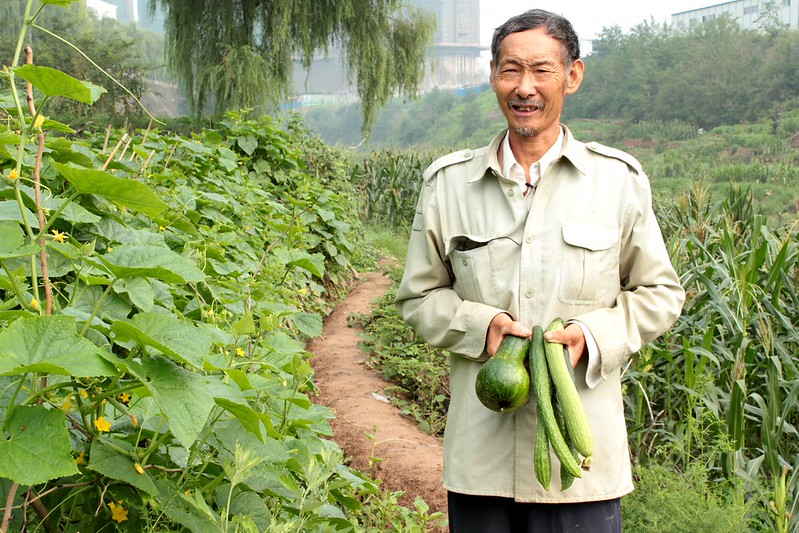 Today’s standard fertilizer production process contributes to a sizable 2% of global carbon dioxide emissions and requires high-priced materials and complex engineering. Additionally, farming communities in impoverished nations often have limited access to and cannot afford the rising costs of industrial fertilizers. Green nitrogen fixation is a sustainable process that can be achieved on-site, ending small-scale farmers’ dependence on imported fertilizers.
With numerous environmental and economic benefits, green nitrogen fixation can help alleviate global poverty and promote food security in developing nations.
Industrial Fertilizer Production
Industrial fertilizer is composed of compounds that provide plants with essential nutrients, which include the crucial life-sustaining element nitrogen and minerals such as phosphorus and potassium. Nitrogen for fertilizer production is commonly obtained from atmospheric air, which reacts with hydrogen in natural gas to create ammonia. The ammonia can be converted to ammonium nitrate or other nitrogen compounds and mixed with minerals to produce fertilizer.
Inert atmospheric nitrogen must be “fixed” (converted to reactive nitrogen compounds) to be absorbed by crops. The Haber-Bosch process is the most common technique for nitrogen fixation since the early 1900s. It catalyzes the reaction between hydrogen and nitrogen at extreme temperatures and pressures, requiring significant energy and producing substantial carbon dioxide.
Not only is the Haber-Bosch process energy-intensive, consuming nearly 2% of global energy demand, but the materials needed for the method can be costly and, at times, inaccessible.
Fertilizer Supply Chain
Given that phosphorus, potassium and natural gas resources are limited and available only in certain parts of the world, fertilizer availability can fluctuate. The ongoing conflict between Ukraine and Russia has significantly reduced fertilizer reserves. Many of Ukraine’s fuel processing facilities have been damaged in battle, reducing its ability to produce natural gas and driving up fuel prices.
Additionally, Russia and Belarus produce a substantial amount of fertilizer that they are presently unable to export due to shipping disruptions and sanctions resulting from the conflict. Rising costs and fertilizer scarcity have had a significant impact on farmers and consumers worldwide. Unlike those in developed nations who may be able to afford higher-priced fertilizers, food growers in developing regions do not have the financial resources to afford them.
Alternative solutions are needed to enable impoverished farmers to sustain food security for themselves and their communities. A promising alternative to industrial fertilizer, green nitrogen fixation can help alleviate global poverty by protecting the food supply of developing countries while delivering additional environmental and economic benefits.
On-Site Green Nitrogen Fixation Methods
Providing the capability of on-site, small-scale production, green nitrogen fixation methods are economical and fairly easy for remote farmers to implement. The methodologies include the following:
- Plasma-Based Nitrogen Fixation: Plasma nitrogen fixation uses ionized gas (plasma) to cause a reaction between atmospheric nitrogen and hydrogen from water to produce ammonia. Plasma is created by electrifying air using small-scale reactors powered by solar or wind energy. The process creates liquid nitrates that can be sprayed onto crops. Though plasma nitrogen fixation uses renewable energy and has small-scale production capabilities, it requires high energy consumption.
- Biological Nitrogen Fixation: Biological nitrogen fixation uses bacteria such as Azotobacter to convert atmospheric nitrogen into ammonia via the enzyme nitrogenase. The bacteria are added to the soil, enabling crops to take up nitrogen directly. Biological nitrogen fixation eliminates the need for a fuel source. It provides a no-processing, direct on-site application. However, it can emit nitrous oxide (a greenhouse gas) when excess nitrogen is added to the soil.
- Photocatalytic Nitrogen Fixation: This method utilizes solar energy to convert atmospheric nitrogen into ammonia, using water as a hydrogen source. A photocatalyst is exposed to solar energy to generate the reaction between hydrogen and nitrogen to form ammonia. While the method uses renewable energy and has on-site production capability, current catalysts are inefficient and the reaction loses much of its energy as heat.
Scientists are working to further improve these techniques to enhance their effectiveness. With so many potential benefits for remote farmers, there is promise that green nitrogen fixation can help alleviate global poverty by enabling sustainable small-scale farming and helping end food insecurity worldwide.
The Agrogeological Approach
In addition to nitrogen, plants also need key minerals for optimal growth. To bypass reliance on imports, these minerals can be obtained locally. Although the fertilizer industry mainly targets the macro- (main) plant nutrients, such as nitrogen, phosphorus and potassium, the “agrogeological” approach also employs micro- (secondary) nutrients to sustain soil fertility. Generally available worldwide, sources of phosphorus and potassium include animal manure, fallen leaves and sewage sludge.
Secondary plant growth nutrients, such as calcium, magnesium, iron, zinc and copper, can be obtained from wood ash, marl (a sedimentary clay rock) and phosphate rock. Often requiring minimal processing, these resources can be found in industrial waste or in nature and, along with nitrogen from green nitrogen fixation, can sustainably provide crops with the nutrients needed to thrive.
Outlook for Green Nitrogen Fixation
The world population could reach 10 billion by 2050, further increasing the already scarce supply of fertilizer and adding to food production demands on impoverished nations. Green nitrogen fixation is a promising soil fertility solution, particularly when coupled with agrogeological techniques. It can help alleviate global poverty by strengthening the resilience and independence of local farmers while contributing to environmental protection.
– Debbie Barto
Debbie is based in Monroe, WA, USA and focuses on Technology and Solutions for The Borgen Project.
Photo: Flickr
