Top Facts About Gender Violence in Morocco
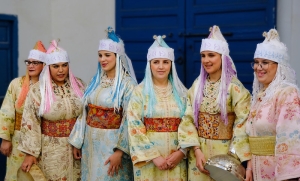 Morocco is a sovereign nation in the Maghreb region of North Africa. Located on the northwest coast of Africa, it borders the Atlantic and Mediterranean Seas, bridging Africa and Europe. It is a constitutional monarchy with a rich, diverse culture, known for its mix of Arab, Berber and European influences, with its capital being Rabat.
Contributing Factors
- More than half of women report experiencing violence. As of 2019, about 57% of women in Morocco have been or are currently victims of domestic violence. This translates to six million individuals being abused at the hands of their partners.
- Society is not concerned. According to the U.S. Department of State, Moroccan police treat domestic violence as a social issue rather than a criminal matter.
- Violence takes many forms, not only physical. These include sexual assault, as well as psychological and emotional abuse. Psychological abuse is the most common, affecting more than 95.8% of non-single women in 2018.
- Domestic environments are a major site of abuse in Morocco. A large share of violence occurs within family or intimate partner relationships. Among teenage girls, more than half report experiencing some form of violence. This highlights domestic abuse as a major driver of gender-based violence in Morocco.
- Underreporting is common. Only about 3% of survivors formally report violence, often due to stigma or fear. This is often linked to family pressure, where abuse is treated as a private matter that should not be disclosed publicly. Survivors are discouraged from reporting, especially through legal channels, due to concerns about the consequences. These include children growing up without a father and the loss of perceived protection or financial support from husbands.
- Cultural norms contribute to silence. Economic dependency and unequal gender power dynamics are frequently cited as barriers to leaving abusive relationships.
- Tens of thousands of cases are recorded annually. Between July 2024 and June 2025, 28,980 cases of violence against women were reported in Morocco.
Call to Action
To address gender-based violence, Morocco has implemented policies regarding child and forced marriage laws following the Amina Filali case. Filali was a 16-year-old who killed herself after being forced to marry her rapist. The Moroccan government reformed its penal code to raise the legal age of marriage, criminalize forced marriages and increase protections for victims of sexual violence.
Beyond legislation, Morocco has also established shelters for survivors, hotlines for reporting abuse and awareness campaigns to educate the public about gender-based violence. Furthermore, nongovernmental organizations (NGOs) such as the Democratic Association of Moroccan Women provide legal aid, psychological support and vocational training to help survivors gain independence and escape abusive environments.
Conclusion
Violence against women in Morocco has prevailed for centuries. It dates back to historical social structures shaped by patriarchal family systems, tribal and kinship traditions and legal norms that gave men greater authority within households. For much of Morocco’s history, women’s economic dependence, limited access to education and social expectations around marriage and obedience reinforced unequal power dynamics.
Domestic matters were often treated as private family issues rather than legal concerns. However, recently, efforts have been made to change this, including the passing of Law 103-13 (Morocco) in 2018. The law criminalizes certain forms of violence against women and aims to improve protection and prevention efforts.
However, despite these legal reforms, historical social structures continue to influence attitudes toward domestic violence today.
– Veda Mungara
Veda is based in Cupertino, CA, USA and focuses on Global Health for The Borgen Project.
Photo: Flickr
