Expanding Internet Access in the DRC
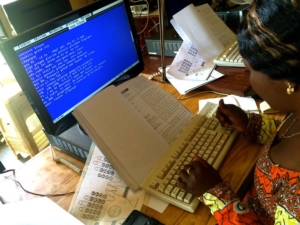 In today’s digital age, the internet is a norm in many people’s lives, as nearly 4.66 billion active internet users exist worldwide. People use the internet for communication, research, gaming and e-commerce. Yet, most citizens of the Democratic Republic of the Congo (DRC) have no access whatsoever to the internet. Only about 20 million people out of 100 million people living in the DRC have access to the internet. However, changes are occurring in the DRC. Nearly 9 million people in the last few years have gained access to the internet due to technology companies investing in the development of the internet in the DRC. Likewise, Liquid Intelligent Technologies (LIT) and Facebook are partnering to build a massive fiber network in the DRC. Here is some information about how they are expanding internet access in the DRC.
How LIT is Expanding Internet Access in the DRC
Liquid Intelligent Technologies plans on building a 2,000-kilometer-long fiber-optic cable network from the DRC to the Atlantic Ocean. From there, it will connect with the 2Africa submarine cable system, which Facebook has a major role in developing.
On completion, the undersea cable network will better connect the DRC to Europe and the Middle East. It will help complete LIT’s two-year-long project to build a vast digital pathway from the Atlantic Ocean connecting to East Africa and the Indian Ocean, where millions of people would gain access to the internet. In addition, it will bridge the democratic republic with its neighboring countries of Tanzania, Rwanda, Uganda and Zambia.
Facebook has invested in this operation and helped plan the fiber network, but LIT will be the company to build and own the fibre network. It also plans to provide internet service providers and services to network operators to take advantage of the fibre network. Thus, the company estimates that nearly 30 million people in the DRC will gain access to the internet.
However, the effort that is necessary will not be easy. “This is one of the most difficult fibre builds ever undertaken, crossing more than 2,000 km of some of the most challenging terrain in the world,” said Nic Rudnick, CEO of Liquid Intelligent Technologies. To help build the network, LIT will hire nearly 5,000 locals from communities in the Congo, employing many people and families in the DRC.
Why Internet Access in the Congo is Nonexistent
Government policies on censorship and high Wi-Fi costs ensure that the Congolese have no access to the internet. The government passed a censorship policy in 2002, called law No. 013/2002, which has the power to control telecommunications in the DRC. It grants the government the power to control telecommunications to defend the public or in the interest of national security. If telecommunication companies don’t comply with this law, they risk getting their operating licenses terminated. This forces many ISPs to shut off the internet.
Due to manipulation of this law, the Democratic Republic of Congo has cut off the internet, text-messaging services and social media services multiple times such as Facebook, YouTube and WhatsApp to stifle civil and peaceful protests occurring in the country. In addition, the country is suffering economically as it is losing $2 million every day due to the termination of internet services.
Buying one gigabyte of mobile broadband data in the DRC costs a staggering 26% of monthly income. This makes the DRC the most expensive country to get access to the internet in the world because there are no rules regulating caps on internet prices. Additionally, customers bear the burden of high taxes on telecommunication companies. These reasons allow telecommunication companies to raise prices to an extreme.
Companies like Liquid Intelligent Technologies are expanding internet access in the DRC. However, the government will need to make changes in censorship policies on the internet, to ensure every Congolese can experience the joys of the internet.
– Matthew Port Louis
Photo: Flickr
