Poverty and Education in Liberia
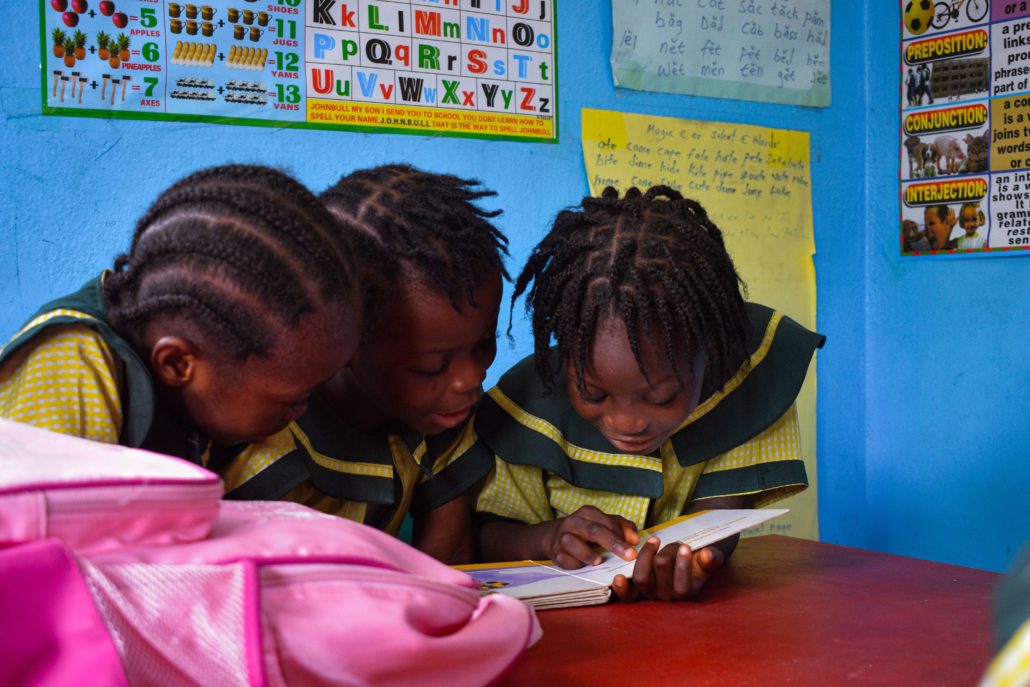
Liberia faces persistent poverty and significant barriers to education. The country’s population of nearly six million has experienced the long-term effects of two civil wars and the 2014 Ebola outbreak. Although Liberia is rich in natural resources, poverty remains widespread. The World Bank’s most recent assessment found that 50.9% of Liberians lived below the national poverty line, with rural communities accounting for nearly three-quarters of the country’s poor. Poverty has also contributed to significant barriers to accessing and completing education in Liberia, particularly for children from low-income and rural households.
Education Challenges
Liberia’s education system is the 3-9-3-4 model: three years of early childhood education (ECE), six years of lower basic and three years of upper basic education, then three years of either secondary or technical and vocational education and training, concluding with four years of tertiary education.
In 2024, UNESCO reported that Liberia was facing a learning crisis. Across sub-Saharan Africa, an estimated 89% of children are unable to read and understand an age-appropriate text by age 10, a measure known as learning poverty. Liberian students have reached only minimum achievement (2020), with low primary, secondary and tertiary completion rates.
Two education challenges that Liberia faces are educating the poor and educating its girls and women. The UNICEF Liberia Country Office reported for 2023-2024 that the key obstacles were access and quality. There was limited availability and quality of learning spaces, low enrollment and high out-of-school rate and gender disparities, with girls facing barriers to education. This was accompanied by a lack of learning outcome assessments, shortages of qualified and sufficiently trained teachers and inequitable distribution of teachers. UNICEF’s planned response was threefold, focusing on (1) sector analysis and policy development, (2) sector policy implementation and (3) monitoring and evaluation.
UNICEF’s partnership with the Government of Liberia included a Joint End-Year Review and Planning Meeting in March 2026 to assess progress and set priorities going forward, with increased access to education as a flagship priority.
A Poor Country with Underfunded Schools
For fiscal year 2026, the allocation for education increased by 14%, but was still only 11% of the national budget and 2.73% of GDP, considerably below the 4% average for the Economic Community of West African States and the global benchmark. In addition, the 2026 national education budget disproportionately favors tertiary education over ECE to grade 12 education, which in turn disproportionately favors wealthier households over lower-income households.
“Free Schools” and “Overage” Students
Liberia’s Education Reform Act of 2011 mandated free and compulsory education for grades 1 through 9, although the Ministry of Education allows registration fees, set by the ministry. However, Human Rights Watch found that the registration fees of many schools are substantially higher, especially at the early childhood level, creating a significant barrier to entry, in particular for more than half of parents in the lowest income quintile.
When families wait until they have enough money to pay the registration fees, their children may enter school late. For example, 43% of children at the ECE level are overage by at least three years, and more than 60% of secondary school students are four or more years older than they should be for their grade. One mother’s children entered first grade at ages 12 and 13. “They started late,” she said, “because I had no money.” Many children are forced to drop out of school and/or to work to contribute to the cost of their education.
This situation is compounded by the shortage of public schools, with private, faith-based and community schools comprising more than 60% of the country’s schools. Public school classrooms can be as large as 80-100 students, with many relying on underpaid or volunteer teachers and inadequate materials.
The Future: Back to the Classroom
In August 2024, Liberia, with UNICEF support, launched a campaign to support its commitment to bring back children who had been left behind. Then, in June 2025, a county-level launch took place in Grand Bassa County.
In July 2026, UNICEF reasserted its commitment to the “challenges of equity, protection, health, nutrition and opportunity” that are part of the education challenges, and to the expansion of the Back to My Classroom campaign and to the accomplishments already achieved by the shared partnership of government, communities and development partners. “Every child sitting outside a classroom today represents both a challenge and an opportunity.”
A Promising Future
In June 2025, the World Bank Board approved almost $89 million in financing for the Excellence in Learning Liberia (EXCEL) Project to strengthen Liberia’s education sector, including foundational learning and public primary school access. Funding comprises a $428.7 million Global Partnership for Education grant and $60 million credit from the International Development Association. It is expected that approximately 362,000 students, teachers and staff in 2,337 public primary schools will directly benefit from the project. Support includes teaching and learning materials, and teacher and principal training, as well as data management and overall school management.
– Staff Reports
Photo: Pexels
