Education in India: Access, Challenges and the Path Forward
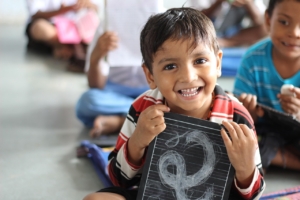 It’s no secret that education opens up pathways and opportunities for those able to attend school. Countless organizations and activists fight for education access worldwide every day. Unfortunately, the reality is that thousands of children worldwide are unable to attend school and receive the education they deserve.
In India, an estimated 1.17 million children aren’t attending school as of 2025. The lack of educational access stems from various reasons, including the uncertainty of the job market after graduating. Unemployment rates for Indian college graduates are staggeringly high. One graduate’s perspective attempts to shed light on this issue and the education system in India as a whole.
Who Has Access to Education in India?
Despite the challenging job market, education in India remains a powerful tool for combating poverty and inequality. Education and poverty are closely linked. Education helps reduce poverty by creating job opportunities and driving economic growth, while poverty limits access to education by restricting resources and opportunities for low-income individuals.
A family isn’t likely to prioritize the education of their children if they are forced to choose between putting food on the table and purchasing school supplies. These children face fewer opportunities in life than their peers and much higher chances of lifelong poverty. Children belonging to marginalized groups are more likely to face educational adversity.
Socioeconomic status, gender and residing in rural areas have been proven to negatively affect education levels. Due to cultural expectations of household chores and marriage, nearly 30% of girls in India do not finish their elementary education. Teacher shortages and a lack of an updated and usable facility to hold classes affect those in less-populated areas.
Yet, this problem is not limited to adolescents, as more than 19% of adults are illiterate.
Education and the Workforce
Though education in India is of high quality for those who can access it, a degree does not guarantee employment. In fact, 13.4% of college graduates struggle to find jobs that offer fair wages. More than half of unemployed young people are educated, some holding multiple degrees.
An estimated seven million jobs will need to be created over the next decade to meet the demands of India’s growing workforce. The bleak outlook of post-graduate employment, often earning as little as $2.40 per day, discourages many students from continuing their education.
Making Education Accessible
Many organizations are making efforts to make education more accessible to all. The issue of children facing barriers to education isn’t solved in its entirety. However, these acts are a step in the right direction and offer thousands of children opportunities they wouldn’t have otherwise had.
- The Right to Education Act makes education for children 6-14 years old free and compulsory. This act prevents children from being expelled or dropping out of school before completing elementary school, as well as providing teachers with the right training and qualifications in every school. This act guarantees children years of free education, which will help a large portion of the children in low-income families. If there are no associated costs with obtaining a basic education, parents are more likely to send their children.
- Furthermore, India launched the National Education Policy (NEP) in 2020, in an effort to revamp the education system and offer quality education on all levels. The main focus is on a new system of a 5+3+3+4 pattern of education. In other terms, dividing education into four stages, with an emphasis on development, language learning, vocational skills and holistic development.
- Pratham is one of the largest nongovernmental organizations working to make education accessible to all children in India. Founded in 1995, the organization began by providing education to children living in the slums of Mumbai. Pratham developed the Teaching at the Right Level (TaRL) approach, which places children in learning groups based on what they know rather than their age. This method has significantly improved student learning outcomes, as well as classroom organization and management. Today, Pratham is widely recognized for its impact on education access and has received numerous awards for its work.
Final Remarks
Working to solve India’s job crisis will work in tandem with increasing education rates; if pursuing education and degrees results in higher-paying jobs, then more individuals and families will prioritize education. With the growing use of AI, many entry-level positions once available to new graduates are no longer accessible.
To address this issue, school curricula are beginning to shift toward incorporating skills such as digital science, robotics, data science and applied AI to better prepare students for the workforce. Education is an incredible tool that opens doors for many people. It can continue to change lives and create a lasting impact, regardless of an individual’s country of residence.
– Sydney Uhl
Sydney is based in Vancouver, WA, USA and focuses on Good News and Technology for The Borgen Project.
Photo: Pixabay
