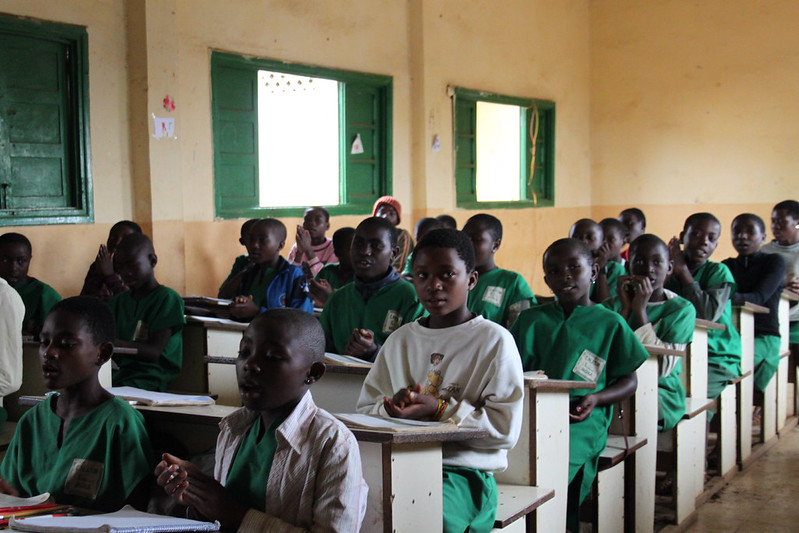
Equatorial Guinea faces a range of challenges that impact its overall development, with shortcomings in the education system standing out as one of the most pressing concerns.
Challenges in Equatorial Guinea
Since its independence from France in 1958, Equatorial Guinea has seen high levels of political unrest, severe human rights abuses and dangerously high poverty rates. As of 2022, half of Equatorial Guineans lived below the nation’s poverty line, and 58% of the population lived on less than $5.50 per day. Furthermore, Equatorial Guinea has the ninth-highest child marriage rate in the world, with 47% of girls marrying before the age of 18.
These challenges have also contributed to Guinea’s troubling educational outcomes. Although the nation’s adult literacy rate (as measured in 2010, the most recent year in which literacy rate was recorded) was 94% and the youth literacy rate was even higher (98%), in 2020, the primary school completion rate was only 66%.
The Education System
In Equatorial Guinea, escuela primaria (primary school) is both free and mandatory. Students should enter primary school at the age of 6 and graduate at the age of 11. However, Equatorial Guinea’s low primary school completion rate shows that over a third of students fail to complete primary school, despite it being compulsory.
After primary school, students may attend lower secondary school for four years and upper secondary school for three years. Students can attend either an academic upper secondary school or a vocational one. Afterwards, some students may attend La Universidad Nacional de Guinea Ecuatorial, the university founded in Equatorial Guinea in 1995.
However, the completion rate for lower secondary school in Equatorial Guinea as of 2015 was only 19% for boys and 18.7% for girls. The number of students who do not complete primary school is already high, and the vast majority of children do not complete any level of schooling beyond primary (per the 2015 data). Furthermore, girls, particularly those living in rural areas, attend secondary school at much lower rates than boys. This gender disparity in education likely has to do with unfair cultural norms as well as Equatorial Guinea’s high child marriage rate. Equatorial Guinea is one of the countries with the greatest gender inequality in the world, and this inequality manifests itself in education.
Potential Solutions
Overall, Equatorial Guinea’s education system lacks sufficient infrastructure and funding and does not have enough qualified teachers. However, Equatorial Guinea’s government is collaborating with the Global Partnership for Education and others to ensure that teachers are more qualified to educate children. Together, they are working to better train, recruit, and assign teachers to improve the quality of education that children receive. 31% of teachers do not possess the required qualifications, and this initiative is seeking to decrease this proportion of unqualified teachers. The government and the Global Partnership are also trying to create a better learning environment that will hopefully address violence against girls and reduce the gender disparity in education.
The United Nations Educational, Scientific and Cultural Organization is also partnering with Equatorial Guinea, aiming to help young women excel in scientific fields. The initiative is the first of its kind, a program dedicated to allowing young African women to pursue the life sciences. UNESCO established the Young African Women Scientists Programme in 2024, with Equatorial Guinea funding $25,000 grants for two African women every year to conduct research in the life sciences and advance their careers. This program will help women not just in Equatorial Guinea but across the entire continent of Africa to pursue careers in the life sciences, a field in which they are currently underrepresented.
However, Equatorial Guinea still has a long way to go to improve education and achieve gender equality, and these two goals should be priorities for the government of Equatorial Guinea.
– Katrina Beedy, Jackson Meyer
Photo: Flickr
