5 Countries Providing Earthquake Relief in South America
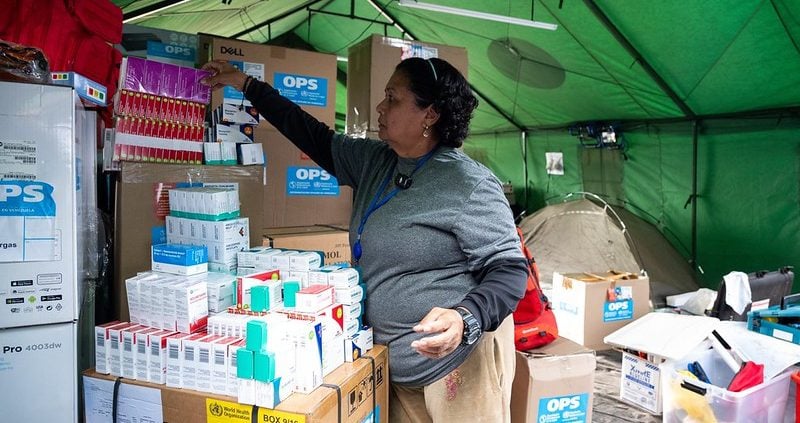 South America has a high risk of earthquakes with an average of 32,000 per year, according to Volcano Discovery. This year, three major earthquakes were reported, hitting Venezuela and Colombia with magnitudes above 7. Venezuela received the first two, while Colombia received the third. Before the earthquake, Venezuela already faced one of the highest poverty rates in Latin America, with independent estimates placing it above 80% of the population. The earthquakes are expected to push that figure even higher. In Colombia, 28% of marginalized communities were living in poverty. After the earthquake, the percentage rose to 30%. People suffered from food insecurity and basic infrastructure issues, leaving tens of thousands displaced within the country.
To provide earthquake relief in South America, countries outside of the continent have supported survivors living in poverty after destruction. Here are five countries that have given continuous support for earthquake victims.
United States
The United States (U.S.) mobilized efforts in response to the earthquake in Colombia on Aug. 10, 2026. The Department of State donated $15.5 million in funds for emergency shelter, food, protection, and structural assessment. They also deployed a Disaster Assistance Response Team (DART) to look for individuals impacted by the earthquake. DART comprises workers from various partner organizations like Catholic Relief Services and the United Nations (UN) World Food Program.
On July 8, the Department of State announced the establishment of a humanitarian air bridge for the June 24 Venezuelan earthquakes. The bridge would initiate Amazon and Airlink to fly weekly relief supplies from Miami, Florida, to Maiquetía, Venezuela, at no cost.
The Venezuelan earthquakes left more than 17,000 people homeless, according to NBC. Venezuela was already home to nearly 8 million people in need of humanitarian assistance before the quakes struck. The humanitarian air bridge provided crucial relief as reconstruction began.
Canada
On June 25, the day after the Venezuelan earthquakes hit, Canada donated an initial $5 million in humanitarian aid, later expanding to $12 million total, according to the Government of Canada. Anita Anand, the Minister of Foreign Affairs, wrote on X that the suffering in Venezuela is “heartbreaking,” adding that many people were “facing unbearable days ahead without shelter, food or certainty.”
For the earthquake in Colombia, more than 30,300 families were affected with 9,550 homes destroyed, according to CBC. To combat the damage, Colombian residents in Toronto are raising funds for survivors in poverty. Two GoFundMe pages were set up to collect money for earthquake recovery and rebuilding.
The first GoFundMe page, set up by Natalia Campo, owner of Delicious Empanadas in Toronto, raised $3,000. The money will go to lost loved ones, homes, and aid for search and rescue teams. The second, set up by Toronto-based Colombian journalist Camilla Gonzales, raised $22,000. The money will go to Corporación Presentes, a Colombian organization that works in disaster recovery.
While there is no specific number of survivors in poverty who are benefiting from the aid, Campo and Gonzales hope that the funds lead to a successful recovery of those impacted by the earthquake.
France
After the earthquake in Venezuela, France deployed a rescue team of 85 French rescue workers to search for victims, according to France in the United Kingdom. Along with search and rescue, the Ministry for Europe and Foreign Affairs sent 38 tonnes of humanitarian aid from Guadeloupe, plus an additional six tonnes from Martinique, France. In Colombia, France worked with the European Union (EU) to launch Copernicus, its satellite service to help with rescue operations. Copernicus provides rapid mapping and assesses earthquake damage. Based on the analysis, Copernicus estimated that 622 buildings were impacted by the earthquake.
Japan
The Government of Japan issued an emergency grant of $3.5 million in response to the earthquake in Venezuela, according to Relief Web. They also provided goods, such as tarpaulin, portable jerry cans and water purifiers through the Japan International Cooperation Agency. Based on the ongoing needs assessment, Japan partnered with nongovernmental organizations (NGOs) to provide support to disaster victims living in poverty. In response to the Colombian earthquake, Foreign Minister Motegi Toshimitsu expressed condolences and readiness to assist following the Colombian earthquake. “In the wake of the earthquake that struck the Republic of Colombia on Aug. 10, I express my deepest condolences to those who lost their lives and extend my heartfelt sympathies to all those affected,” Toshimitsu said. “Japan stands in strong solidarity with the people of Colombia.”
Outside of the government, the Nippon Foundation is requesting donations for disaster relief for Colombia. The money will fund efforts for survivors in poverty from the aftermath.
Israel
In response to the earthquake in Colombia, Israel sent a rescue team of 80 people to search for victims, according to the Jerusalem Post. The main goal of the expedition was to provide immediate life-saving assistance to survivors through mapping destruction sites. The rescue team comprised regular duty soldiers and reservists. The delegation also spent three weeks providing earthquake relief to Venezuela before returning home, according to the Times of Israel. During the three weeks, Israel was tasked with assessing and classifying damaged buildings and assisting with reconstruction efforts. After the return, Israel continued to provide aid to survivors remotely.
By proceeding efforts remotely, Israel provides the framework for rebuilding Venezuela after the destruction from the earthquake. The two countries also restored consular ties with each other after severing diplomatic relations in 2009. The impact shows another face of Israel and the Jewish community, according to eJewish Philanthropy.
Moving Forward
Secretary of State Marco Rubio said in a statement that the U.S. is closely monitoring the situation and stands ready to support the people of Colombia. Other countries continue to provide earthquake relief in South America as more victims find themselves in poverty. Through international support, survivors receive basic needs from across the globe.
With the five countries providing international support for earthquake relief in South America, past hostilities are forgotten as they come together to provide humanitarian aid to poverty-stricken communities.
– Casey Chan-Smutko
Casey is based in Natick, MA, USA and focuses on Good News for The Borgen Project.
Photo: Flickr
