Does Globalization Help or Hurt Women?
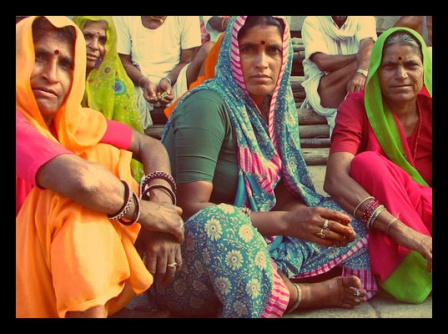
Some say globalization has excluded or even impoverished women due to disproportionate job loss from an influx of foreign goods into domestic markets. Others say that living standards have improved for women due to the creation of new jobs and economic growth in second and third-world nations. The discussion is nuanced, and there are both improvements and impediments to women’s equality:
Pro-trade Research
- The World Bank’s 2012 World Development Report (WDR 2012) finds an increase in international trade has tended to increase women’s employment.
- The value of trade growth goes beyond just job creation. Employment allows greater autonomy for women working outside the home, empowering them with greater decision-making authority – a key shift in development for the woman, and for the next generation.
- The arrival of garment jobs in Bangladesh increased the probability of a five-year-old girl attending school. Either due to parental awareness to prepare their daughter for skilled work later, or simply because they had additional income.
- Greater trade has increased job opportunities for women in many countries. This is especially true for manufacturing and service exports, characterized by labor-intensive production.
- In Korea, the number of women employed in manufacturing grew from 6% in 1970 to around 30% by the early 1990s.
- In Delhi and Mumbai, call centers now employ more than 1 million people, mostly women (WDR 2012).
- In Bangladesh, female garment workers have higher self-esteem than other female workers in non-export industries; some even take employment against their family’s wishes.
- In one study, female garment workers in Bangladesh marry and give birth at a later age.
Trade-inequality Research
- There is still a wide disparity in the women-to-men wage gap for the same job.
- In Korea, even with high labor demands, the women-men wage gap narrowed only marginally between 1975 and 1990 (Seguino, 1997).
- Women are subject to more job insecurity. In Turkey, gross job reallocation is larger for women than men, showing women are subject to more volatile employment status. In Chile the gross job reallocation rates are more than twice as high for women than men.
- A systemic issue is that greater employment segregation emerges as new industries and companies expand and increase in value. In East Asia, as countries have moved to more skill-intensive manufacturing, there has been a decline in the female manufacturing workforce. Between 1980 and 2008, women’s share of manufacturing employment has declined from 50% to 37% in Chinese Taipei, and from 39% to 32% in the Republic of Korea (Berik, 2008; ILO, 2011).
- In agriculture, women’s weaker land rights and limited access to productive inputs can limit their opportunities to benefit from greater agricultural trade.
- While gender gaps in schooling have largely closed, association in different fields of study, and thus different career opportunities, continues to be an issue. In higher education, women are more likely to choose fields related to education and health, but not science, engineering, or construction (WDR 2012).
- In severely disadvantaged populations, such as remote rural areas, girls still tend to drop out of school more often than boys.
- Companies under-invest in training female employees, reflecting the view that men are less likely to leave paid work to fulfill domestic responsibilities (Seguino and Growth 2006).
- In Afghanistan, as one example, women’s mobility is severely limited because they are not allowed to interact with men outside the family, or work outside the home without permission from a male family member, or to own their own land.
Does globalization help or hurt women? It seems the expansion of global markets and trade is quantitatively lifting more women out of poverty and providing new access to opportunities. The impediments for women are indicative of historic sexism, and potentially greater globalization will help eradicate antiquated traditions. Read the full article for a discussion on how to turn the trend toward greater equality – all the time.
– Mary Purcell
Source: ITC
Photo: UFA.lookmart
