How Aid Groups Are Responding to Displacement in Yemen
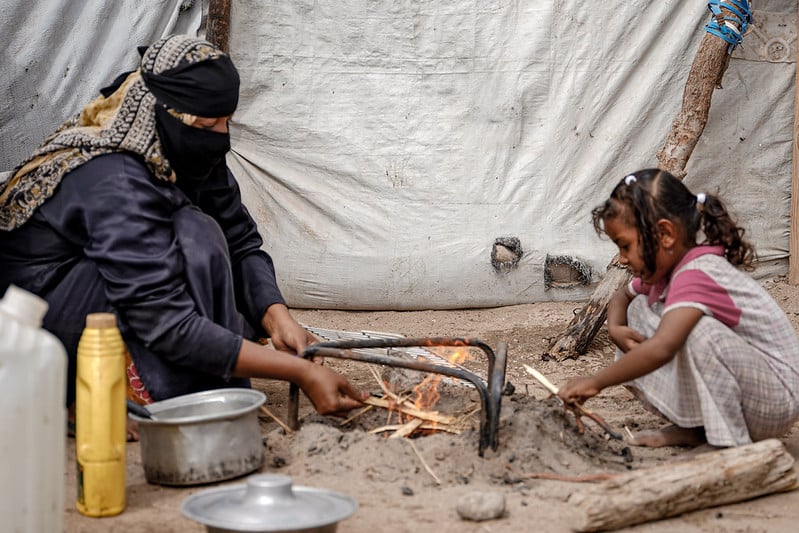
Early September 2026 brought renewed fighting to Taiz and Yemen’s west coast. Families left their homes at night, many on foot, carrying whatever they could. As of Sept. 22, the International Organization for Migration’s Displacement Tracking Matrix had recorded about 133,494 people displaced since Aug. 1, and 134,550 since the escalation began in June. These are dated tracking figures, rather than a current national total. The International Organization for Migration has since reported higher numbers. Displacement in Yemen is not new. What is different now is how little the country has left to absorb it.
For many families, this is not the first time they have fled. Concern Worldwide reported in September that some were displaced for the second or third time. Concern also cites a United Nations estimate that more than 80% of Yemenis live below the poverty line. A Sept. 23 joint humanitarian statement put the number needing humanitarian assistance and protection at 22.3 million. Money is the other problem: National Public Radio reported on Sept. 22 that only 20% of the United Nations’ funding needs for Yemen had been met in 2026. Even so, aid groups continue to work, and three of them show what the response to displacement in Yemen looks like on the ground.
International Organization for Migration Maps the Crisis
Before anyone can deliver aid, someone has to know where people went. The International Organization for Migration’s Displacement Tracking Matrix records displacement and shares information to help humanitarian agencies identify where assistance is needed. The organization also works directly with displaced families. In its Oct. 5 update, the agency described providing emergency shelter, essential household items, cash assistance, clean water and sanitation and protection services.
Concern Worldwide Keeps Clinics Open in Lahj
Concern Worldwide works alongside Yemeni nongovernmental organizations rather than on its own. In its Sept. 22 statement, it said they were supporting health, nutrition and water and sanitation services in Lahj and preparing an emergency response in Taiz. The pressure shows in the camps. Clinics Concern supports in two displacement camps in Lahj had received about 560 extra people in recent weeks, and medical supplies were running low. Concern planned to reach 40,000 people in Yemen in 2026. Its Irish Aid-funded emergency response aimed to support more than 1,000 people in the camps where it worked.
A New Name, the Same Work in Taiz
On Sept. 9, 2026, Mercy Corps began operating under the public name Prosper Global, with some offices retaining the old name during the transition. The organization behind the name is the same. In Taiz, its teams saw families reach safer areas with only what they carried, short on food, shelter and money. Milena Murr of Prosper Global told the Associated Press that some had walked for more than 16 hours to reach displacement camps, arriving exhausted and dehydrated, with some children appearing malnourished. Like the others, Prosper Global said it needed more funding to keep up.
Looking Ahead
Displacement in Yemen will not fade on its own. The groups on the ground say they know how to respond. The hard part is paying for it at the scale this crisis demands. Cash assistance, shelter and clinics are central parts of that response, but aid groups say funding shortages limit what they can provide. Steady donor support and safe humanitarian access will help determine how many families they can reach, and for how long.
– Juan Guillermo Rueda Castrillón
Juan is based in Barcelona, Catalunya, Spain and focuses on Politics for The Borgen Project.
Photo: Flickr
