The Promising Future of Desert Agriculture
 Desertification occurs when land near desert and arid regions becomes barren and dry due to human activities or adverse weather conditions. In the past 20 years, thousands of acres of fertile farmland and grazing land have been lost to desertification. Several internationally funded projects have been initiated to combat this issue, the most famous being the Great Green Wall.
Developed in 2007, the Great Green Wall project aims to halt the expansion of the Sahel and stretch from Senegal to Djibouti. While the international community initially lauded the project as a great example of environmental restoration, the World Agroforestry Center has critiqued the plan. It is a tree-planting-centric model that scientists argue is ineffective in attempting to recover desert land. Instead, the areas along the project’s route that have seen success have seen little from the original initiative and instead have found new life in the hands of local farmers and communities.
Through indigenous communities, the land’s revitalization has begun to take shape. In Niger, farmers are using the Faidherbia albida tree, along with native low-brush plants, to assist with soil nutrients. The Great Green Wall is considered one of the most well-known plans to combat desertification. However, other plans are currently in action; some are taking inspiration and others are developing more applicable solutions to desert agriculture.
Mongolia
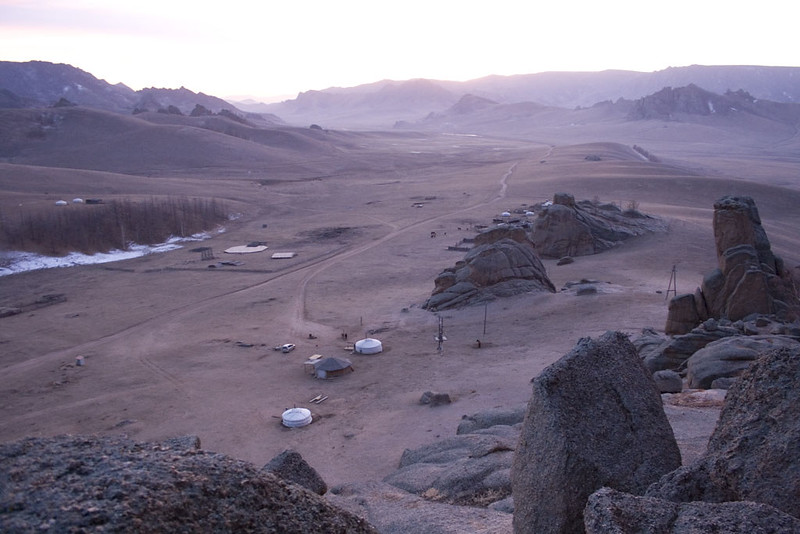
As of 2017, more than 70% of Mongolian land is considered to be desertified to some degree. Significant drought periods have exacerbated the spread of desertification in Mongolia’s Dornod and Khentii grasslands. While Mongolia has always been classified as arid and semi-arid, the large-scale grasslands have allowed a long-standing animal husbandry tradition to dominate the Mongolian economy.
The Mongolian Great Green Wall plan was launched in 2008 to combat this. However, like its African counterpart, it was largely unsuccessful and primarily abandoned in favor of other preventative methods. One indigenous solution to desert agriculture has been to change animal grazing timelines to ensure proper recovery time and prevent overgrazing. Between an increase in protective land policies and the nomadic communities remaking animal grazing patterns, there is a high possibility that the increased desertification along the Steppe can be reduced and managed with proper collaboration between local communities and government agencies.
Iraq
In the last three decades, the country has seen an increase in desertification due to deforestation during regional conflicts, water scarcity and the removal of brush cover, which has exacerbated the desertification in Iraq. The United Nations Convention to Combat Desertification (UNCCD) reports that as of 2019, 2.89 million hectares of land in Iraq are classified as degraded. This degradation, primarily affecting the agricultural sector, is caused by water salinity from the Tigris and Euphrates rivers and the lack of alternative irrigation sources. As a result, many farmers have abandoned their lands and migrated to densely populated urban areas for employment.
There are currently no active UNCCD projects in Iraq. However, a comprehensive analysis was produced in 2022, which gave several strategic suggestions to boost vegetation cover and revitalize local agricultural lands by planting lichen and other microorganisms to strengthen top soils, provide necessary nutrients and improve desert agriculture. The UNCCD recommends spearheading projects by local communities and generational farmers to ensure the land is cared for by those who understand the human-land balance more intimately than government bodies.
– Jamie Sackett
Jamie is based in Hutto, TX, USA and focuses on Global Health and Politics for The Borgen Project.
Photo: Flickr
