Climate and Poverty: The Role of Global Charities
 Increasingly severe floods, droughts and storms are intensifying risks to livelihoods, particularly for those already living in poverty. Around the world, rising environmental instability and unpredictable weather conditions push back on people’s progress against poverty. Extreme weather patterns are now one of the greatest drivers of poverty and hunger, with 45 million people at risk of famine and nearly half of the world’s children living in countries highly vulnerable to environmental shocks. The World Bank warns that natural disasters could push an additional 100 million people into poverty within the next decade.
Background
The poorest communities, often living in the most exposed and fragile conditions, suffer the worst effects of severe storms, droughts and other natural disasters. To cope with the risks of more frequent extreme weather, significant investment is necessary to strengthen communities and businesses. Climate finance from developed countries to developing countries remains crucial to help vulnerable populations adapt while supporting long-term poverty reductions
Climate actions also present economic opportunities. Green jobs, roles that reduce the environmental impact of economic activity, are essential to building a more sustainable economy. According to the International Monetary Fund (IMF), increasing productivity and sustainability in climate-critical sectors could lift 100 million small-scale farmers out of poverty.
This is why climate charities and poverty reduction strategies are becoming inseparable in global development policies.
International Fund for Agricultural Development (IFAD)
Farmers are not just food producers; they are the backbone of rural economies and global food systems, yet unpredictable weather conditions disrupt their livelihoods. The International Fund for Agricultural Development (IFAD) supports small-scale farmers in adapting to the impacts of extreme environmental conditions. It funds infrastructure that can withstand extreme weather, including flood defenses and cyclone early-warning systems and helps redesign government policies to better respond to environmental risks in the future.
In 2024, IFAD invested more than $750 million in climate finance projects. Overall, it has supported 6 million farmers and helped avoid 112 million tonnes of greenhouse gas emissions. Its work shows how strengthening rural resilience can simultaneously protect ecosystems, increase food security and reduce poverty.
Practical Action
Practical Action is a charity that focuses on helping communities tackle poverty and environmental degradation, working directly with those most affected. Its approach centers on creating green and inclusive economies that strengthen resilience while unlocking economic opportunity. The organization supports small businesses that help adapt to increasing environmental shocks and unpredictable weather conditions, as they allow people to earn a decent living. It trains farmers to grow and sell products in ways that protect nature and increase income. It also expands access to clean and affordable energy to power homes and local businesses. By making clean energy affordable and food production climate-smart, they help farmers, entrepreneurs and workers grow and diversify their income while protecting nature.
Practical Action also helps communities prepare and recover from natural disasters. The charity supports communities in building their own future with solutions that foster resilience, create jobs and lasting prosperity. As a result of their work, crops survive extreme weather, ensuring food security and small businesses grow, creating job opportunities.
Over the past five years, 6 million people have experienced improvements in their lives through the organization’s projects, and it aims to reach 10 million people by 2030.
SolarAid
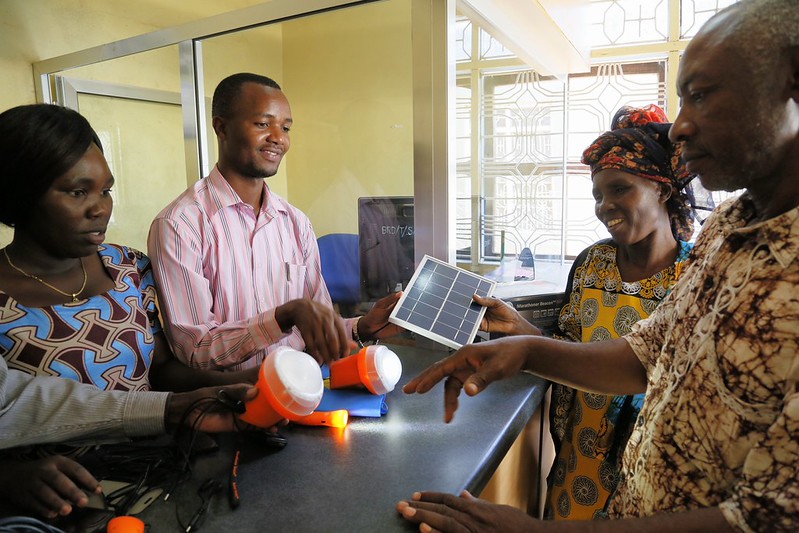
SolarAid is an international charity providing solar lamps to some of the most rural and hard-to-reach communities in sub-Saharan Africa, tackling both poverty and the environmental changes.
In many of these areas, households rely on kerosene lamps and paraffin candles, which emit toxic fumes and contribute to carbon emissions. Solar power offers a cleaner and safer alternative, an immediate benefit for both people and the planet. To date, SolarAid has distributed 2.5 million solar lights.
Its mission is to light up every school, clinic and home in Africa. The aim is to enable farmers to work after sunset, children to study in the evening and midwives to deliver babies safely at night
Trees for the Future
Trees for the Future is an organization that focuses on large-scale land restoration in developing communities, tackling hunger, poverty and environmental degradation. With landscapes and ecosystems are deteriorating worldwide, many farming families are trapped in cycles of hunger and poverty. Africa alone is home to 33 million farmers who produce 80% of the continent’s food, often on degraded land worsened by environmental shocks. Trees for the Future’s Forest Garden Approach restores soil health by planting diverse mixes of trees and crops, ensuring year-round food and income
The program can end poverty as its approach ensures opportunities otherwise inaccessible to rural families. By embracing sustainable land practices, farmers are breaking the cycles of land degradation and poverty and rebuilding our food systems.
UNDP’s Green Growth and Jobs Accelerator
The United Nations Development Program (UNDP)’s Green Growth and Jobs Accelerator (GGJAP) helps established entrepreneurs and small and medium-sized enterprises (SMEs) adopt greener business practices, expand green job opportunities, and contribute to a more sustainable and inclusive economy. SMEs form the backbone of many economies and are key to tackling environmental risks, unemployment and poverty. Across the Arab States region, GGJAP aims to support 800 SMEs, creating 4,000 green jobs.
Climate Action and Poverty Reduction
There are now more jobs in clean energy than in fossil fuels, as investments in clean energy technologies drive global demand for new workers worldwide. Every dollar invested in renewable energy creates roughly three times more jobs than in the fossil fuel industry.
Measures to reduce emissions and adapt to environmental instability can promote sustainable, resilient and inclusive development, particularly in developing countries, offering new avenues out of poverty.
The two biggest challenges of the 21st century, poverty and growing environmental disruption, can be addressed together. Technologies and practices that tackle environmental shocks also improve people’s livelihoods, health, food security, education, gender equality and more.
– Jeanne Pellet
Jeanne is based in London, UK and focuses on Business and Technology for The Borgen Project.
Photo: Flickr
