• Link to X
  • Link to Facebook
  • Link to Instagram
  • Link to TikTok
  • Link to Youtube
  • About
    • About Us
      • President
      • Board of Directors
      • Board of Advisors
      • Financials
      • Our Methodology
      • Success Tracker
      • Contact
  • Act Now
    • 30 Ways to Help
      • Email Congress
      • Call Congress
      • Volunteer
      • Courses & Certificates
      • Be a Donor
    • Internships
      • In-Office Internships
      • Remote Internships
    • Legislation
      • Politics 101
  • The Blog
  • The Podcast
  • Magazine
  • Donate
  • Click to open the search input field Click to open the search input field Search
  • Menu Menu

Archive for category: Indigenous Peoples

Global Poverty, Indigenous Peoples

Amazon Deforestation Undermines Indigenous Rights in Brazil

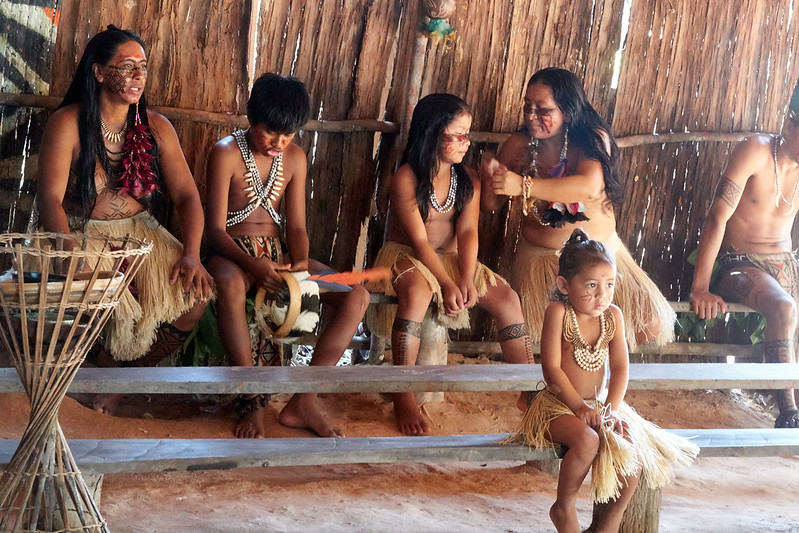
Indigenous Rights in BrazilBrazil shares a complex history with its indigenous population that spans centuries. The country contains approximately 60% of the Amazon rainforest and houses around 305 indigenous tribes. Throughout the 20th century, the intersection of indigenous rights, natural resource management and economic development has been navigated in Brazil.

Background to Indigenous Rights in Brazil

Brazilian policy aimed to balance development needs with indigenous rights and environmental protection. This approach shifted dramatically in 1964 when military forces successfully staged a coup and established a dictatorship.

Almost immediately after seizing power, the regime prioritized economic growth through large-scale development projects. The government built highways, including the Trans-Amazonian road, promoted colonization programs, and opened the Amazon to mining, logging and agribusiness operations.

Officials adopted slogans such as “Integrar para não entregar” (“Integrate to avoid surrender”). This phrase reflected the regime’s belief that Brazil needed to occupy the Amazon to protect national interests. These policies brought severe consequences for indigenous communities.

Twenty-one years later, the military dictatorship was toppled and Brazil transitioned back into a democracy. When the democratic constitution was still in progress, indigenous advocates and allies, including the Catholic Church’s Indigenous Missionary Council (CIMI), had lobbied vigorously to enshrine indigenous rights to their ancestral lands. “CIMI has become one of the most important defenders of indigenous rights, focusing on land rights, self-organisation and health care in indigenous territories.”

Feasting on the Amazon

Reestablishing democracy and constitutional protections has not resolved these issues. Subsequent administrations continue to face pressure to accelerate economic growth in the Amazon interior. This development drives deforestation and displaces indigenous communities. Agribusiness and logging operations systematically destroy public and indigenous Amazon lands. The state of Rondônia exemplifies this pattern with one of Brazil’s highest deforestation rates.

The Pastoral Land Commission, which advocates for environmental protection through the Brazilian Catholic Church, documented increased violence linked to logging activities.

“Poor people who effectively produce on their small lands are systematically persecuted, expelled, threatened or killed in the interest of real estate speculation,” Raphael Bevilaqua, the Commission’s attorney in Rondônia wrote.

Global demand for cheap coffee, meat, and soy incentivizes these developments. Multinational corporate giants such as McDonalds, Sysco, JBS Foods  and Wal-Mart actively benefit from land seizure and repurposing it for cattle use, according to Protean. One Brazilian journalist writes, “Both these broader incentives and direct investment have helped facilitate the Amazon’s destruction and promoted abuses against Indigenous peoples.”

Displacing the Kayapó and the Cost of Energy

One example of this dynamic is the construction of the Belo-Monte dam. The Brazilian government began to implement plans to construct hydroelectric dams on the Xingu River, in northern Brazil. In response, hundreds of Indigenous leaders from the Xingu basin – Kayapó, Juruna, Arara, and others – united in the town of Altamira for a historic protest meeting, the first of its kind. Completing the dam would effectively destroy the livelihoods of thousands as well as increase the risk of flooding villages.

Riding the 1989  global wave of protests, indigenous communities in the Amazon leveraged the rare opportunity to take their grievances to an international audience. Around the world, people responded with ardent pressure against the dam’s construction. The public outcry eventually led the World Bank to pull out of financing its construction. Eventually, the Brazilian government capitulated, a watershed moment. For the first time the indigenous peoples were successful in halting the destruction of ancestral land.

Reversing the Victory

Rising electricity demands coupled with public consciousness favoring cleaner solutions, lead to the dam’s construction entering the public dialogue once again. Indigenous communities began to coalesce: organizing protests, filing lawsuits, and lobbying FUNAI (analogous to the Bureau of Indian Affairs in the U.S.) against the construction. Even Sting, the British rockstar who headlined The Police, joined in their movement.

The construction went ahead in 2010 and five years later, the Brazilian government, facing substantial domestic and international scrutiny, launched an investigation into the dam’s construction. Investigation found that the dam’s main contractor, Norte Energia, had committed serious federal crimes. “In December, Brazil’s Public Federal Ministry, an independent state body, started legal proceedings to have it recognized that the crime of ‘ethnocide’ was committed against seven Indigenous groups during the building of the Belo Monte dam.”

Cautious Optimism

One tribe, the Kayapó, have been particularly vocal in halting plans to construct further dams in the region. In 2016, they scored a rare legal victory when a federal judge halted the construction of an expansion project.

The dam’s future remains uncertain as energy conglomerates and indigenous communities clash in the court system. Under President Luiz Inácio Lula da Silva, indigenous rights in Brazil have been given more consideration, but not concrete action. As of May 2025, no further construction has been initiated as the decision on construction rests with IBAMA (environmental regulation agency) to approve or deny the dam’s license.

Indigenous communities have once again banded together to oppose further degradation of the river. The Kayapaó have been successful in obtaining legal support from the Brazilian federal public defender’s office.

Advocates abroad like AIDA America and the Rainforest Foundation, are seeking to replicate the successful international pressure campaign of 1989 by amplifying indigenous voices to a global

audience.

The Future

As public awareness grows, advocacy networks are mobilizing and Indigenous leaders remain steadfast, placing Brazil at a pivotal moment. The impending decision on the dam is no longer just a yes-or-no vote—it is a chance to prove that economic growth can align with environmental stewardship.

– Max Marcello

Max is based in Pittsburgh, PA, USA and focuses on Good News and Celebs for The Borgen Project.

Photo: Flickr
June 26, 2025
https://borgenproject.org/wp-content/uploads/borgen-project-logo.svg 0 0 Naida Jahic https://borgenproject.org/wp-content/uploads/borgen-project-logo.svg Naida Jahic2025-06-26 07:30:482025-06-26 06:01:30Amazon Deforestation Undermines Indigenous Rights in Brazil
Education, Global Poverty, Indigenous Peoples

How Intercultural Education in Bolivia Can Help Alleviate Poverty

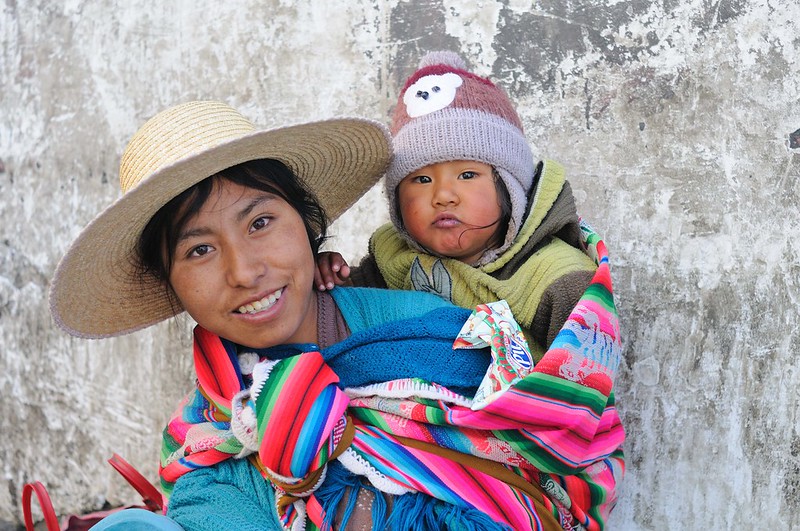
intercultural Education in BoliviaThere are 36 officially recognized Indigenous peoples in Bolivia, and according to a 2021 national survey, 41% of Bolivians over the age of 15 identify as Indigenous. Despite Bolivia establishing relative economic stability since the COVID-19 pandemic, native rural communities are still disproportionately affected by deprivation, with a poverty rate 20% higher than that of urban areas, as well as struggles with underrepresentation and exclusion from services. Cycles of poverty within Indigenous communities can often happen due to educational inequalities since there is not enough access to native language instruction.

Intercultural education recognizes cultural and linguistic diversity, as well as ensures all learners have the right to communicate in their native language. Thanks to various strategies, legal reforms and programs, the implementation of intercultural education in Bolivia helped improve outcomes, preserve identities and promote inclusion among rural communities.

Bolivia: A Plurinational Nation

Bolivia’s 2009 constitution declared the country a plurinational state and officially recognized 36 Indigenous languages. This signalled a step forward in the decolonization of Bolivia, as the document also guaranteed rights to “autonomy, self-government, their culture and recognition of their institutions” for Indigenous populations. The constitution also emphasises education in Bolivia as universal, intercultural and free in Article 17.

Following the 2009 constitution and its emphasis on education, the government introduced Law 070 in 2010 to promote multilingual, intracultural and intercultural education in Bolivia. This meant that a multilingual model replaced the bilingual model, so English, Spanish and an Indigenous language became part of the national curriculum.

However, the implementation of complete intercultural education in Bolivia poses a network of challenges. Some of these challenges include insufficient time allocated to native languages, a lack of native-speaking teachers and an inadequate understanding of socio-cultural and regional contexts.

Improving Educational Outcomes

In addition to constitutional and legal reforms, various organizations are working to improve opportunities for Indigenous peoples through multilingual and intercultural education in Bolivia. The Programa Amazónico de Educación Intercultural Bilingüe (PAEIB) has been promoting an intercultural bilingual approach to education in the Amazon and lowland region since 2006. PAEIB provides scholarships and supplies materials to primary schools across Indigenous regions, including dictionaries, learning units, songbooks and teaching guides. Not only does this supply of materials ensure that schools have the necessary equipment to teach native languages, but it also adapts and complements the curriculum towards Indigenous cultures.

Similarly, Fe y Alegría Bolivia promotes quality education for excluded populations. Fe y Alegría manages 398 educational centres across Bolivia (including specialised services for children with learning and hearing disabilities), benefiting 173,518 students and employing 9,384 teachers and administrators. The education centres focus on relevant and contextualised learning by adopting a learning model based on the knowledge and practices of rural Indigenous communities, meaning that the curriculum responds to the socio-cultural contexts of its students and helps to preserve their cultural identities.

Preserving Cultural Identities

With around 30 indigenous languages in danger of extinction, Bilingual Nests is preserving the identities of marginalized groups by revitalizing native languages nationwide. The program has been working since 2014 to prevent language extinction and impacted 2,314 children in 2021.

Bilingual Nests targets children under the age of four to maximise acquisition and adapt their approach depending on whether or not a child’s relatives or caregivers are native speakers. If they are, daily communication and instructions using the native language are encouraged, as well as family and community meetups, in order for the child to naturally build a linguistic foundation. If neither a primary caregiver nor a grandparent can oversee language transition, childcare facilities primarily use Indigenous languages during instructions and activities.

During the COVID-19 Pandemic, Bilingual Nests recognized inequalities regarding internet access and remote learning across Indigenous communities in Bolivia and subsequently developed both print and digital materials to continue running the program in rural communities. With the help of funding from UNICEF, Bilingual Nests hopes to continue expanding its strategies into more rural areas where native languages are at risk of extinction.

Funding and prioritization of native languages in the national curriculum are crucial in order for the 2009 Constitution’s promises of intercultural education in Bolivia to materialize.

– Clodagh Dowson

Clodagh is based in Wiltshire, UK and focuses on Global Health and Politics for The Borgen Project.

Photo: Flickr

June 25, 2025
https://borgenproject.org/wp-content/uploads/borgen-project-logo.svg 0 0 Naida Jahic https://borgenproject.org/wp-content/uploads/borgen-project-logo.svg Naida Jahic2025-06-25 01:30:362025-06-24 13:33:23How Intercultural Education in Bolivia Can Help Alleviate Poverty
Global Poverty, Indigenous Peoples

Indigenous Poverty in Colombia

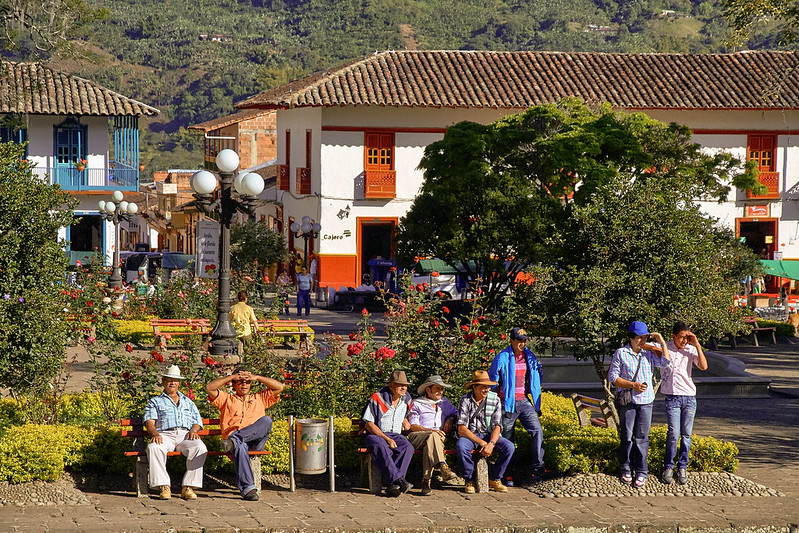
An Overview of Indigenous Poverty in ColombiaAs of 2018, approximately 1.9 million Indigenous people live in Colombia. According to ABColombia, nearly half of them experience extreme poverty, while more than 60% of Colombia’s total population lives below the poverty line. Indigenous communities face distinct and deeply entrenched barriers that perpetuate this inequality, often tied to conflict, displacement and discrimination.

Armed Conflict and Displacement

Colombia has endured decades of armed conflict, beginning in 1964 with the emergence of guerrilla groups such as the Revolutionary Armed Forces of Colombia (FARC) and the National Liberation Army (ELN). Though a peace agreement was signed with the FARC in 2016, violence and displacement remain ongoing challenges.

Indigenous communities are particularly vulnerable in this context. Due to their geographic isolation and limited political representation, many Indigenous families live in conflict zones and face territorial disputes involving armed actors. ABColombia reports that more than 300 Indigenous people have been forcibly displaced in recent years. Children from these communities also face heightened risk: since 2016, more than 8,000 Indigenous children have been forcibly recruited by armed groups.

Systemic Discrimination and Rights Violations

Historical discrimination continues to affect Indigenous people in Colombia. Though the 1991 Constitution officially recognized their rights, enforcement remains inconsistent. Many Indigenous groups still face exclusion from decision-making and public services.

Land dispossession, threats and attacks against community leaders persist. Advocacy for Indigenous rights can be dangerous: in 2023, Colombia recorded 142 killings of human rights defenders, nearly half the global total. Indigenous advocates are among those most frequently targeted. The violence impedes community organizing, weakens support networks and perpetuates cycles of poverty.

Pathways to Support and Development

Despite the challenges, organizations across Colombia are working to support Indigenous communities and reduce poverty. Targeted assistance and advocacy are essential to improve living conditions and ensure access to education, health care and legal protection.

  • Scottish Catholic International Aid Fund(SCIAF). Originally founded in 1985, SCIAF supports Indigenous and Afro-Colombian communities by strengthening disaster resilience, land rights and access to basic services.
  • International Work Group for Indigenous Affairs(IWGIA).  IWGIA promotes Indigenous rights and self-determination. In Colombia and other Southern American countries, it focuses on land rights and gender equity among Indigenous women.
  • Amnesty International. This organization funds campaigns and provides research to help minority groups in different countries. In Colombia, Amnesty International defends the rights of Indigenous groups threatened by armed conflict, displacement and violence.

Looking Ahead

Efforts to reduce Indigenous poverty in Colombia increasingly involve strengthening local governance, education access and legal land rights. According to the International Fund for Agricultural Development (IFAD), land tenure security is a key catalyst for multiple benefits in poverty eradication, food security and nutrition. Expanding such measures in Colombia offers a pathway for enhancing economic stability while protecting cultural heritage. National and international programs continue to support civil society participation, territorial autonomy and rural development. Long-term improvements in these areas remain tied to sustained investment, enforcement of existing protections and collaboration with Indigenous-led organizations.

– Jose Gabriel Lopez

Jose is based in London, UK and focuses on Good News and Technology for The Borgen Project.

Photo: Flickr

May 27, 2025
https://borgenproject.org/wp-content/uploads/borgen-project-logo.svg 0 0 Precious Sheidu https://borgenproject.org/wp-content/uploads/borgen-project-logo.svg Precious Sheidu2025-05-27 07:30:332025-05-26 23:24:50Indigenous Poverty in Colombia
Page 3 of 3123

Get Smarter

  • Global Poverty 101
  • Global Poverty… The Good News
  • Global Poverty & U.S. Jobs
  • Global Poverty and National Security
  • Innovative Solutions to Poverty
  • Global Poverty & Aid FAQ’s
Search Search

Take Action

  • Call Congress
  • Email Congress
  • Donate
  • 30 Ways to Help
  • Volunteer Ops
  • Internships
  • Courses & Certificates
  • The Podcast
Borgen Project

“The Borgen Project is an incredible nonprofit organization that is addressing poverty and hunger and working towards ending them.”

-The Huffington Post

Inside The Borgen Project

  • Contact
  • About
  • Financials
  • President
  • Board of Directors
  • Board of Advisors

International Links

  • UK Email Parliament
  • UK Donate
  • Canada Email Parliament

Get Smarter

  • Global Poverty 101
  • Global Poverty… The Good News
  • Global Poverty & U.S. Jobs
  • Global Poverty and National Security
  • Innovative Solutions to Poverty
  • Global Poverty & Aid FAQ’s

Ways to Help

  • Call Congress
  • Email Congress
  • Donate
  • 30 Ways to Help
  • Volunteer Ops
  • Internships
  • Courses & Certificates
  • The Podcast
Scroll to top Scroll to top Scroll to top