• Link to X
  • Link to Facebook
  • Link to Instagram
  • Link to TikTok
  • Link to Youtube
  • About
    • About Us
      • President
      • Board of Directors
      • Board of Advisors
      • Financials
      • Our Methodology
      • Success Tracker
      • Contact
  • Act Now
    • 30 Ways to Help
      • Email Congress
      • Call Congress
      • Volunteer
      • Courses & Certificates
      • Be a Donor
    • Internships
      • In-Office Internships
      • Remote Internships
    • Legislation
      • Politics 101
  • The Blog
  • The Podcast
  • Magazine
  • Donate
  • Click to open the search input field Click to open the search input field Search
  • Menu Menu

Archive for category: Artificial Intelligence (AI)

Artificial Intelligence (AI), Global Poverty, Technology

The Role of AI in Reducing Poverty

 Role of AI in Reducing PovertyThe fight against global poverty is breaking new ground with the help of artificial intelligence. Artificial Intelligence (AI) is an amoral tool that is equally capable of both harm and help. However, there are many noteworthy ways in which it contributes to global poverty reduction. The emerging tool has already helped improve access to health care and education. Additionally, it has assisted in disaster response mitigation, particularly in regions where access is otherwise limited. For example, let’s consider the role of AI in reducing poverty in Brazil, Kenya and Bangladesh.

Health Care in Brazil

AI-based diagnostic systems can provide timely and remote access to health care> It can reduce the burden of preventable disease and improve overall health outcomes. These systems can bridge the gap between people and essential resources in remote or marginalized places.

In Brazil, AI is currently being used to improve health care access. One example is ViBe Saúde, a Brazilian telemedicine startup that uses AI algorithms to facilitate consultations between medical professionals and patients. The initiative has proven especially beneficial in rural regions where access to health care services is limited.

Education in Kenya

AI-powered educational systems can adapt to offer personalized learning experiences, which is particularly helpful in regions with limited educational resources. In Kenya, Bridge International Academies, a company that provides for-profit education, is using AI-powered digital learning platforms to help disadvantaged populations break the cycle of poverty.

Remarkably, since 2015, Bridge students who have sat for the Kenya Certificate of Primary Education (KCPE) exam have consistently scored above the national average. Furthermore, its alumni are now in top universities in Kenya and the United States (U.S.).

Disaster Response in Bangladesh

Climate AI’s predictive analysis and relief coordination capacities can help mitigate the impact in disaster-prone regions and reduce their socioeconomic impact. Bangladesh, for instance, is highly susceptible to cyclones, floods and landslides, which can devastatingly impact vulnerable populations. AI-powered chatbots provide real-time information and enable timely evacuation and response efforts, further aiding in disaster management.

The Bangladesh government has used AI to enhance preparedness and response efforts. For example, the Bangladesh Meteorological Department uses AI algorithms for disaster risk management (DRM) to analyze weather data and issue early flood and cyclone warnings. “DRM is constantly upgraded through machine learning and artificial intelligence,” writes Abdullah Shibli, a reporter at The Daily Star.

Unemployment (And Re-Employment) in Bangladesh

While celebrating the accomplishments of the role of AI in reducing global poverty, it is also crucial to acknowledge its potential to exacerbate it. An epitomic example of this is AI’s capacity to automate the manufacturing sector. In Bangladesh, garment manufacturing is a significant source of employment and economic growth. As with many cases of hyper-industrialization, automation would cause underemployment in Bangladesh.

However, rather than exclusively displacing workers, AI also has the capacity to create more job opportunities. According to the World Economic Forum, by 2025, “approximately 85 million employees are anticipated to lose their jobs, while 97 million new roles may emerge.” This example illustrates the nuanced truth underlying robotics: AI’s capacity to promote harm or help is dependent on how we choose to use it. There is no reason to fear AI, as the future of its potential is a matter of our responsibility.

– Sheridan Smith

Sheridan is based in New York, NY, USA and focuses on Business and Technology for The Borgen Project.

Photo: Pexels

June 20, 2024
https://borgenproject.org/wp-content/uploads/borgen-project-logo.svg 0 0 Hemant Gupta https://borgenproject.org/wp-content/uploads/borgen-project-logo.svg Hemant Gupta2024-06-20 07:30:182024-06-19 13:08:04The Role of AI in Reducing Poverty
Agriculture, Artificial Intelligence (AI), Food Security, Global Poverty

AI Is Helping Address Food Security in India With Agriculture

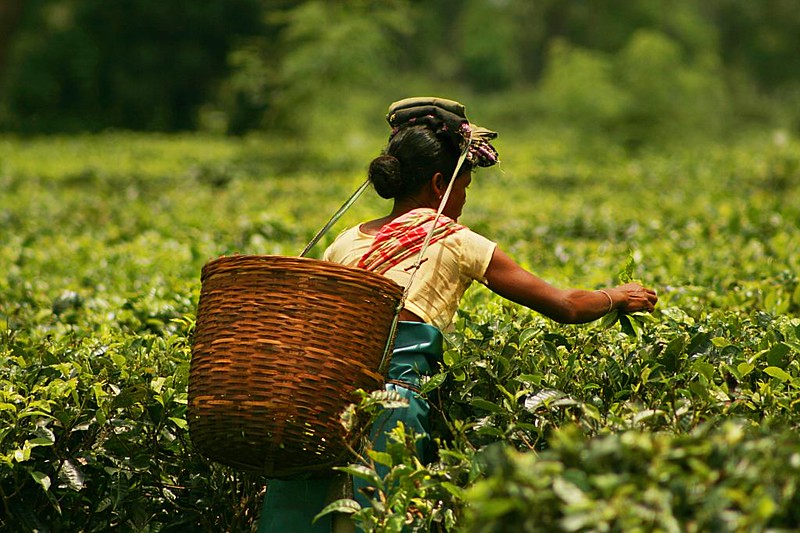
Food Security in IndiaIn Telangana, South India, artificial intelligence (AI) helps address food security by helping farmers. The country is a prime example of how emerging AI technology is applied to global issues. The Indian government, in collaboration with agricultural aid organizations, has launched an AI program called Saalu Baagu. This program aims to use AI-based tools to solve agricultural challenges. AI programs and emerging technologies are experiencing ongoing growth and expansion in the country.

AI and Farming

The Telangana government divided its AI implementation process into distinct phases. Phase one focused on introducing a variety of AI-based agritech services to thousands of farmers. Phase two reached more than 20,000 chili and groundnut farmers in three districts. The project began in 2022 and has received the support of various AI tech companies and the Bill and Melinda Gates Foundation.

The Saagu Baagu program has had major success with farmers and crop yields, specifically chili crops. The program has enabled AI-focused startup companies like AgNext, a company helping farmers assess the quality and physical attributes of their chiles. Over 18 months, Indian farmers have experienced a 21% increase in plant growth per acre and a 9% decrease in pesticide usage. More than 500,000 farmers are now engaged in the program and have utilized AI tools in their farming.

The success of the Saagu Baagu signifies the potential for AI to help not just agriculture in India but also crop health on a global scale. AI has helped to address food security in India through revolutionary and adaptable technology that could work in a variety of agricultural environments. The program’s impact in Telangana has exemplified the ability of emerging AI technologies to assist modern farming techniques and strategies. Planting schedules, crop health and yield predictions are all challenges faced by farmers that AI has been able to leviate and make more efficient.

The Future of AI and Food Security

AI could help feed the world and prevent global hunger now and in the foreseeable future. “AI is going to transform the way we produce, store, distribute and market food in ways that will improve food safety, efficiency, resilience and sustainability,” said Gbola Adesogan, associate vice president and director of the Global Food Systems Institute. Efficient and sustainable farming will be the key to global food security.

AI is playing a pivotal role in addressing food security in India. Additionally, it holds promise for farmers worldwide in the future:

  1. It facilitates the analysis of vast data sets, enabling the development of resilient crops capable of withstanding various environmental challenges.
  2. AI offers valuable insights to farmers regarding soil conditions, optimal planting times and harvest periods, thereby enhancing agricultural productivity.
  3. AI technology aids in the early detection of diseases and pests, enabling proactive measures to safeguard crops and maximize yields.

AI has proven to be an incredibly useful tool in empowering farmers to face modern economic and environmental challenges. Technology will be essential to combating global food security and poverty through agriculture.

– Jacob Buckner

Jacob is based in Raleigh, NC, USA and focuses on Technology and Solutions for The Borgen Project.

Photo: Flickr
April 16, 2024
https://borgenproject.org/wp-content/uploads/borgen-project-logo.svg 0 0 Hemant Gupta https://borgenproject.org/wp-content/uploads/borgen-project-logo.svg Hemant Gupta2024-04-16 01:30:492024-04-16 01:16:32AI Is Helping Address Food Security in India With Agriculture
Artificial Intelligence (AI), Global Poverty, Technology

AI Offers Promise for Africa’s Smallholder Farms

AI Offers Promise for Africa's Smallholder Farms More than 226.7 million people in Africa face starvation, yet the continent is poised to become the world’s future breadbasket. At the forefront of a technological revolution, Africa’s rich agricultural tradition embraces Artificial Intelligence (AI). The integration of AI into agrifood systems is expected to significantly boost efficiency, enhance yields and promote sustainable farming practices. Agriculture accounts for nearly a quarter of Africa’s Gross Domestic Product (GDP), but the continent still depends largely on food imports. By 2030, these imports are estimated to cost up to $100 billion annually. Smallholder farms play a crucial role in this agricultural landscape.

AI and Smallholder Farms

There is extensive room for improvement and modernization in the smallholder farm industry. AI has the potential to support crop yield, irrigation, soil content sensing, crop monitoring, weeding and crop establishment. AI technology can optimize the use of fertilizers, pesticides and irrigation. A change that would improve the health of humans as well as the environment. Africa faces two significant obstacles to fully harnessing the potential of AI, access to reliable internet connectivity and affordable technology. Smallholder farmers remain confined to simple devices such as mobile phones, radio and TV to access digital resources, including the Internet despite the availability of digital opportunities.

Small Holder Farms: Constraints and Successes

Smallholder farms are vital in Africa, contributing significantly to food production, enhancing rural livelihoods and reducing poverty. These farms typically operate on less than two hectares of land, equivalent to approximately 2.47 acres each. These farms usually cultivate a diverse range of crops such as yams, beans, rice, cassava, maize, vegetables and fruits and raise livestock including goats, cows and chickens. Individual farmers or families manage these operations, facing common agricultural challenges in countries like Kenya, Nigeria and South Africa. Here are some of the agricultural constraints:

  • Use of outdated technology -Regular Flooding
  • Climate change -Desertification of crop and grazing land
  • Diseases and pests -Lack of financing
  • Agricultural Infrastructure -Shortage of farming skills
  • High levels of soil degradation -Tough economic conditions
  • Impact of Energy Shortages on agriculture, food, fiber and beverage production

Smart Farming Powered by Internet of Things (IoT) Technology

AI successes feature smart farming enhanced by Internet of Things (IoT) technology, which optimizes crop management through the use of sensors, gateways, and data analysis. These sensors collect vital data from the fields, which is then stored and analyzed. This process allows farmers to access real-time insights, enabling more efficient and informed decision-making.

Nigeria is home to 38 million smallholder farmers who account for 90% of Nigeria’s agricultural produce and employ 60% of the country’s labor force. More than 72% of residents live below the poverty line in Nigeria, where smallholder farms produce the majority of the country’s staples and employ millions.

AI Successes include Farmcrowdy, Nigeria’s first digital agriculture platform that connects small-scale farmers with smart farming techniques, quality farm inputs and access to superior markets to be able to earn a decent profit margin. Founded in 2016, Farmcrowdy began with 25,000 farmers. Currently, it is working with 50,000 farmers, with a plan to scale to 500,000 by the last quarter of the fiscal year 2020 and 3 million over the next 5 years.

AI successes feature Precision Agriculture, monitoring crop conditions, soil quality, weather patterns, and pest infestations. Additionally, Ujuzikilimo’s mission in precision farming aims to empower all farmers and stakeholders to make quick, informed, and data-driven decisions through the collection and analysis of agricultural data. The United Nations (U.N.). The initiative is exploring ways AI can be used to predict flood patterns and optimize Agrifood systems across Africa. Agrifood systems would predict the best times to plant, provide an assessment of soil health and monitor pest and disease outbreaks.

The Future of Full-Scale Agricultural Digitalization

The convergence of AI and agriculture in Africa offers a mix of potential benefits and challenges. While AI holds the capacity to enhance agricultural productivity and bolster food security, achieving widespread digitalization is still a goal out of reach. The claims of transformative impact often disconnect with the actual experiences of smallholder farmers, facing constraints like low literacy and scarce access to digital tools. Nonetheless, there are opportunities tailored to address both present and anticipated obstacles in smallholder agriculture, aiming to realize the full promise of digitalization in the sector.

– Pamela Fenton
Photo: Unsplash

March 10, 2024
https://borgenproject.org/wp-content/uploads/borgen-project-logo.svg 0 0 Precious Sheidu https://borgenproject.org/wp-content/uploads/borgen-project-logo.svg Precious Sheidu2024-03-10 07:30:182024-06-11 00:12:44AI Offers Promise for Africa’s Smallholder Farms
Page 3 of 3123

Get Smarter

  • Global Poverty 101
  • Global Poverty… The Good News
  • Global Poverty & U.S. Jobs
  • Global Poverty and National Security
  • Innovative Solutions to Poverty
  • Global Poverty & Aid FAQ’s
Search Search

Take Action

  • Call Congress
  • Email Congress
  • Donate
  • 30 Ways to Help
  • Volunteer Ops
  • Internships
  • Courses & Certificates
  • The Podcast
Borgen Project

“The Borgen Project is an incredible nonprofit organization that is addressing poverty and hunger and working towards ending them.”

-The Huffington Post

Inside The Borgen Project

  • Contact
  • About
  • Financials
  • President
  • Board of Directors
  • Board of Advisors

International Links

  • UK Email Parliament
  • UK Donate
  • Canada Email Parliament

Get Smarter

  • Global Poverty 101
  • Global Poverty… The Good News
  • Global Poverty & U.S. Jobs
  • Global Poverty and National Security
  • Innovative Solutions to Poverty
  • Global Poverty & Aid FAQ’s

Ways to Help

  • Call Congress
  • Email Congress
  • Donate
  • 30 Ways to Help
  • Volunteer Ops
  • Internships
  • Courses & Certificates
  • The Podcast
Scroll to top Scroll to top Scroll to top