Sierra Leone: Freedom & War
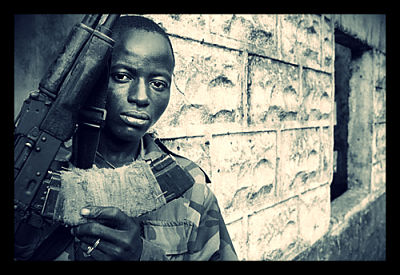
Sierra Leone, home to over 6.1 million people, is a West African nation ravaged by a 11-year civil war. The country was prone to military coup de’tats, resulting is an ever-revolving door of presidents, dictators, military juntas and overall political chaos.
The political crises that have befallen the diamond resource rich nation is in stark contrast to its prominent past as a settlement for freed slaves, particularly its capital, Freetown. Sadly, the civil war, which was condemned for human rights violations such as the use of child soldiers, created a situation where poverty became rampant among the populace.
Sierra Leone now has one the lowest life expectancies in the world, with an average person expected to live to only 48. It ranks fairly low in the Human Development Index at 180th out of 187 countries. Particularly distressing is that over “60 percent of the population” lives on about “$1.25 per day.” Consequently, the nation boasts a high illiteracy rate, and deals with a increasingly volatile health crisis, with a majority of the population unable to attain proper medicine and health services.
Despite the problems, the country has made positive strives since the end of the civil war. Since 2002, positive changes have occurred. The central government has become stronger and democracy has flourished quite prominently in the wake of the civil war. The nation has also seen an uptick in economic development.
Unemployment and underemployment of the youth population are major reasons for the civil unrest within the nation. Around 70 percent are out of work or critically underpaid, resulting in strikes that are routinely suppressed by the government. Disillusionment with political elites and inequality of wealth in the country has led to a huge divide among political groups.
Current President Ernest Bai Koroma and his All People’s Party have been criticized for their actions, but at the same time praised for helping the nation “transition from a failed state” to a “fast-growing economy.” The economic growth of the nation is contrasted by the rampant poverty faced by a majority of the nation.
Sierra Leone has had an arduous history in regards to women’s rights. The country is home to many customary practices, such as “female genital mutilation” and forced marriages. Amnesty international reported that the Sexual Offences Act, though pushed through in 2013, was never truly enacted, and discriminatory policies against women were still heavily occurring in the nation.
Human rights violations are particularly evident in post-civil war Sierra Leone. Peaceful demonstrations are still violently suppressed, and opposition media are continually jailed for dispelling information against the ruling regime. An April demonstration against working conditions at a local mine resulted in police officers killing 12 workers. The Human Rights Commission of Sierra Leone found the police culpable for their actions, and pushed for an investigation into the matter. Sierra Leone has not indicted or prosecuted any of those involved in the killings.
Can Sierra Leone make a change? Unless the government makes a more proper investment in its population and respects human rights, civil unrest is a common possibility. The lack of oversight for respecting human rights and drastic poverty is an increasingly damaging problem for the nation that was once a safe-haven for those escaping slavery.
– Joseph Abay
Sources: Amnesty International, New York Times Blogs, BBC, BBC, UNDP
Photo: UWO
Follow The Borgen Project on Twitter.
