Are Needy Children in Nigeria Invisible?
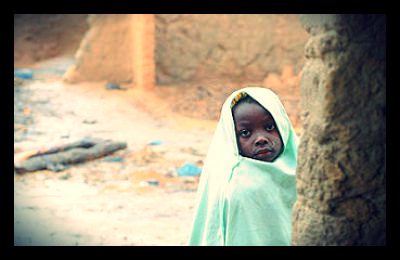
As the most populous country in all of Africa, the Federal Republic of Nigeria is made up of over 250 ethnic groups. The following are the most populous: Fulani and Hausa, 29 percent; Yoruba, 21 percent; Igbo, 18 percent and Ijaw 10 percent. They also have a significant split in religion, with 50 percent of the population being Muslim and 40 percent of the population being Christian.
With the largest population in Africa, Nigeria has 174,507,539 people and is ranked as having the 8th highest amount of people in the world. Of all those people, 76,461,896 are fourteen years of age or younger, meaning 43.8 percent of Nigerians are children. Of that 43.8 percent, about 60 percent lack birth certificates, meaning they are not permitted to use many government facilities that would normally be free with proper proof of citizenship.
Nigeria’s government is trying to reform its petroleum-based economy, but through all the corruption in that sector, it is not focusing as much on the youth in need. On top of that, presidential elections are tarnished by substantial violence and irregularities and the country has been undergoing long-lasting religious and ethnic conflicts, which also takes focus away from the children in need. These children need help; about 1,000,000 children die each year in Nigeria before their fifth birthday (10 percent of the global total.) What they need to save more lives is continuous investment and organized scaling up of essential newborn, maternal, and juvenile health interventions.
In Nigeria, there are numerous state hospitals that are free for children under the age of five, but the only dilemma is that the majority of these children do not have birth certificates. This is a catch-22 because the hospitals admit patients under five for free with proof of age, but these children have never had any way to prove how old they truly are. From there, they have no choice but to go to a private hospital for treatment where they are forced to pay $45 (a trivial amount for a life-saving medication in the United States,) but an unfathomable expense for the people living in this region, especially since most of them live on less than a dollar per day.
The number of children lacking birth certificates in Nigeria is up to about 17,000,000, a number second only to India, which has 71,000,000 unregistered children. According to UNICEF, one out of every three children in Sub-Saharan Africa does not “officially exist,” but does that mean that they do not still need help? The undocumented children in Nigeria are denied education and healthcare and often times have their rights abused. Their parents often times cannot even help them because in these rural areas many are uneducated and are not aware of how important it is to register their children.
The deficiency of birth records in Nigeria also causes an error in the government’s efforts to track demographic information. Without the proper information on how many children need hospitalization or immunization, the government cannot tell how many vaccines it needs from organizations like UNICEF, it cannot tell how many children have already died nor the cause of death.
The good news is UNICEF is trying to convince people to register their children and trying to increase the number of registration centers in Nigeria so the families can have easier access. They plan on having 65 percent to 70 percent of children be registered with official birth certificates within the next few years.
– Kenneth W. Kliesner
Sources: CIA World Factbook, Voice of America ,UNICEF
Photo: The Guardian
