Germany’s ODA: A Problem of Fiscal Pressure or Public Perception?
While Germany has long been a global leader in humanitarian aid—ranking as the world’s second-largest donor behind only the United States in total financial volume—its commitment to Official Development Assistance (ODA) is now facing serious fiscal pressure. Between 2020 and 2023, Germany consistently met and exceeded the international benchmark of allocating 0.7% of Gross National Income (GNI) to foreign assistance. However, it now reflects a broader pattern observed across donor nations: federal governments are reducing overseas development spending to manage domestic budgetary pressures and expanded defense priorities that compress discretionary allocations. Here is more information about Germany’s ODA.
From Historical Compliance to Fiscal Squeeze
In the federal budget blueprint, foreign assistance allocations have experienced sustained reductions. Operating under statutory debt-brake rules (Schuldenbremse), the federal government enacted spending limits across multiple departments. Discretionary funding for the Federal Ministry for Economic Cooperation and Development (BMZ)—designated under budget section Einzelplan 23—was reduced to approximately €9.47 billion, marking a consecutive series of funding drops that brought the ministry’s share of the federal budget to an all-time low of 1.7%. Parallel constraints were placed on the Federal Foreign Office, where humanitarian aid remained 50% below 2024 levels alongside a 45% cut to long-term commitment authorizations (Verpflichtungsermächtigungen).
These reductions carry direct operational consequences for international programs. An official policy analysis by the Association of German Development and Humanitarian Aid NGOs (VENRO) notes that shrinking federal allocations directly undermine global food security, climate adaptation and crisis management budgets (the latter reduced from €710 million to €434 million). When major donor contributions decline, multilateral agencies face severe operational shortfalls. Operational assessments from the United Nations World Food Programme (WFP) document that international funding deficits have forced critical relief programs—such as operations in South Sudan and Afghanistan—to drastically scale back emergency response and reduce food distributions by 50% to 70%, leaving millions of vulnerable individuals without vital aid.
Concurrently, public opinion in Germany has shifted, with sections of the electorate questioning Germany’s ODA and international expenditures in light of ongoing domestic infrastructure and fiscal requirements.
The Autumn Window: Debates and Financial Clarifications
Parliamentary discussions are entering a decisive phase in the Bundestag, where members of the Budget Committee (Haushaltsausschuss) are negotiating final ministry appropriations during the autumn sessions.
During these periods of fiscal debate, discussions surrounding foreign assistance frequently focus on headline spending figures rather than project-level structures. A prominent case occurred regarding bilateral development projects in Peru. Public debate and online political campaigns asserted that the German federal government had provided more than €300 million in taxpayer subsidies exclusively to build bicycle lanes in Lima, contrasting this with domestic infrastructure funding levels.
Official documentation released by the BMZ and project evaluations from KfW Development Bank detailed the actual financial breakdown. Non-repayable grants earmarked specifically for sustainable cycling paths and urban transit networks in Lima amounted to approximately €20 million, aimed at reducing urban emissions and connecting lower-income suburban areas. The remaining portion of the referenced €300 million was comprised of low-interest promotional loans extended via KfW. Because promotional loans are repaid with interest by the recipient country, they represent commercial credit mechanisms rather than non-repayable taxpayer expenditure.
Measured Outcomes: Multilateral Health Investments
In discussions regarding public expenditure, policy researchers frequently assess multilateral health initiatives to evaluate tangible returns on development funding.
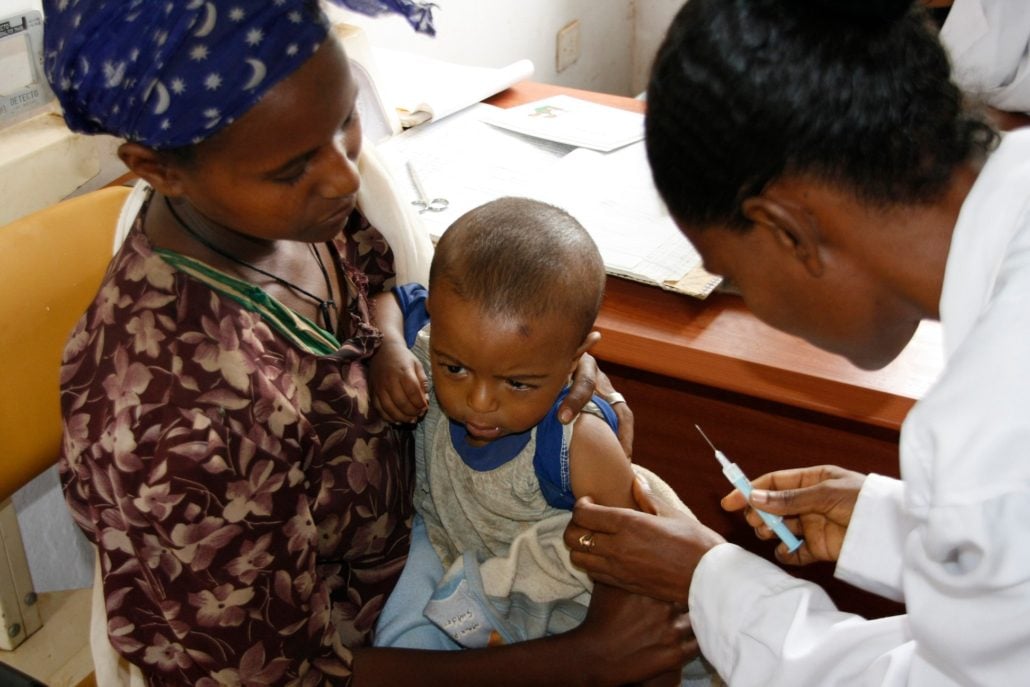
Germany’s multi-year engagement with Gavi, the Vaccine Alliance, represents a documented example of this financing model. Serving as a core contributor since 2006, Germany provides structured funding through allocations from both the BMZ and KfW. In addition to recurring multi-year pledges of €600 million across operational cycles, Germany allocated more than $300 million to the African Vaccine Manufacturing Accelerator (AVMA), an initiative structured to establish regional vaccine manufacturing infrastructure across the African continent.
Multilateral health data shows that these immunization programs distribute vaccines protecting millions of children against preventable infectious conditions, including measles, pneumonia, and polio. Independent epidemiological studies indicate that maintaining baseline immunization coverage stabilizes local health systems and reduces the cross-border spread of disease, mitigating the likelihood of regional health emergencies expanding internationally.
As the Bundestag concludes its budgetary allocations impacting Germany’s ODA, distinguishing repayable loan instruments from direct grants and reviewing verified outcomes in global health frameworks remain the central parameters used to analyze Germany’s international development commitments.
– Giacomo Ciavarelli
Photo: Flickr
