Telehealth Could Expand Healthcare Access Across Remote Islands
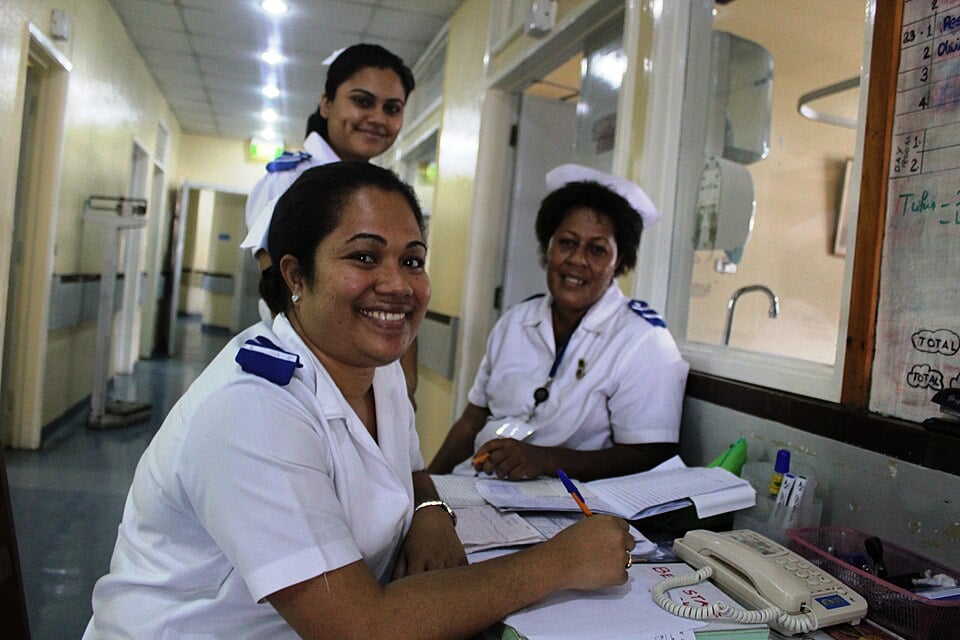
In April 2026, the Pacific Healthy Islands Transformation (PHIT) Project was launched in Fiji to reduce healthcare gaps, including infrastructure, and expand access to specialist care across remote islands. Financed by the World Bank, Asian Development Bank, OPEC Fund and The Pandemic Fund, with analytical groundwork supported by the Australian government through the Advance UHC partnership, the $239.5 million project is expected to reach 2 million people across eight countries and generate approximately 11,000 jobs.
Telehealth’s Role
Telehealth focuses on reducing reliance on costly overseas referrals and easing travel burdens. Its benefits depend on reliable connectivity, trained staff and local support. A 2023 Pacific Heads of Health paper reported about four doctors per 10,000 people in the Pacific, based on available workforce data. Telehealth could expand access to specialty care, including surgical, anesthesia and obstetric services. The World Bank reports that lack of access to specialists can lead to late diagnoses and limited disease prevention or screening.
The Problem
The Pacific Islands comprise a vast geographic region with tens of thousands of islands scattered across the Pacific Ocean. This dispersion makes it difficult for specialists to reach rural areas, especially with limited specialists in each location. Travel from these areas requires time, funds and resources not available to all patients.
According to the World Bank, non-communicable diseases like diabetes, heart disease, kidney failure and cancer cause premature deaths in the region. These long-term conditions require ongoing care and monitoring, often necessitating long, expensive trips to a few specialty doctors. Telehealth can expand access by offering virtual connections to specialist doctors, reducing travel and economic burdens.
What Telehealth Can Do
Telehealth uses telecommunication technologies to deliver long-distance clinical health care, patient education and health administration. It provides a potential solution to geography-related healthcare gaps, increasing specialists’ accessibility to rural patients.
Telehealth makes it possible for doctors to connect with patients virtually, increasing remote diagnosis, imaging review, maternal and chronic-disease follow-up and specialist advice to local nurses. This could reduce the burden on nurses and local healthcare workers without replacing in-person care. According to Pacific Heads of Health, nurses carry an unsustainable workload while lacking critical care management information. Telehealth offers an opportunity to support their work and the communities they serve.
Pacific Healthy Islands Transformation (PHIT)
The Pacific Healthy Islands Transformation Project addresses growing healthcare gaps by targeting funding toward education and accessibility. According to the World Bank Group, this project will train thousands of healthcare workers, improve telehealth systems, deploy them to remote islands and upgrade health facilities. It will also support healthcare infrastructure, including equipping primary healthcare facilities and supporting climate-proofing measures to reduce flooding risks. Improving access to healthcare systems to support telehealth communications, real-time data collection and regional knowledge-sharing is a main focus.
Building Climate-Resilient Health Services
The Pacific Islands face significant climate-related health risks. According to the World Bank, more than half of the region’s hospitals face flooding risks. Climate shocks can amplify health risks and strain already fragile systems. PHIT’s financing platform supports climate-proofed health facilities, digital health systems providing real-time data for government decision-making and a regional knowledge-sharing platform.
The project supports changes to clinical guidelines and patient pathways, covering referral care more broadly and not limited to telehealth. Infrastructure investments differ by country, with participating governments expected to use PHIT investments according to their national priorities. The project does not commit every government to replacing infrastructure.
The Pacific Healthy Islands Transformation Project is a regionwide effort to bring care closer to people across eight countries. Its telehealth systems aim to help patients on remote islands reach specialist care and reduce reliance on costly overseas referrals. While telehealth is a part of the project, PHIT also plans to train thousands of health workers, upgrade facilities, climate-proof infrastructure and strengthen referral services to help build a more connected health system.
– Anna Kubiak
Anna is based in Buffalo, New York/Erie County, United States and focuses on Technology and Solutions, and Global Health for The Borgen Project.
Photo: Flickr
