How Cassava Processing in Ghana is Expanding Opportunities for Women
Cassava plays an important role in Ghana’s food system and economy. This starchy root vegetable is a crucial food staple and accounts for 22% of the country’s agricultural GDP, according to Gates Agricultural Innovation. Fresh cassava roots begin to deteriorate in quality about 72 hours after harvest. This short life limits the time farmers have to sell their crops, reducing their ability to negotiate better prices. Processing cassava into gari, flour, starch or animal feed extends its shelf life, allowing farmers more time to better position themselves in the marketplace.
Women Leading Cassava Processing in Ghana
Women play a central role in Ghana’s cassava value chain. They contribute to the majority of the post-harvest tasks, including peeling, washing, grating, pressing, roasting and packaging cassava products before selling them to consumers. According to Ghana’s Ministry of Finance, women account for 52% of the agricultural labor force, yet they produce 70% of food crops. Furthermore, they represent 90% of the labor force in marketing farm produce.
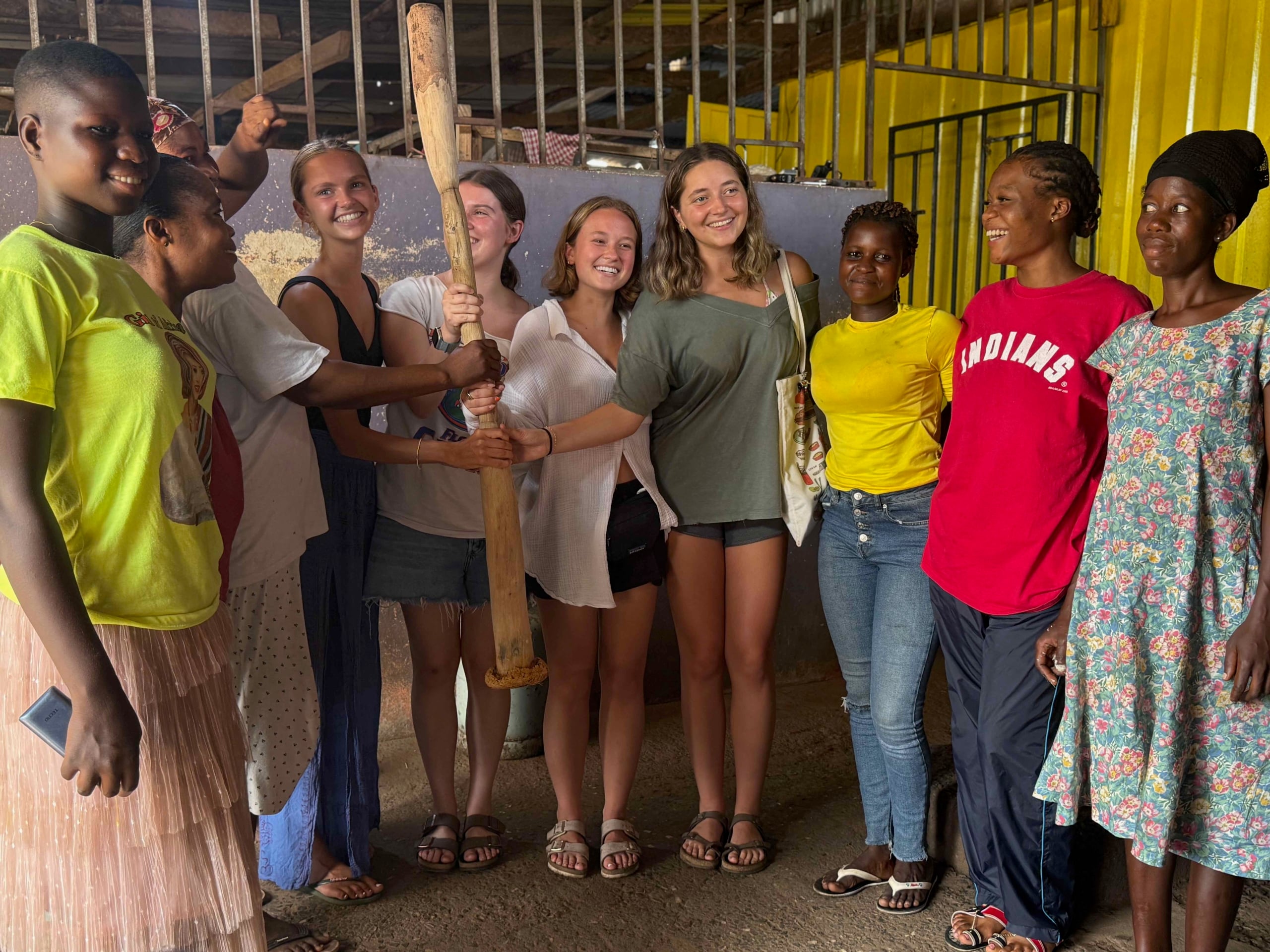
During a visit to Ghana in 2025, I discovered a local restaurant, Oforiwaa Enso Nyame ye, and received an unexpected tour of their kitchen. There, I observed four generations of women working together to pound cassava into a sticky dough called fufu. They explained how it is common to eat this food with every meal. Their collaboration revealed how cassava processing is a skill passed down through generations. These women’s work reflects their vital knowledge, a critical part of Ghana’s food system.
Processing also supports household food security and incomes. Turning the fresh root into gari or flour means women can store and sell their products for longer, although seasonal supply and market constraints remain. This post-harvest processing also creates jobs for transporters, packagers and market vendors.
Despite this potential, processors face several barriers. In a 2022 study, researchers Francis Amoah, Joseph Akowuah and Emmanuel Bobobee examined small-scale gari processors in selected communities across Ghana’s Ashanti and Bono East regions. They identified high energy costs, limited access to equipment, high transportation expenses and inadequate financing as major barriers to post-harvest processing. Even once the final product is made, some processors struggle to find buyers for their finished products.
Connecting Processors With Better Technology and Markets
CAVA2 was a project that operated from 2014 to 2019 across five countries in Africa: Ghana, Nigeria, Uganda, Tanzania and Malawi. The goal of the project was to improve the lives of smallholder farmers and develop commercial value chains for cassava. The Bill & Melinda Gates Foundation funded the project while partners in Ghana worked with farmers to improve production, processing technology and access to markets. The project concluded in 2019 and the results describe completed activities during that time period.
Across all five countries, CAVA2 mobilized 2.37 million metric tons of cassava, and more than 70% of those roots entered new value chains such as flour, starch and ethanol. The project generated $369.1 million in gross income for smallholders across all five countries. Specifically in Ghana, 21 bin dryers were installed across the country to help small businesses process the plants even faster. The project highlighted that women made up 43% of the direct beneficiaries across the five countries.
Reducing Food Waste Through Cassava Processing in Ghana
Processing cassava helps reduce food waste by creating more uses for all parts of the crop. In turn, this can create additional products and income. A 2013 report that the Food and Agriculture Organization published explains how cassava could partly replace maize as an energy source in livestock feed. Maize is currently an important and expensive ingredient. Since cassava contains high levels of moisture when it is first picked, processors must dry it properly before using it as livestock feed. Investing in drying equipment can help processors overcome this challenge and extend cassava’s shelf life.
A 2024 account published by the West Africa Competitiveness Programme explained that after receiving training from UNIDO in value addition, food safety and quality standards of cassava, the number of women receiving daily wages increased. The cooperative had 127 members, most of whom were women, who expanded their product offerings to include gari, starch, ethanol, fish feed and bread. According to co-founder Faustina Sakyi, the share of women earning daily wages rose from 30% to 87.5%. The cooperative’s growth also created opportunities for international trade, with Sakyi explaining that “our cluster’s production of gari now meets the demands of markets in the UK and USA,” showing how other Ghanaian processors could also pursue export markets.
Looking Ahead
Through a few post-harvest processes, women in Ghana can take the short lifetime of cassava and turn it into many different products they can store and sell for longer. Cassava processing in Ghana can help women turn generational agricultural knowledge into income while strengthening local food systems. By investing in affordable equipment, electricity, market access and training, Ghana can help women-led businesses create more products to get the most out of each cassava plant. Turning cassava into flour, gari and animal feed can help rural communities earn more from a crop they already grow abundantly.
– Allyson Young
Allyson is based in San Diego, California, United States of America and focuses on Business and New Markets for The Borgen Project.
Photo: By Allyson Young
