How Türkiye’s Aid to Somalia Supports Poverty Reduction
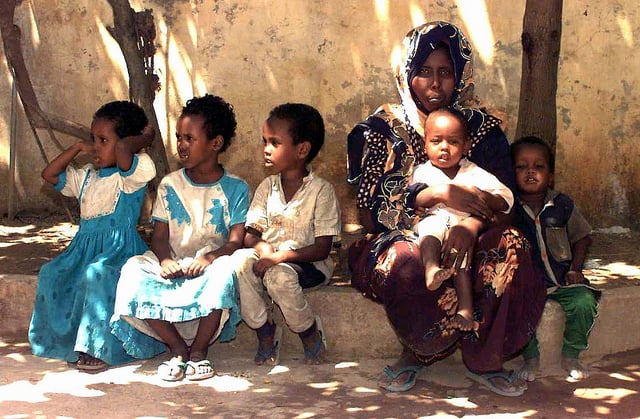
For much of the 30 years following the civil war that broke out in 1991, Somalia has been shaped by conflict, terrorism, humanitarian crises and a fragile state structure. Even today, this East African country located in the Horn of Africa continues to face serious challenges such as drought, terrorism, hunger, migration, food insecurity and limited access to basic services and economic opportunities.
According to an analysis by the World Bank of Somalia’s household survey, which was carried out in 2022, more than half of the population were living below the national poverty line in 2022.
In the case of Somalia, poverty is not merely a lack of income. Approximately 75% of the population experienced non-monetary forms of poverty in 2022, such as inadequate food security, housing issues and a lack of access to basic services like health care, education and infrastructure. Limited access to basic services can also constrain people’s access to suitable employment opportunities.
From Humanitarian Assistance to Development
The combination of the growing importance of humanitarian diplomacy in today’s globalized world and the specific challenges facing Somalia has made international development partnerships a crucial component of the country’s recovery process. Since the then-Prime Minister Recep Tayyip Erdoğan’s visit to Mogadishu in 2011, Türkiye has become one of Somalia’s foremost partners. Since then, Türkiye’s aid to Somalia has expanded beyond providing emergency support to encompass assistance in the fields of health, education, infrastructure, agriculture and institutional capacity building.
The Turkish Cooperation and Coordination Agency (TİKA) stands out as a key player regarding Türkiye’s aid to Somalia. Since commencing its operations in Somalia in 2011, TİKA has implemented more than 500 projects by September 2025 spanning the fields of health, education, agriculture and infrastructure, all focused on sustainable development and long-term impact. By July 2022, the total humanitarian aid and technical development support provided by Türkiye to Somalia had exceeded $1 billion.
The Turkish Red Crescent has provided emergency aid during crises, including the crisis assistance documented in its 2021 activity report. However, longer-term development initiatives are also needed to address broader development challenges.
Health and Education Strengthen Human Capital
Health and education play a key role in Türkiye’s aid to Somalia. A prime example is the Recep Tayyip Erdoğan Training and Research Hospital in Mogadishu, for which Türkiye provided equipment support. Türkiye has also supported schools and educational infrastructure in Somalia. Furthermore, TİKA has emphasized the importance of vocational training, carrying out initiatives in this area through programs such as those offered at the SANCO Training Center for the Disabled, where skills like sewing, makeup application and henna art are taught. These programs aim to enable participants to generate income and achieve greater financial independence.
Agricultural education serves as an example of this. Zamzam University began operations as a small agricultural school in 2012 and attained university status in 2014. In August 2022, TİKA noted that the school’s graduates are already contributing to Somalia’s agricultural sector. Such programs can help solve one of the country’s fundamental development challenges by imparting skills that enable employment and income generation.
The link between these investments and poverty reduction, while indirect, is significant. Improving access to health care and education can enhance people’s capacity to participate in the economy, while vocational training can equip individuals with the practical skills needed for employment and starting their own businesses.
Infrastructure and Economic Opportunities
Infrastructure development efforts can also play a significant role in enabling households and businesses to participate actively in the economy. Türkiye has undertaken infrastructure projects in Somalia—such as the paving of approximately 35 kilometers of road in Mogadishu. In an account covering developments through 2019, the Turkish Ministry of Foreign Affairs reported that Mogadishu International Airport and the Port of Mogadishu were operated by Turkish companies and Türkiye’s investments in Somalia had reached approximately $100 million. As improved infrastructure facilitates market access and paves the way for foreign direct investment, these activities link development aid with broader economic cooperation.
Türkiye’s aid to Somalia also encompasses cooperation in the energy sector. In 2024, an agreement was signed between the two countries regarding offshore oil and natural gas exploration activities, thereby marking a step toward economic cooperation based on natural resources.
From Aid to Long-Term Development
Türkiye’s expanding role has shifted from traditional humanitarian aid toward a development partnership. Türkiye has assumed a diplomatic role in Somalia and has been mediating negotiations between Somalia and Somaliland since 2013. This relationship is also linked to strategic considerations; analysts point to Türkiye’s security, economic and geopolitical interests in the Horn of Africa alongside its humanitarian objectives. Türkiye’s growing activities in the energy and security sectors demonstrate that development cooperation can serve multiple purposes simultaneously. Somalia Today reported on May 2, 2026, that Türkiye had approved a grant agreement of up to $30 million for Somalia, further expanding bilateral cooperation.
However, the core issue regarding poverty reduction is not limited to the amount of aid Somalia receives. What truly matters is whether the aid provided contributes to creating conditions that enable people to access education, health care, employment and productive economic opportunities.
Conclusion
Türkiye’s aid to Somalia has evolved from emergency response into a broader partnership encompassing humanitarian aid, health care, education, infrastructure and economic development. These initiatives address many of the factors identified by the World Bank as obstacles to sustainable poverty reduction. International aid alone cannot eradicate poverty in Somalia. Long-term progress will depend on strengthening Somalia’s institutions, expanding productive employment and facilitating access to economic opportunities.
– Ömer Valyozoğlu
Ömer is based in Istanbul, Türkiye and focuses on Politics for The Borgen Project.
Photo: Flickr
