Ways to Protect Factory Workers in China from Exploitation
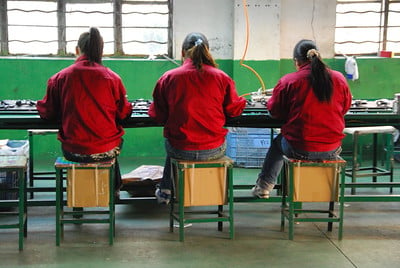
Documented labor violations in parts of China’s manufacturing sector include excessive overtime and the misuse of dispatch workers hired through temporary labor agencies. In a September 2025 investigation of Foxconn’s Zhengzhou factory, China Labor Watch reported that most workers worked 60 to 75 hours per week and that dispatch workers exceeded half the workforce. These findings pertain to a particular factory, rather than describing all factory workers in China.
Social Insurance
China’s social insurance system includes pension, medical, unemployment, work-related injury and maternity insurance. Mandatory schemes do not ensure every worker is enrolled or receives every benefit. Pension insurance provides retirement benefits, medical insurance covers part of eligible health care costs and unemployment insurance supports eligible workers who lose their jobs. Employers fund work-related injury insurance for workplace injuries. Maternity insurance has merged with medical insurance in many cities.
Access to Legal Aid
The Legal Aid Law of the People’s Republic of China provides a route to legal advice and assistance for workers. Legal aid institutions offer advice through service windows, hotlines and the internet. The law took effect Jan. 1, 2022, and allows representation in labor-dispute mediation and arbitration. People facing financial hardship may apply for assistance with labor-remuneration claims, confirmation of employment relationships, social-insurance claims and compensation for occupational injuries or diseases, subject to the law’s requirements.
Worker Representation and Legal Standards
Representation operates through the All-China Federation of Trade Unions (ACFTU) system. A 2011 working paper published by the International Labour Organization described the ACFTU as China’s sole legal trade union organization and examined its ties to the party-state. This analysis highlights the distinction between formal representation and independent worker organization.
China’s Labor Law sets out rights to remuneration, rest, occupational safety and social insurance. Article 36 describes an eight-hour day and an average maximum of 44 hours a week; separate standard-working-hour rules use a 40-hour week. Overtime is regulated separately, with a general monthly limit of 36 hours and specified exceptions. These are legal protections, rather than proof that all workers receive the pay, hours and safety measures they are entitled to.
Supply-Chain Measures
The Fair Labor Association has documented forced-labor risks in supply chains connected to Xinjiang. The U.S. Uyghur Forced Labor Prevention Act establishes a rebuttable presumption against importing goods made wholly or partly in Xinjiang or by listed entities, unless the applicable requirements for an exception are met. The EU has also adopted a regulation prohibiting products made with forced labor from its market; those rules apply from Dec. 14, 2027.
Protecting Household Security
Unpaid wages, unsafe conditions, lack of social-insurance enrollment and difficulty enforcing labor rights can threaten household income and economic security. Legal aid can help eligible low-income individuals access remedies, while social insurance is designed to protect against risks such as sickness, injury and job loss. These mechanisms offer ways to protect factory workers in China, but their value depends on access and enforcement.
– Stephanie Ou
Stephanie is based in San Jose, California/Santa Clara County, United States and focuses on Global Health for The Borgen Project.
Photo: Flickr
