Livelihoods and Cash Assistance in Mozambique
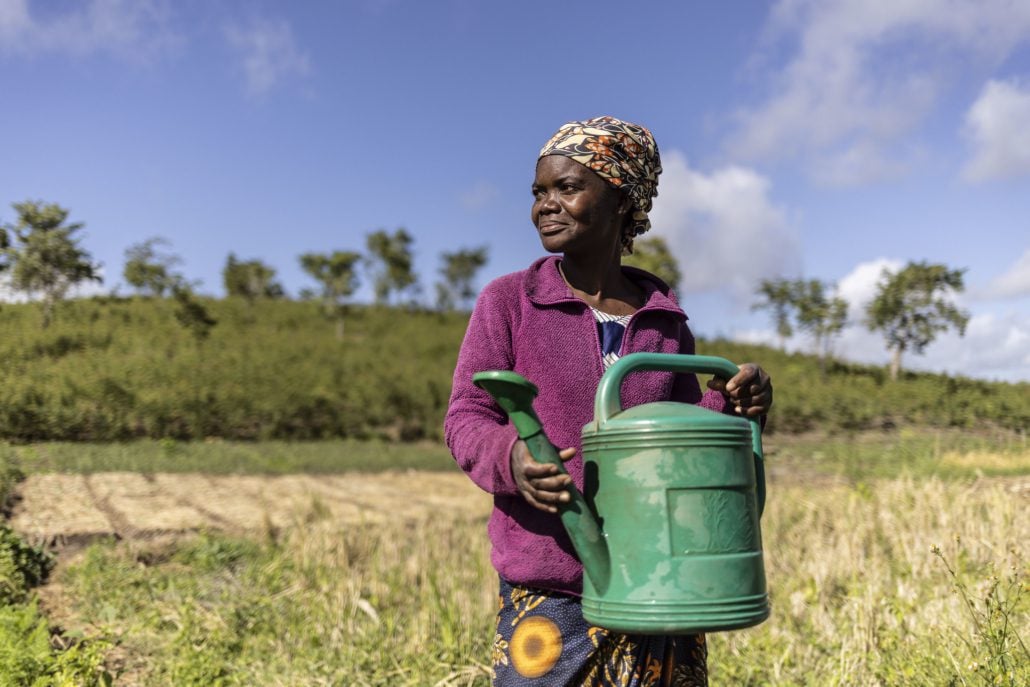
For 52-year-old grandmother Inácia Laquareta Abraão, social protection has meant more than receiving money. Caring for her three grandchildren, she once relied on irregular income and grew what she could to help feed her family. Through Mozambique’s Productive Social Action Program (PASP), Inácia earned income while helping restore the coastline at Zalala Beach. She later invested in a small farm, where she now grows tomatoes, rice and beans. Her experience shows one way that temporary support and paid public works can help a participant invest in a livelihood. It is an individual example, however, rather than evidence that every PASP participant makes the same transition. More than 300,000 people in Mozambique have participated in PASP since its launch in 2012, with women accounting for around 65% of beneficiaries. The program aims to reduce poverty and strengthen climate resilience through labor-intensive public works and income-generating activities. These have included coastal protection, erosion control, riverbank restoration and rural infrastructure.
Why Complementary Support Matters
Cash assistance in Mozambique can help households buy food, meet immediate expenses and avoid selling essential assets. Transfers alone do not guarantee a lasting source of income. Longer-term economic security can also depend on access to skills, productive assets, markets and financial services.
PASP combines cash assistance in Mozambique with public works and income-generating activities. Its broader aim is to help vulnerable households strengthen their livelihoods and resilience; the extent to which participants achieve lasting economic security will vary with their circumstances and the opportunities available to them.
It is important to distinguish PASP from a separate cash-plus pilot that the Food and Agriculture Organization (FAO) is evaluating. That pilot involves 700 households that previously participated in PASP and combines cash transfers with agricultural inputs and technical training. Evidence from this evaluation should not be presented as a finding about PASP as a whole. Instead, it may offer separate learning about whether an integrated package of support can help participating households strengthen agricultural production and resilience.
Opening Doors to Financial Inclusion
PASP may also contribute to financial inclusion. The World Bank reports that more than 200,000 e-money accounts have been opened through the program since it began in 2012. Digital payments can reduce the time and cost involved in collecting assistance and give households an entry point into formal financial transactions.
This pathway matters for women, who make up around 65% of PASP beneficiaries. But participation in a program or access to digital payments does not automatically translate into control over productive assets or higher income. Inácia’s experience should therefore be understood as one example, not a typical or guaranteed outcome for women participating in PASP.
Research also points to persistent gender-related barriers. The United Nations University World Institute for Development Economics Research (UNU-WIDER) reported in a 2016 study using 2002-2012 surveys that female-headed households in Mozambique were, on average, around 20% less agriculturally productive than male-headed households. A 2020 UNICEF publication also raised concerns that women may remain concentrated in low-income households if social protection does not adequately address gender-specific constraints.
What Happens When the Support Ends?
Evidence from former participants offers examples of how skills and productive activities can continue beyond program participation. The World Bank reports that farming groups established through PASP in Sofala were still cultivating collective plots in 2025, producing around 14 metric tons of crops for household consumption and local markets. Another former participant used brick-making skills learned through PASP to build a more resilient home. These examples show what some participants have done after taking part; they do not establish that all participants will achieve lasting economic independence.
Important constraints remain. The International Household Survey Network reports that Mozambique’s 2025 PASP baseline sampling frame included 6,864 eligible beneficiaries across 285 communities in five provinces. The evidence should be interpreted carefully, with individual examples distinguished from conclusions about program-wide long-term impacts.
The International Labour Organization has also highlighted the importance of non-contributory social protection for poorer households while identifying challenges including limited coverage, underfunding and targeting problems, including gender disparities.
Building Pathways to Lasting Livelihoods
Strengthening PASP’s longer-term contribution will require attention to what happens during and after cash assistance and public works placements. Longer periods of support may give households more time to build assets and develop farms or small businesses. Stronger links to buyers, cooperatives, value chains and local enterprises could help participants connect production to reliable markets. Appropriate finance may help viable activities grow beyond subsistence levels.
Programs should also address gender-specific barriers so women can control assets, access land and finance and participate fully in economic opportunities. This is particularly important given women’s large share of PASP beneficiaries.
PASP illustrates how social protection and economic inclusion can support complementary goals. Cash assistance in Mozambique can help households meet immediate needs, while public works, skills, productive assets, financial services and market connections may help create opportunities to earn income over time. Inácia’s farm is one example of a participant investing in a livelihood. The wider challenge for PASP is to make pathways to employment and self-employment more accessible and durable, without assuming that every participant will experience the same results.
– James Moretti
James is based in United Kingdom and focuses on Good News for The Borgen Project.
Photo: Flickr
