Solar Mesh Grids Improve Electricity Access in Haiti
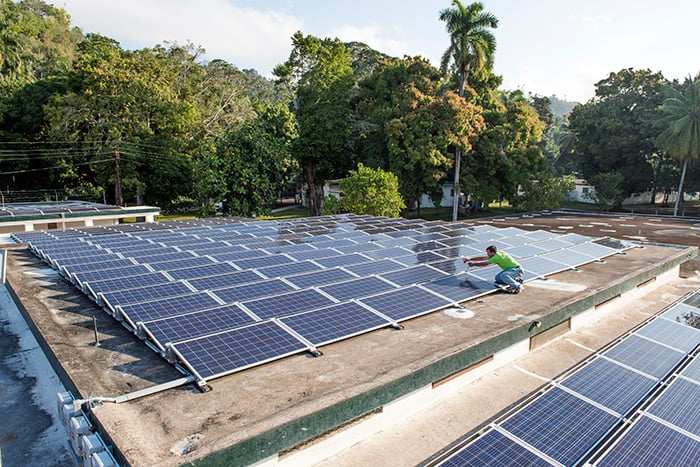
Electricity access in Haiti is a major determinant of energy poverty. This term can be defined as insufficient access to energy that is both reliable and affordable enough for cooking, heating and other essential activities.
Only about a third of Haiti is electrified, with a stark difference between urban and rural areas. While urban electrification reaches up to 85%, it remains a mere 15% for rural populations. In these remote areas, which are home to 40% of Haiti’s population, wood and charcoal often serve as the primary sources for daily lighting and cooking.
Even for those connected to the grid, electricity is expensive and unreliable due to aging infrastructure and chronic mismanagement. Yet despite these challenges, Haiti represents an emerging market for renewable energy, and the country’s tropical location is ideal for solar.
The Solution
For people living off-grid, electricity access in Haiti often comes from mini-grids or solar home systems, each with pros and cons. Solar home systems are affordable and easy to install, but only produce enough power for basic lighting and charging needs. On the other hand, mini-grids can produce enough electricity for businesses and more demanding appliances but face higher upfront costs.
In 2021, a Haitian startup called Alina Eneji decided to pursue a third option: the mesh grid. The mesh grids, whose components are designed and built by the Australian company Okra Solar, combine the affordability of home solar with enough output to power small businesses.
They follow a hub-and-spoke model, where “hub” households receive solar panels, an inverter, a battery and a Pod, Okra’s metering device. Nearby “spoke” households receive a Pod and sometimes a battery, then connect to hubs by low-voltage lines. This setup allows homes within 50 meters of each other to share up to 600 watts of power and ensures that customers only pay for what they use.
The Outlook
Initially, Alina Eneji’s pilot program served only 35 homes, but it was not long before outsiders started taking notice. Following an intervention from the Global Energy Alliance, the number of connections surged to 1,000 by 2023.
Alina Eneji has continued expanding its network. An Inter-American Development Bank project approved in December 2023 aimed to support service for 8,000 additional rural households. The IDB project lists a total cost of $1.75 million and an original grant approval of $500,000. These are financing figures and an expansion objective, not evidence that every planned household has been connected.
Customers have found several new and economically productive ways to use their electricity. Some have bought the freezers and refrigerators necessary to run a bar or restaurant, while others offer paid phone charging services. Nighttime lighting has added a greater sense of safety, particularly for women.
Driko Ducasse, founder of Alina Eneji, says he wants to show stakeholders that electricity access in Haiti is within reach. “More broadly, my goal is to give back because I want other Haitians to have the opportunities that I have had.”
– Harland Pusey-Nazzaro
Harland is based in Brunswick, ME, USA and focuses on Business and New Markets, and Technology and Solutions for The Borgen Project.
Photo: Wikimedia Commons
