Small Nation, Big Dreams: Higher Education in Cape Verde
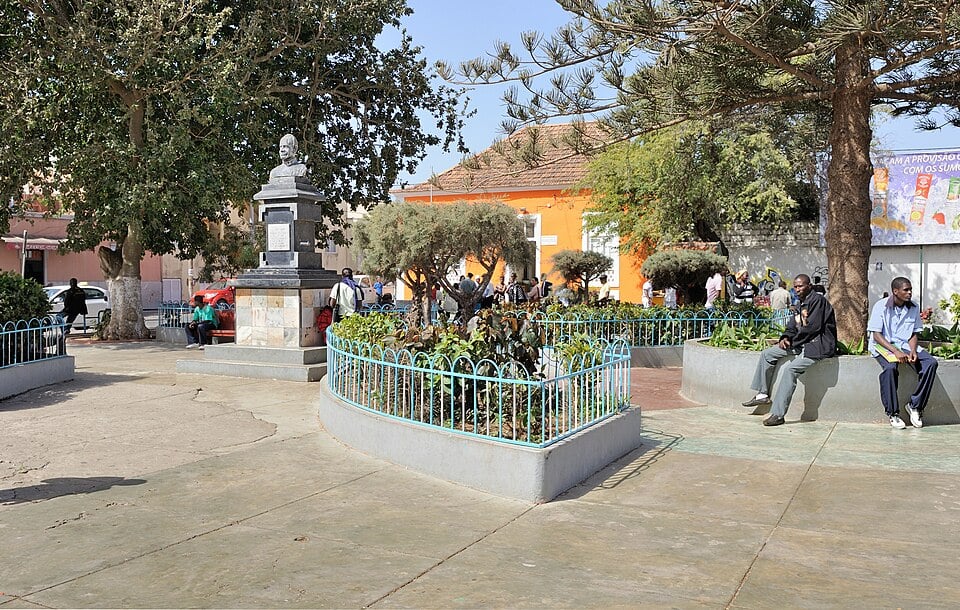 Following Cape Verde’s historic performance in the 2026 World Cup, millions around the globe have seemingly turned their attention to the small island nation of 520,000. There are many ways to learn about the world and how to navigate it, but an examination of education in Cape Verde can reveal what shapes the country’s future long after the final whistle blows. Greater access to higher education in Cape Verde translates into stronger employment prospects and, in turn, a critical pathway out of poverty and toward economic mobility.
A Gap Between Islands and Minds
When Cape Verde gained independence from Portugal in 1975, the nation inherited a literacy rate of roughly 40%. Since then, the country has made substantial progress in expanding access to education and improving literacy. By 2021, illiteracy among those aged 15 and above had fallen from 61.3% in 1975 to 7%, while youth illiteracy stood at just 1.3%, giving Cape Verde the highest literacy rate in West Africa. While that is an achievement worth noting, that rise is largely a pre-college achievement, driven by gains in primary and secondary schooling rather than in higher education. There exists an entirely different problem when it comes to pursuing a college degree in Cape Verde.
As of the 2019-2020 school year, the higher education enrollment rate stood at just 23.5%, suggesting that significant barriers continue to prevent many young people from enrolling in higher education. A likely problem is that, because Cape Verde’s geographical landscape, like that of Indonesia or Fiji, is an archipelago, the equal distribution of services, including higher education, becomes relatively more difficult. Out of the nine inhabited islands of Cape Verde’s total of 10, only two islands, Santiago and São Vicente, have concentrated institutions for higher education such as the University of Cape Verde (Uni-CV) and Jean Piaget University of Cape Verde (UniPiaget). This condition forces secondary school graduates to relocate to the two islands if they want to enroll, a luxury not accessible to everyone. Therefore, considering the tuition on top of the geographical issue, many Cape Verdean youths face discouragement in pursuing higher education.
Aside from the geographical gap, economic inequality can make these barriers even harder to overcome. World Bank data show that students from the poorest fifth of Cape Verde’s population accounted for only 9% of higher-education enrollment, compared with 31% among students from the richest fifth. Therefore, while geographical challenges remain a pervasive issue, economic inequality is still an even greater hurdle to accessing higher education. These “gaps” generate enough reason for secondary school graduates to immediately find a job instead of pursuing higher education, which in itself can cause stagnation in employment qualifications and create disadvantages in the global job market.
On Closing the Gap
Thankfully, the government noticed this disparity and translated it into action. In recent years, Cape Verde’s Ministry of Education has expanded its approach to higher education by strengthening scholarship opportunities both within the country and abroad, with the 2026 state budget prioritizing students from low-income families and underserved regions specifically. This builds on the 2017–2021 Education Sector Plan, which sought to improve access, quality, and efficiency across the education system. The government has also moved to address the islands’ concentration problem directly: current budget priorities name Santo Antão, Fogo and Sal as target islands for expanding higher-education access beyond Santiago and São Vicente, alongside new student residences, free inter-island transport for students, and increased funding for the country’s national scholarship foundation. These measures are underway rather than fully realized, and they do not yet eliminate the country’s broader geographic disparity in access.
Looking Ahead
It is worth revisiting the fact that the problem with higher education in Cape Verde is one of concentration, where Santiago and São Vicente host all of the country’s main campuses. The issue is not the number of institutions. The issue requires Cape Verde to direct its money and attention toward the students who have less access to higher education. The scholarship pipelines to Portugal, for example, show a government willing to send its youth wherever opportunity exists rather than waiting for opportunity to arrive at home. If that same resolve extends to closing the distance between islands, Cape Verde’s next generation of graduates could prove as formidable as its national football team.
– Javier Maverick Tristan
Javier is based in Tangerang Selatan, Indonesia and focuses on Good News and Politics for The Borgen Project.
Photo: Wikimedia Commons
