Fragility and Rule of Law in Ghana
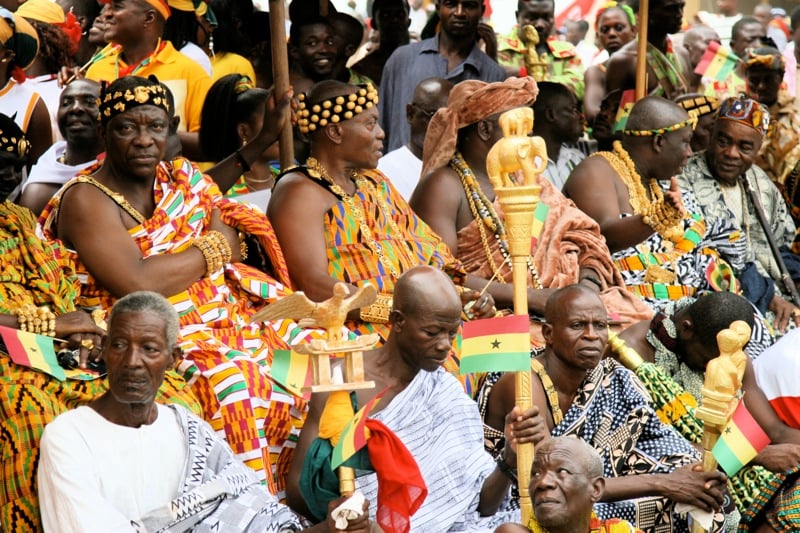 One challenge facing fledgling democracies is maintaining social order via a stable, incorruptible government. Ghana is a prime example of a young democracy encountering this problem today. Shortly after gaining independence from the United Kingdom in 1957, Ghana adopted its constitution to form a republic. Despite coups and protests, Ghana has been able to preserve its government, though notable threats to Ghanaian democracy continue to prevail.
Corruption and Bribery
Despite anti-graft legislation, corruption continues to persist within Ghana’s government. One metric of corruption, the Bertelsmann Stiftung’s Transformation Index (BTI), ranked Ghana as the 32nd most corrupt nation out of 129 countries surveyed. This index notes that multiple scandals involving elite members of the Ghanaian government have eroded public confidence in institutions.
This corruption is apparent in the system of bribery that pervades Ghana’s government. In 2015, scores of government officials–including judges and state attorneys–were implicated in accepting bribes for favorable legal rulings. Although some of these officials were suspended, no formal legal charges were brought against any of the culpable. Moreover, Ghana’s police force also accepts bribes in exchange for the alteration of criminal or civil cases.
The Judiciary
Ghana’s judicial system is uniquely disposed to internal corruption. Although Ghana’s constitution protects judicial independence, the structure of the judiciary prevents it from swiftly and accurately exacting justice. Firstly, Ghana’s justice system is slow. This has led many Ghanaians to perceive the judiciary as being corrupt or biased. Moreover, the government does not have an obligation to provide citizens with legal representation in court. This forces some citizens to represent themselves in legal battles, which greatly reduces the likelihood of winning recompense. Lastly, Ghana’s law provides little protection for women against discrimination, which hinders their ability to find education and employment. Overall, Ghana’s judiciary has numerous flaws that permit corruption to erode society.
External Influence
Officially, Ghana is a part of what political analysts call the Non-Aligned Movement. This group refers to states that oppose strong military or ideological alignment and embrace a democratized system of international relations. Despite this, Ghana has struggled to articulate a coherent foreign policy that emphasizes these values. Though Ghana has pledged some of its resources toward peacekeeping operations via the Economic Community of West African States, the desire to raise funds for its military has often motivated these missions instead of its Non-Aligned Movement affiliation. Furthermore, Ghana’s foreign policy regularly contradicts itself, and sometimes even contradicts its own constitution, such as when Ghana remained silent during the Tongolese coup de ta in 2005.
It is not just regional issues that threaten fragility and rule of law in Ghana either. The U.S. State Department has issued warnings of Islamist extremist groups that may seek to expand into western Africa. It has also noted that Russian influence is growing in the region, which may threaten Ghana’s independence. All of these international strains have the potential to erode Ghana’s stability as it continues to develop.
Connections to Poverty and Looking Ahead
Poverty and stability are not isolated variables in developing nations. Political stability and strong governance are both associated with lower rates of poverty, whereas corruption exacerbates human poverty and low income levels. So, as Ghana continues to reduce its poverty levels, corruption and threats to the rule of law will certainly be factors that it must take into account.
That being said, Ghana’s future is promising. Poverty rates are dropping: in 2016, the poverty rate was 39.03%, as opposed to just 21.9% as of 2025. Furthermore, Ghana unveiled its new National Ethics and Anti-Corruption Action Plan (NEACAP) this year, which seeks to fight corruption in the government, civil society and private sector. Ghanaian officials, in alignment with the United Nations’ Convention against Corruption, believe that NEACAP will help to increase institutional capabilities, improve judicial integrity, strengthen rule of law and fight organized crime in the country.
Though Ghana has only just implemented this plan, it ultimately seeks to increase access to public services and encourage investment. Thus, if successful, NEACAP will not only help to eliminate corruption in Ghana, but will also expand important government resources that work towards reducing poverty in the country. All in all, despite challenges to its stability that threaten to decrease quality of life, fragility and rule of law in Ghana appear to be on a stable path as the nation works to eliminate corruption and widespread poverty.
– Tucker McSpadden
Tucker is based in Norwich, VT, USA and focuses on Good News and Politics for The Borgen Project.
Photo: Flickr
