Education in Jordan
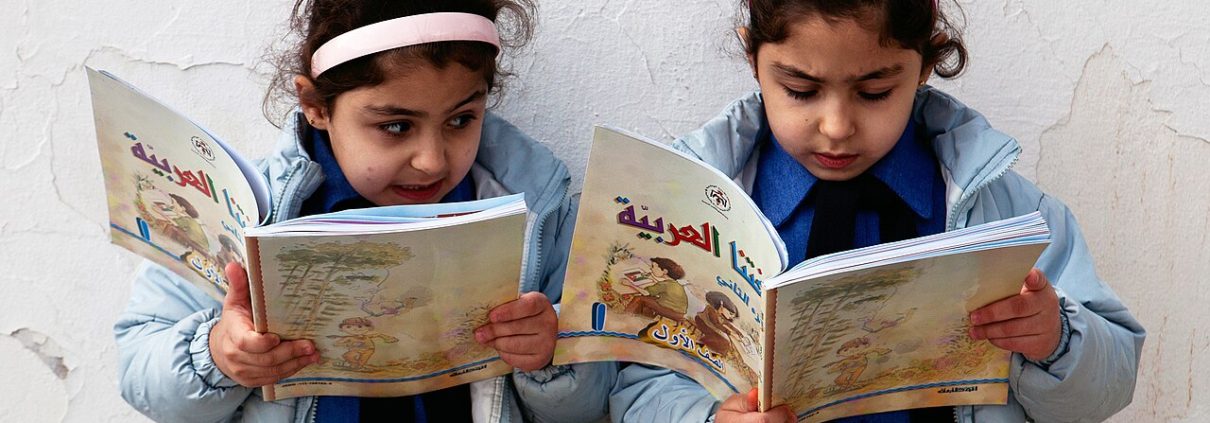 “The primary resource of the country is its people, so people there believe in education,” Razan Brown, a former resident of Jordan, told The Borgen Project in an interview. As a small Arab nation without many natural resources, Jordan relies on its people and their skills to develop economically. Because of this, education in Jordan has remained at the forefront of poverty reduction.
As of 2025, more than 97% of children are enrolled in primary school, and the country’s literacy rate is around 95%. However, Jordan still struggles with funding for education, especially with a recent increase in refugees from Syria and Palestine. Jordan hosts around 200,000 Syrian refugee children alone, which has placed greater pressure on the system due to a lack of teachers and access to school buildings and supplies. Despite this, Jordan still ranks high in enrollment and literacy in its region.
A Glimpse at the System
In Jordan, primary school is funded by the Ministry of Education and is compulsory for children aged 6 to 16. Here, students learn basic mathematics, science, world history and Arabic, among other subjects. After around the third grade, schools are separated by gender, although boys and girls have had equal access to education since 1979. In the final year of high school, students take the Tawjihi exam, a comprehensive college placement exam that determines a student’s field of study and eventual career. Regarding the Tawjihi exam, Brown stated, “A lot rests on that grade. You get to pick what you want to study, however, the schools accept you based on what you score. For example, if you want to be in medical school, you have to score in the 96th percentile and above.” Beyond primary school, public universities are not free but remain affordable.
Additionally, there is a private sector of education in Jordan. Private school prices vary depending on the institution but can create inequalities in access and quality. At private schools, students learn more English and participate in more extracurricular activities. There are some scholarships from the royal palace, known as a “Royal Generosity” for students with high marks who cannot afford private school, but entry into a private institution mostly depends on family wealth.
Importance
Due to a lack of natural resources, Jordan relies heavily on its education system. Its people are the assets necessary for the sustainability of the country’s economy and also provide valuable labor abroad. Additionally, Jordanians rely on the country’s education system to improve their own lives, especially with regard to job opportunities. This necessity has instilled Jordanians with pride for their educational achievements. Regarding this, Brown said, “Families are proud of their children when they achieve what they do at school. It’s celebrated and seen. Perseverance is celebrated versus like ‘do it your way.'”
Jordan’s commitment to high-quality education has led to a demand for Jordanian people in skilled positions throughout the Arab world and beyond. In countries like the United Arab Emirates and Saudi Arabia, which have large oil reserves and industry but lack the necessary population, labor is sourced from places like Jordan. Because of this, the skills acquired through education are the basis for poverty reduction, especially for rural populations seeking job prospects. However, an essential skill for these positions is the ability to speak English, which is nearly guaranteed from a private institution but not from a public one. Because of this, wealth disparities within the population can be perpetuated through disparities in education. Parents may work a second job or pick up extra shifts if it means their children can attend a private school and learn English.
Overcoming Barriers
Despite many successes, Jordan still faces barriers in providing its population with quality education. Underfunding has limited the amount of extracurricular activities available at public schools and has impacted the quality of available teachers. Because teaching is not a well-paying job in Jordan, it attracts students who did not score as well on their Tawjihi. As a result, many teachers were forced into the trade by necessity, rather than by a desire to teach. Private schools can also pay good teachers more, which leads to a smaller pool for public institutions. Lack of funds also affects the quality of school buildings and other areas such as parks that would provide the space for extracurriculars.
A recent influx of refugees has further strained the system. To combat overcrowding, schools in Jordan operate on a two-shift system, meaning one wave of students attend in the mornings and another in the afternoons. This has led to increased issues in staffing. Additionally, it has made it difficult for students, particularly those in rural areas, to travel to school, as it would often be too cold or dark at the times when they arrived or left.
UNRWA
However, United Nations Relief and Works Agency for Palestine Refugees in the Near East (UNRWA) has continued to assist in Jordan’s efforts for educational improvements. As of the 2019 to 2020 school year, UNRWA operated 169 schools that provided basic education for more than 121,000 students. UNRWA has also helped teachers through the implementation of its Teacher Policy and School Based Teacher Development program, which strengthened teachers’ professional development and had reached around 3,900 teachers in 2018. Furthermore, UNRWA offers vocational training at the Amman Training Center and the Wadi Seer Training Center, with emphasis placed on local and regional labor market needs.
Additionally, in terms of morale and motivation, Brown believes the addition of refugee children in Jordanian classrooms has been a positive. In Palestine, UNRWA has been responsible for building some of the best schools in the region since 1948, and the students coming from these schools raise the standard of their classrooms. Referring to refugee children from Gaza, Brown stated, “Those children have nothing but their school. That’s where they see their friends, that’s often times when they eat their meals. The pride in education in a place like Gaza is unprecedented. So once you meet those kids, you want your own child in that classroom because they are meeting an A student.”
Looking Ahead
Since more than 40% of the population is under 18, the continued advancement of education in Jordan is essential to the continued development of the nation. While the current system has yielded good results, there is still room for improvement, especially for children living in poverty or in rural areas. Through increased funding, schools could become less crowded and offer more resources to their students, as well as a better overall education. This would both enhance the system and bridge divides in access and quality based on socioeconomic conditions.
– Josh Megson
Josh is based in Albemarle, NC, USA and focuses on Good News for The Borgen Project.
Photo: Wikimedia Commons
